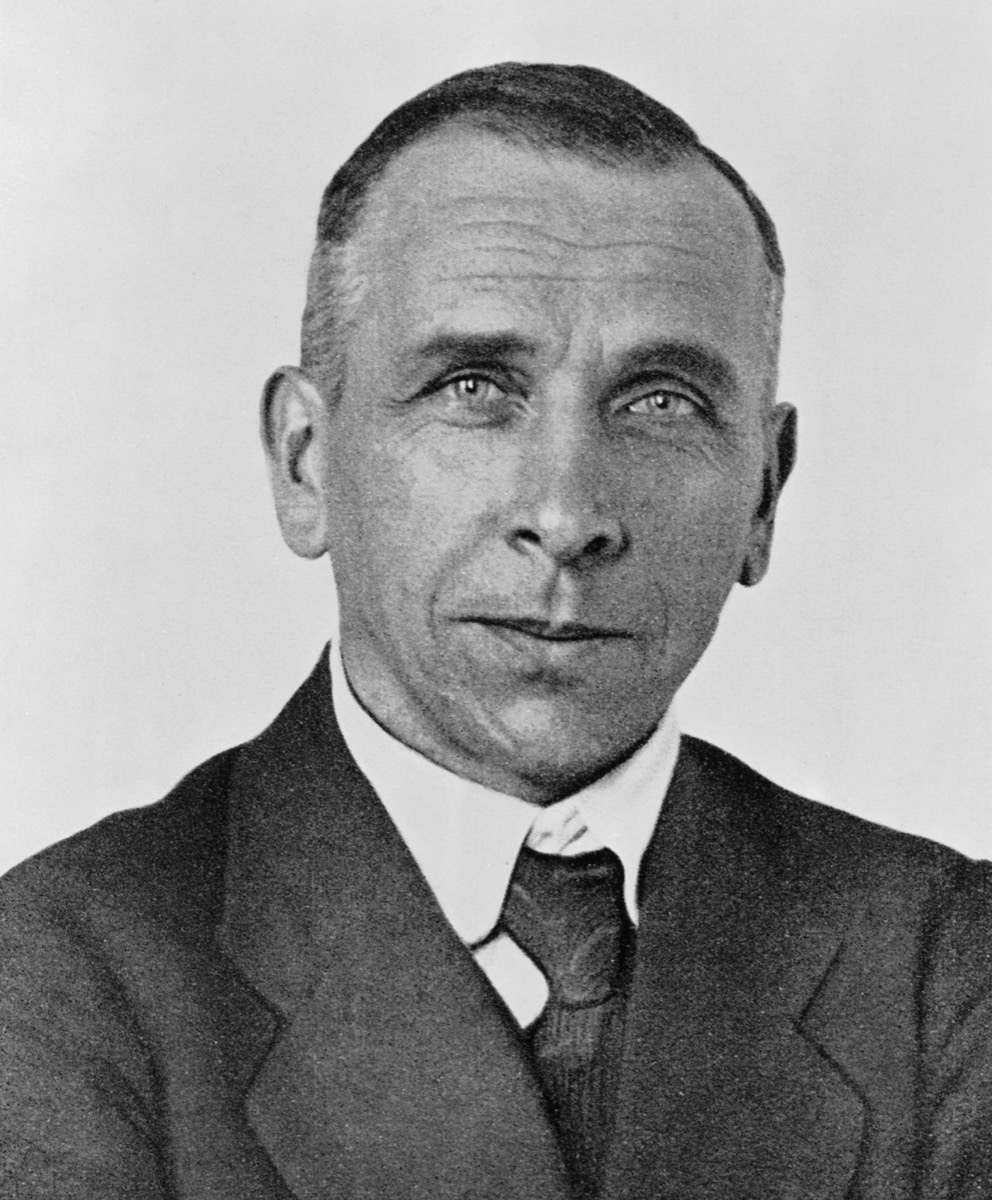
On Christmas of nineteen ten, a meteorologist browsing a friend’s new atlas noticed that the Atlantic coast of Brazil looked as though it had once been tucked against West Africa. Others had seen the same thing and let it pass. Alfred Wegener cut the continents out, fitted them on a globe, and gathered fossils and rock layers that matched across oceans. Then he published. What did the field make of it?
Ridicule, for forty years. German geologists called his work delirious ravings and diagnosed moving crust disease and wandering pole plague. The British objected that he had distorted the continents to fit and had named no mechanism strong enough to move them. Americans were harshest: one paleontologist called it Germanic pseudo-science. For decades afterward, older geologists warned newcomers that any interest in drift would end a career.
Wegener was a poor candidate to overturn geology. He lectured at Marburg University, not merely untenured but unsalaried, and his subjects were meteorology and astronomy. He was also an Arctic explorer and a record-setting balloonist, and when his mentor urged caution in theorizing, Wegener asked why anyone should hesitate to toss the old views overboard.
The evidence came in three kinds. He cut out maps of the continents, stretched them to undo the crumpling of mountain ranges, and fitted them on a globe into a supercontinent he called . He showed that plants and animals on opposite shores often matched, down to the flatworms parasitizing the marsupials. And he pointed out geological layers that stopped at one coast and resumed across the ocean.
He called the idea and presented it to Frankfurt’s Geological Association early in nineteen twelve, where the minutes record no discussion because the hour was late. The book followed in German in nineteen fifteen. When the English edition appeared in nineteen twenty-two, the attacks began in earnest, sharpened by lingering anti-German feeling. One objection had real force: he could name no mechanism powerful enough to move a continent.
Wegener treated the assault as material. Told he had no mechanism, he supplied six, one of them foreshadowing ; told his timeline was far too short, he corrected it in later editions. He retracted nothing. The turn came in the mid-nineteen-sixties, as the older geologists died and younger ones accumulated proof of and of vast plates grinding past each other. Wegener did not see it. He died on the Greenland ice in nineteen thirty, aged fifty, returning from a supply run to two researchers wintering deep in the ice pack.
wat. He was right, he was told he was mad, and the field came round only once the men who had mocked him were dead.
wat wat
Continental drift and plate tectonics are now the bedrock of modern geology, which makes the forty years of ridicule a case study in how an establishment handles an outsider.
How do we know?
Richard Conniff’s account for Smithsonian Magazine draws on Wegener’s own publications, the attacks printed against him, and historians of science including Naomi Oreskes, Robert Dott and Mott Greene.
What is still unknown
A magazine history rather than an archival study, and it follows one theory. How often a mocked idea turns out to be right is exactly what a single case cannot settle.
Learn something?
Where to next
 What finally convinced geologists the continents move?plate tectonics
 What carves a canyon into thousands of stone spires?geology
 Why does cooling lava crack into columns?geology