
Blue light breaking along a night shoreline comes from plankton responding to water movement, and the connection has been known for a very long time. What a single cell is actually reacting to is not. Cussatlegras and Le Gal put into a and ran several kinds of flow past it, measuring the light each one produced. Which part of the motion sets them off?
Shear alone is not enough. Steady homogeneous , however strong, failed to trigger massive bioluminescence. What produced an intense response was acceleration and shear together, both at once, which is what a breaking wave delivers and a smooth current does not. From the light emission the authors then calculated the distribution of bioluminescence thresholds for the species.
A wave breaking at night on the right coast lights up blue along its edge. People have watched plankton react to the movement of water for centuries, and the phenomenon is still under investigation. The exact mechanism at the level of the cell is not fully understood.
Cussatlegras and Le Gal took the question into a Couette shearing apparatus, where fluid sits between two cylinders and the shear rate can be set precisely. Working with the species Pyrocystis noctiluca, they ran several different types of flow and recorded the light produced by each.
The experiments converge on one conclusion. Stationary homogeneous laminar shear does not trigger massive bioluminescence, no matter how it is applied. Acceleration and shear are both necessary, together, to stimulate an intense response.
That distinction matters for what the cell is doing. A steady current deforms a cell continuously and produces nothing, so the organism is not simply reporting that it is being pushed. It responds to the rate at which the pushing changes, which is exactly what separates a breaking wave, or a fish turning sharply, from the ordinary motion of the sea. From the emission data the authors calculated the distribution of bioluminescence thresholds across the population.
wat. A steady current passes in darkness. It is the change in the flow, not the flow, that lights the water.
wat wat
It separates a mechanical trigger from a general one: the cell is not reporting that water is moving, it is reporting that the motion is changing.
How do we know?
Cussatlegras and Le Gal ran Pyrocystis noctiluca through several flow types in a Couette shearing apparatus, recorded the light emitted in each, and derived the distribution of stimulation thresholds.
What is still unknown
One species in a laboratory shearing device, which produces far cleaner flows than a shoreline. The cellular mechanism that converts deformation into light is still not fully understood.
Learn something?
Where to next
 Why do ducklings swim in a tight line behind their mother?waves
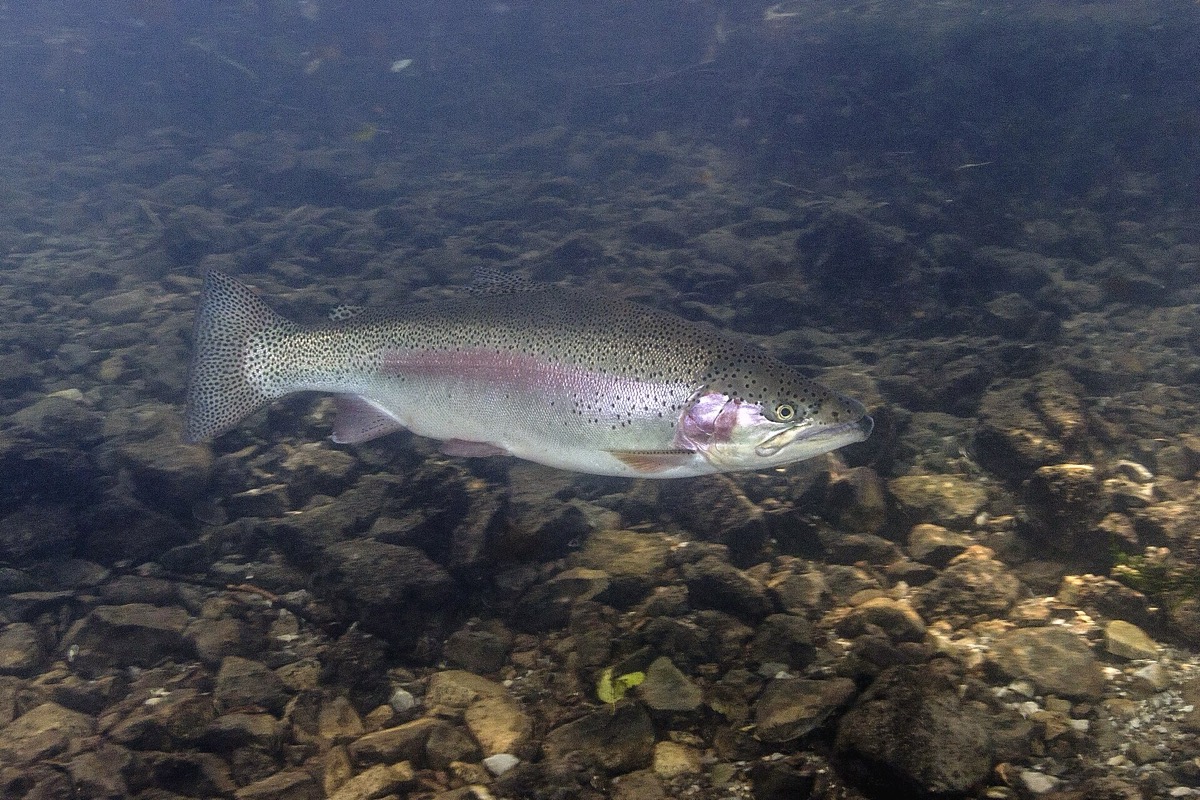 Why would a fish choose the turbulent water over the smooth?flow
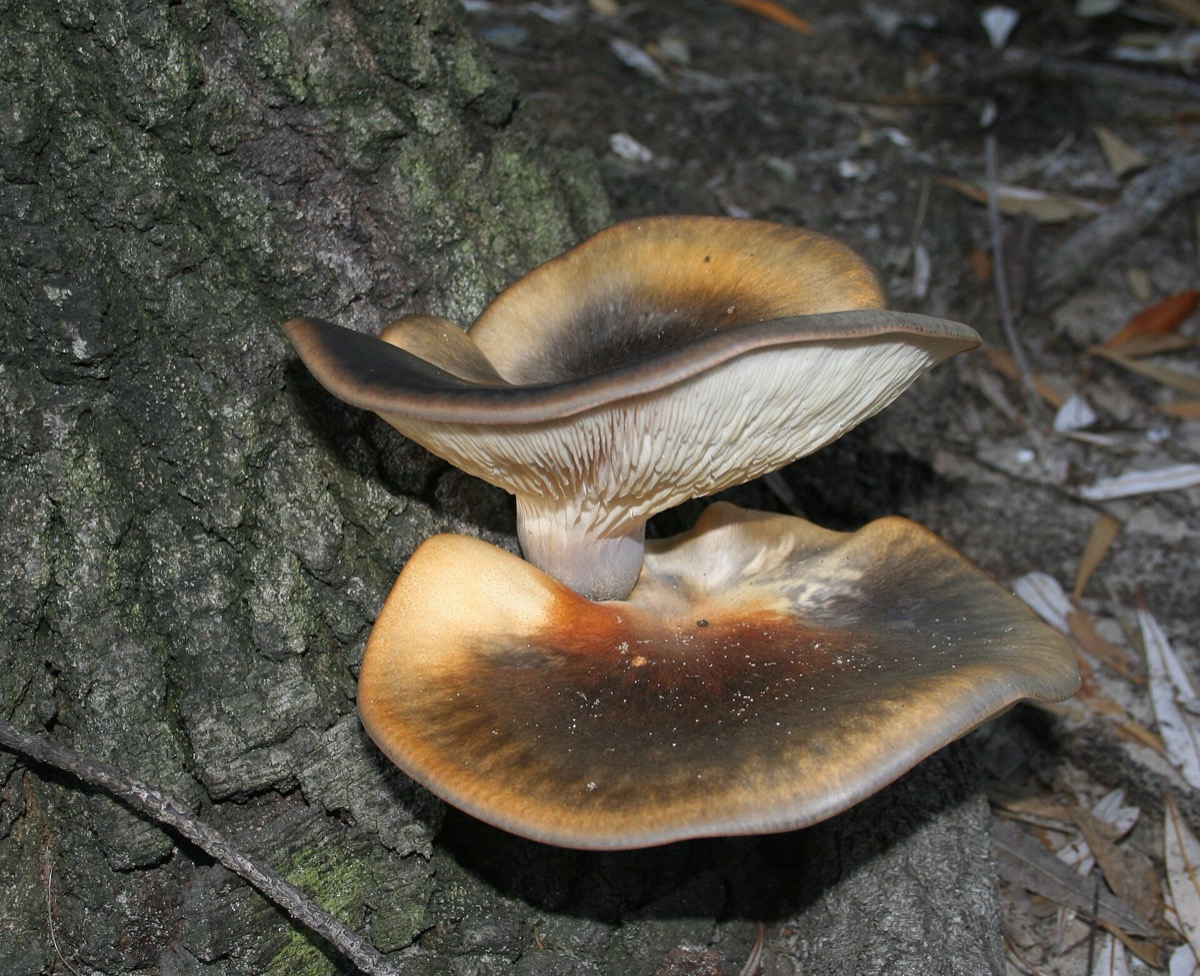 What is a glowing mushroom glowing for?bioluminescence