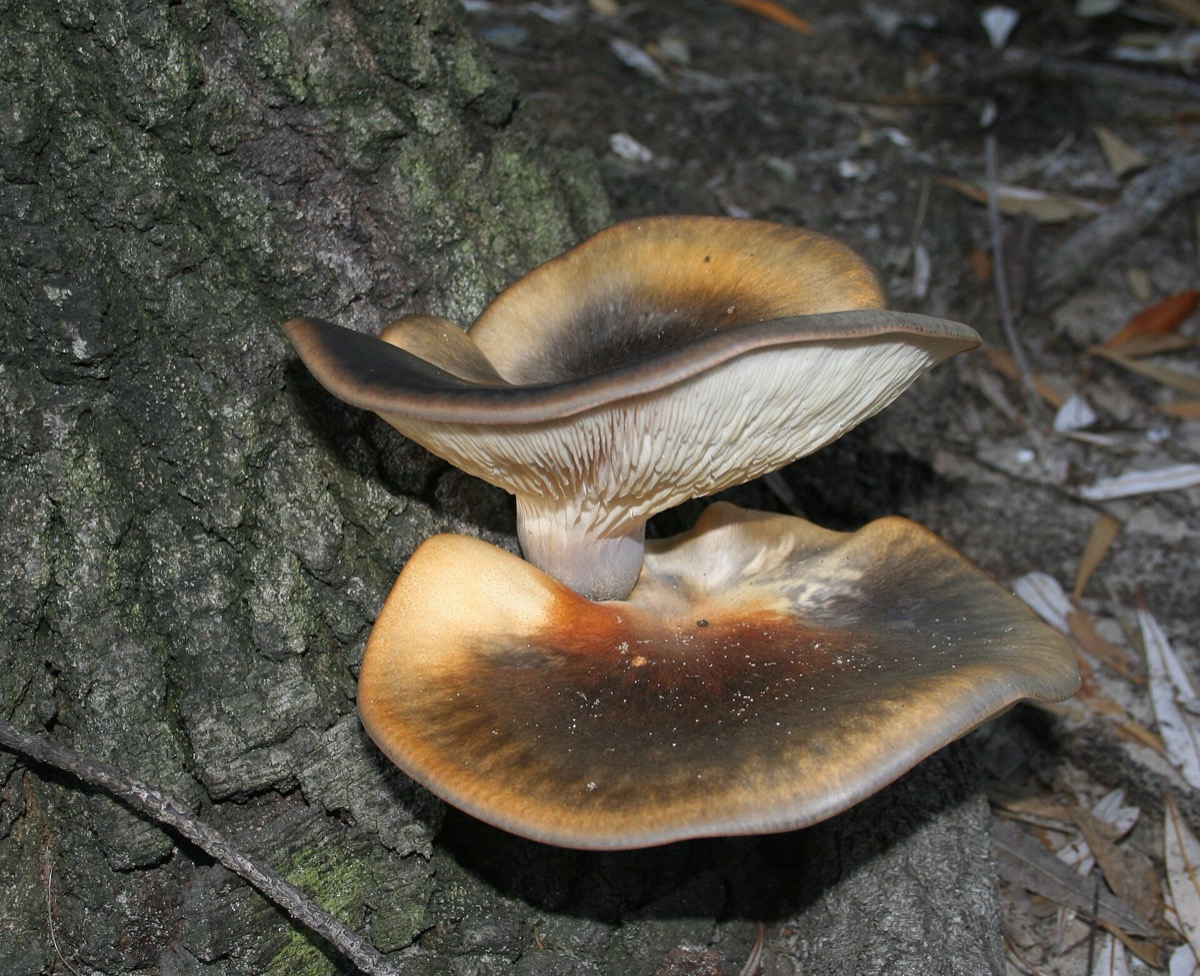
Fungal has been noted since antiquity and the appealing explanation is advertising: a glow that brings in insects, which then carry spores away. Some bioluminescent fungi do attract insects differentially. Weinstein and colleagues asked the same of the Australian , checking when it glows, when insects are about, and whether a glowing specimen pulls anything in. Does the advertisement work?
Three lines of evidence, all pointing away from it. The fruit bodies glowed continuously day and night rather than switching on after dark, and they appear in June and July, when insect abundance is low. Sticky traps baited with fresh glowing fungus, run for four hundred and eighty trap-hours on moonless nights away from light pollution, caught no more insects than the unbaited controls.
Glowing fungi have been remarked on since ancient times and very little work has gone into what the glow is for. The attractive hypothesis is dispersal: the light draws insects at night, insects pick up spores, spores travel. There is evidence that some bioluminescent fungi do differentially attract potential dispersers.
Weinstein and colleagues tested it on the ghost fungus, Omphalotus nidiformis, a widespread Australian species, and went at it from three directions at once rather than one. of the glow, insect abundance at the season the appear, and direct attractiveness of glowing fungi to flying insects.
The first two answers arrive before any trapping. The fruit bodies glowed continuously, day and night, with no switching on at dusk. And they fruit in June and July, Australian winter, when the insects that would carry the spores are scarce.
The trapping agreed. Paired sticky traps, treatment baited with fresh glowing fungus and control unbaited, ran for four hundred and eighty trap-hours in open woodland on moonless nights with no light pollution. Mean insect abundance came out statistically indistinguishable between the two. For this fungus at least, the authors conclude bioluminescence may simply be an incidental by-product of metabolism.
wat. It glows all day, it fruits when the insects are gone, and the traps baited with it caught nothing extra.
wat wat
A negative result on a charming explanation is worth having, and it leaves open the plainer possibility that the light is a by-product rather than a strategy.
How do we know?
Weinstein and colleagues checked the fungus for a circadian rhythm in its glow, recorded insect abundance when the fruit bodies appear, and ran paired sticky traps baited with glowing specimens against unbaited controls.
What is still unknown
One species in one habitat. The authors are careful to say the role of bioluminescence may differ between fungal lineages and with growing conditions such as wind and insect abundance.
Learn something?
Where to next
 Do trees really help each other underground?fungi
 How does a small beetle fire liquid at boiling point?insects
 Do zebra stripes put a fly off from far away, or only up close?insects