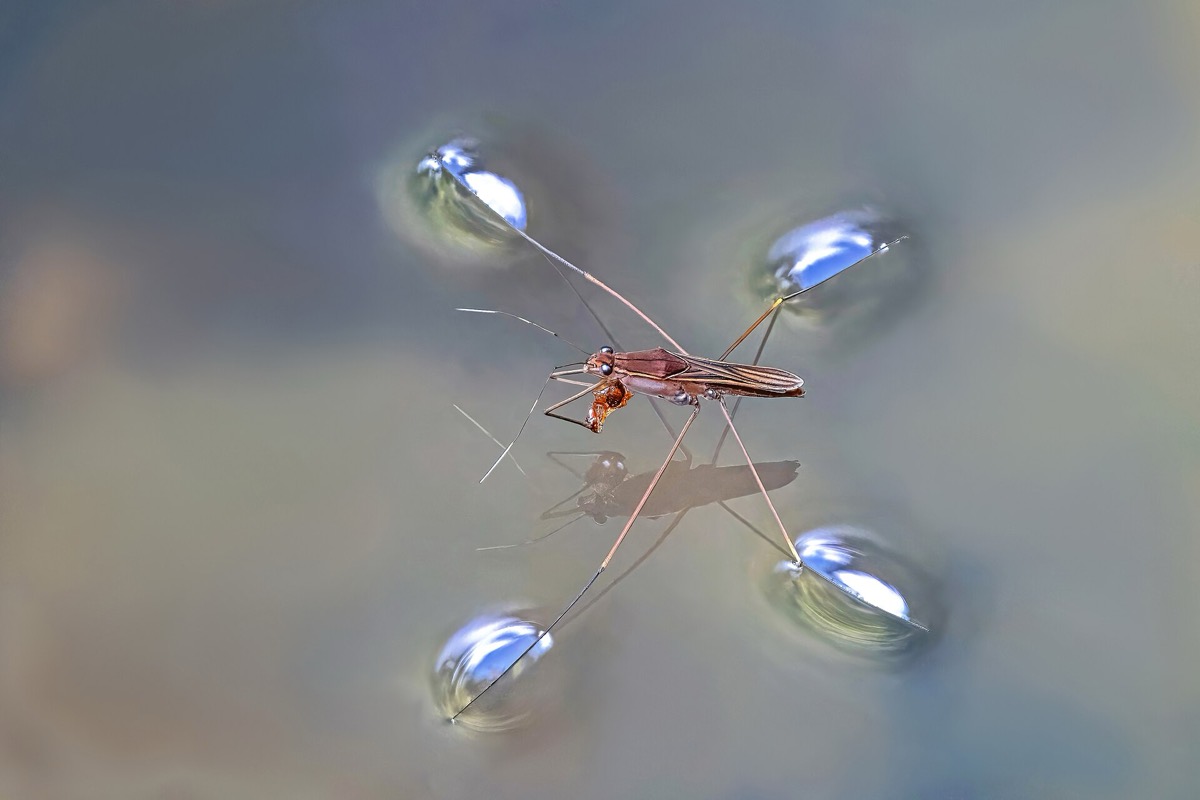
Water-repellent hairs keep a water strider’s legs from wetting, and carries its weight. To move forward it has to push something backward, and the legs hardly break the surface at all. For decades the assumed answer was waves. So what are they pushing?
Vortices, not waves. High-speed video and particle tracking showed the middle pair of legs shedding into the water below the dimples they press into the surface. The water takes backward, and the insect goes forward. That also disposes of a long-standing puzzle, because move their legs too slowly to raise any waves and get around perfectly well.
Surface tension explains why a water strider does not sink, and for a long time it did not explain how one accelerates. The leg barely penetrates the water, so there seems to be nothing solid for it to push against.
The wave account was the standard one, and it broke on its own youngest case. Infant striders cannot move their legs fast enough to generate surface waves at all, which should leave them stuck on the spot. They are not stuck, and that contradiction is what sent people back to the water itself.
High-speed film with particles in the water settled it. The middle leg sweeps backward, deepens the dimple in the surface, and sheds hemispherical vortices underneath it. Those vortices carry water and momentum backward, and conservation of momentum returns the push to the insect as forward thrust.
A self-contained mechanical strider built on the same geometry moved by the same principle, which is the strongest kind of confirmation an explanation like this can get. The balance of forces does shift with size and speed, so this is the central solution for sculling rather than one law for every movement on water.
wat. A water strider rows on vortices it leaves beneath the surface, with legs that never become submerged oars.
wat wat
The insect solved a propulsion problem on the boundary between air and water, and the solution now guides the design of tiny robots that work on a liquid surface.
How do we know?
Hu, Chan and Bush filmed real striders at high speed and tracked particles in the water around the legs, then built a self-contained mechanical strider on the same geometry to test the mechanism.
What is still unknown
The work covered particular species at particular speeds. Very small striders and the leap out of the water involve a different balance of forces.
Learn something?
Where to next
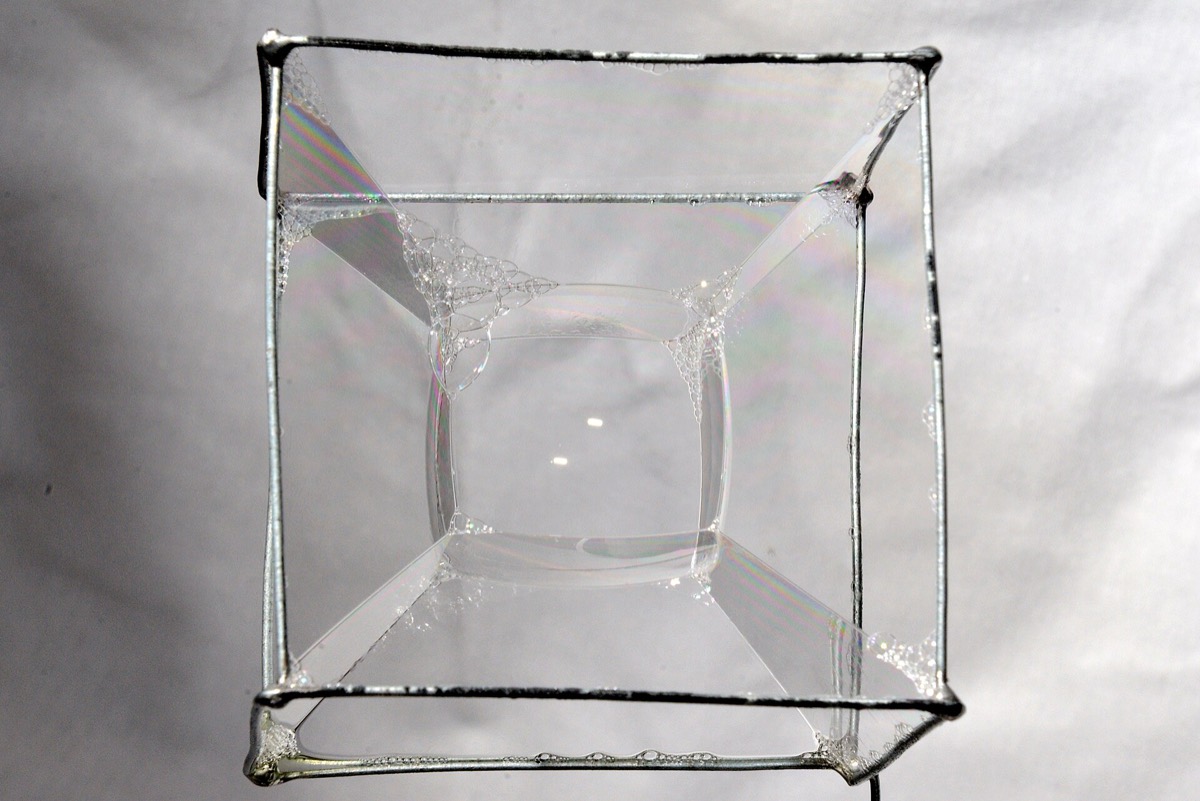 How does a thin film solve a geometry problem without calculating?surface tension
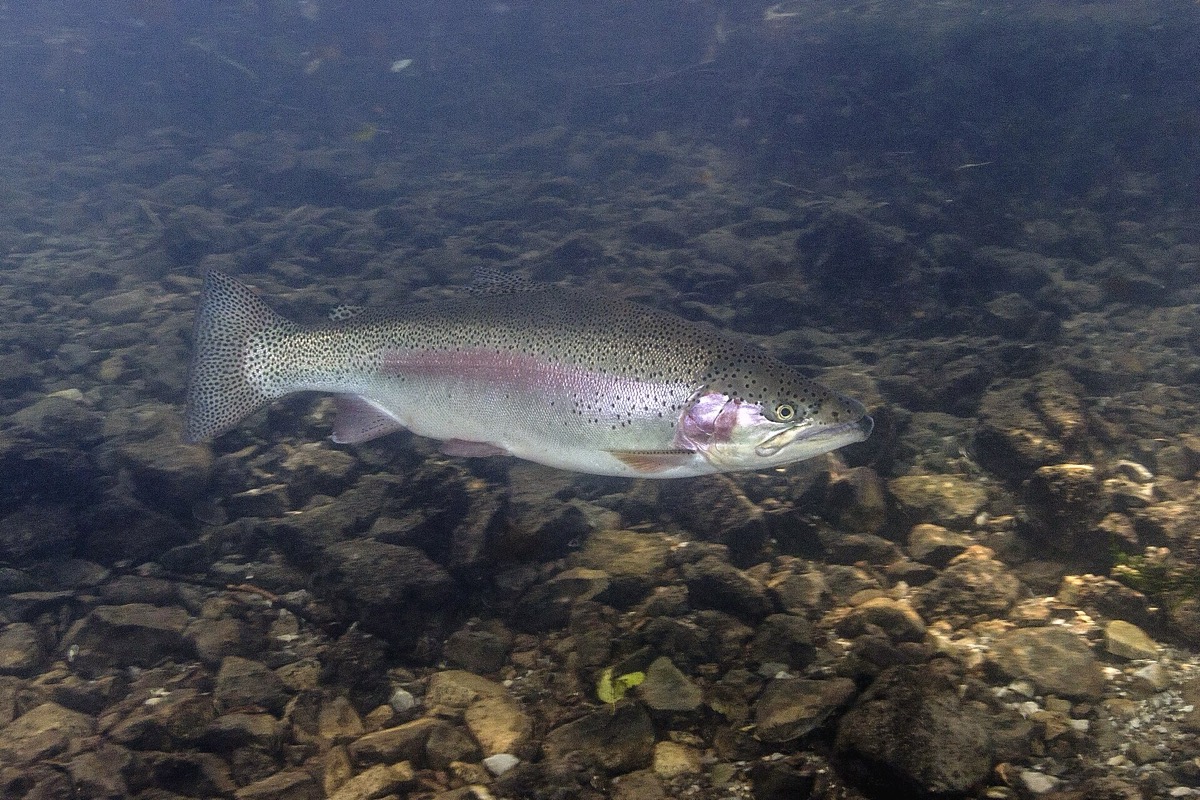 Why would a fish choose the turbulent water over the smooth?vortices
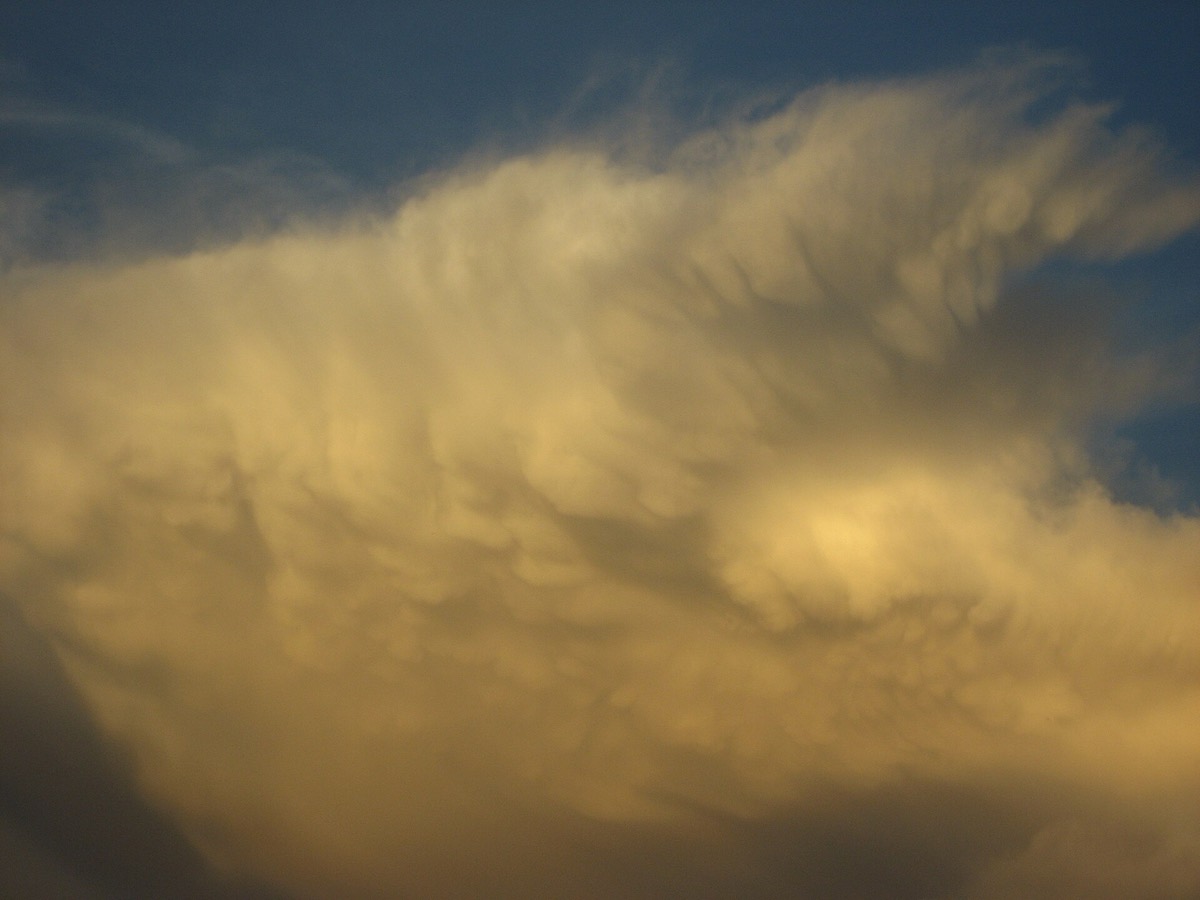 What makes those hanging pouches on the underside of a storm cloud?vortices