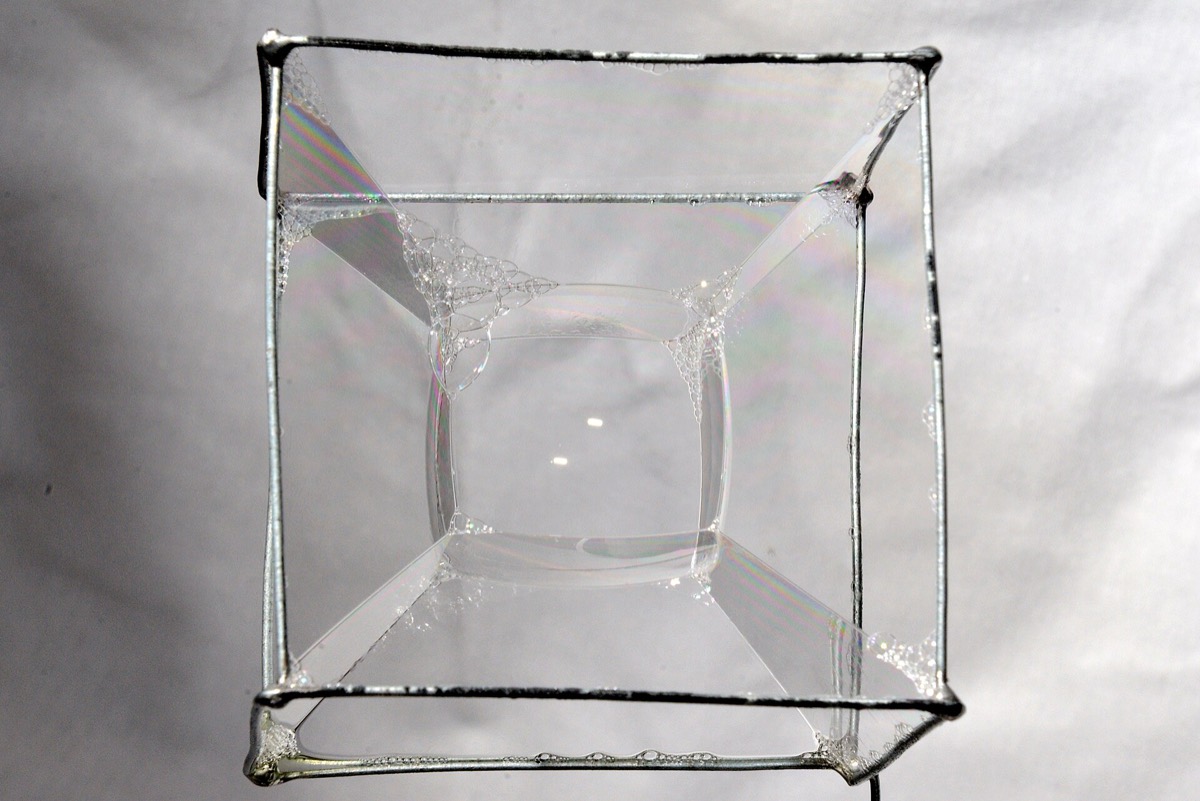
Dip a wire frame in soap solution and you get a film that tries to contract. The boundary is fixed, and every interior point can move, so there is a genuine minimization problem here. How does the film solve it?
By arriving at a balance rather than computing one. pulls along the film until and a locally minimal shape forms. In a cubic frame the films meet at fixed angles and produce surprising surfaces, as though the liquid had worked out a three-dimensional solution.
Every piece of film is pulled toward contraction by surface tension. The frame prevents the boundary from moving, so only the interior points are free to rearrange.
At equilibrium a tiny shift of a point can no longer reduce the area. In geometric language, the mean curvature at every point vanishes. That is why films between frames take saddle shapes rather than only flat sheets.
In complex frames several films meet at fixed angles. Those rules follow from a local balance of forces, and they still produce an overall solution that looks as though the liquid had solved a three-dimensional equation.
The analogy with a computer is limited. The film finds the stable state it happened to reach, which is a , and it is affected by gravity, by pressure and by the way it was dipped. That limitation matters precisely when are used to design structures and materials.
wat. A stretched soap film turns surface tension into an engine that searches for a small, stable surface.
wat wat
Minimal surfaces connect geometry with physics and serve in the design of membranes, lightweight structures and porous materials.
How do we know?
Equations of minimal surfaces predict the shapes, and experiments with wire frames reproduce them and allow the curvature and the stability to be measured.
What is still unknown
The film finds a local minimum rather than necessarily the smallest area of all the possibilities, and gravity and pressure can distort it.
Learn something?
Where to next
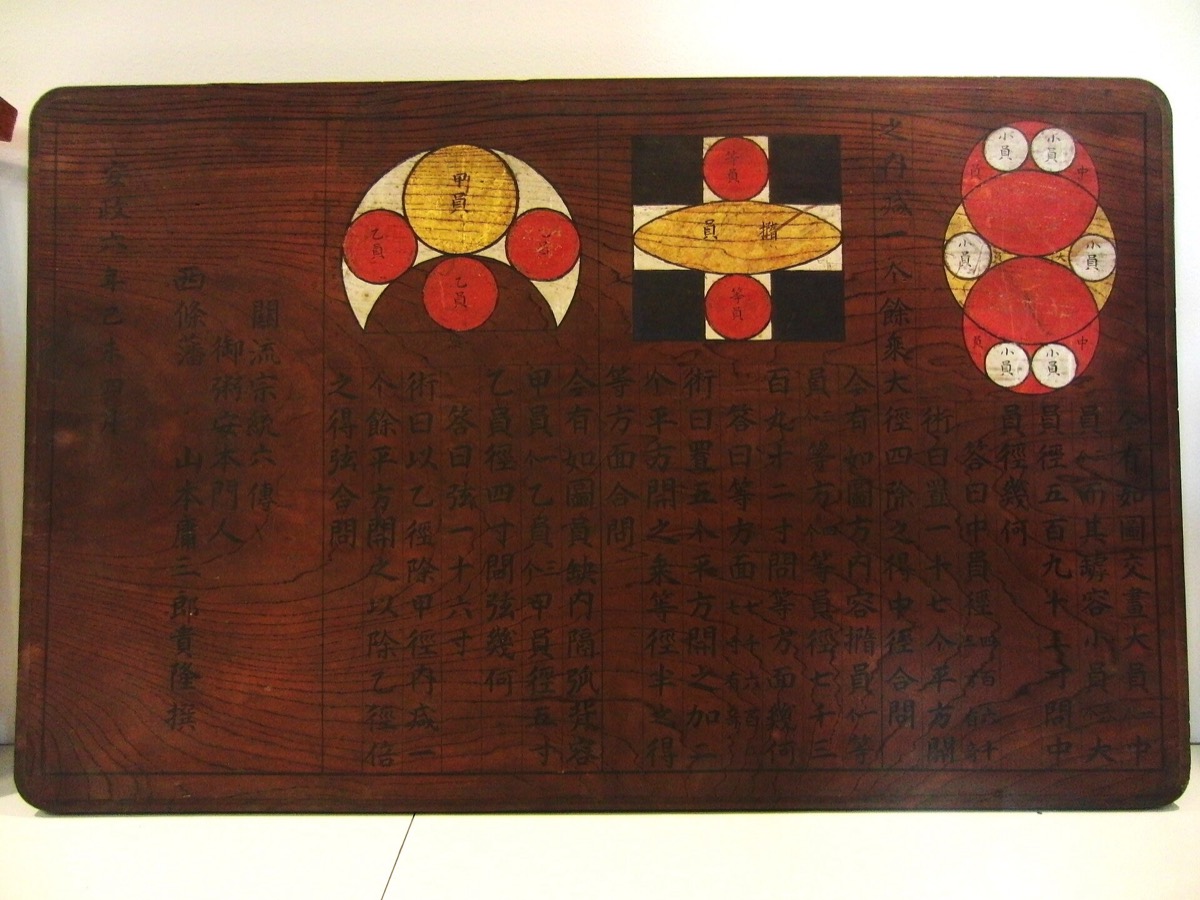 Why were geometry problems hung in temples in Japan?geometry
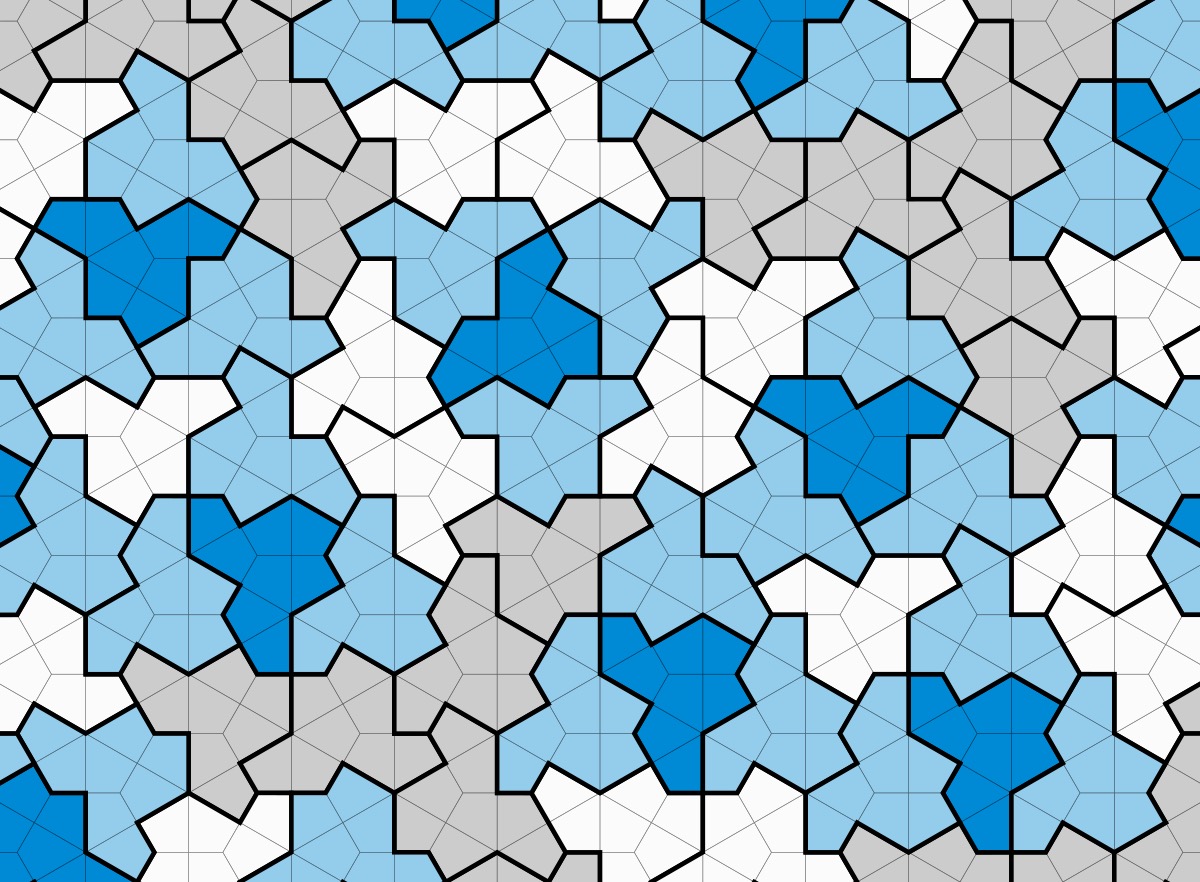 Can one shape tile a floor that never repeats?geometry
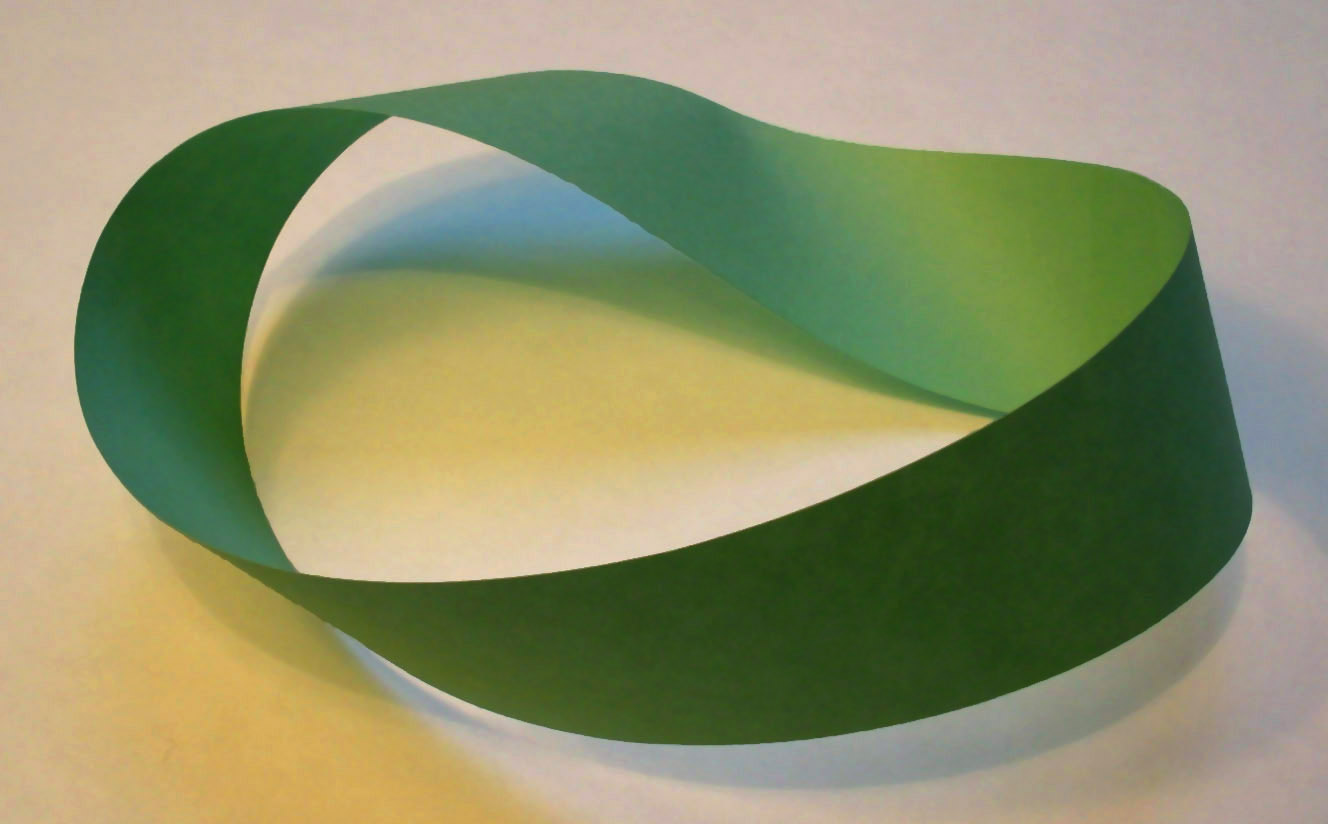 What do you get if you cut a one-sided surface down the middle?geometry