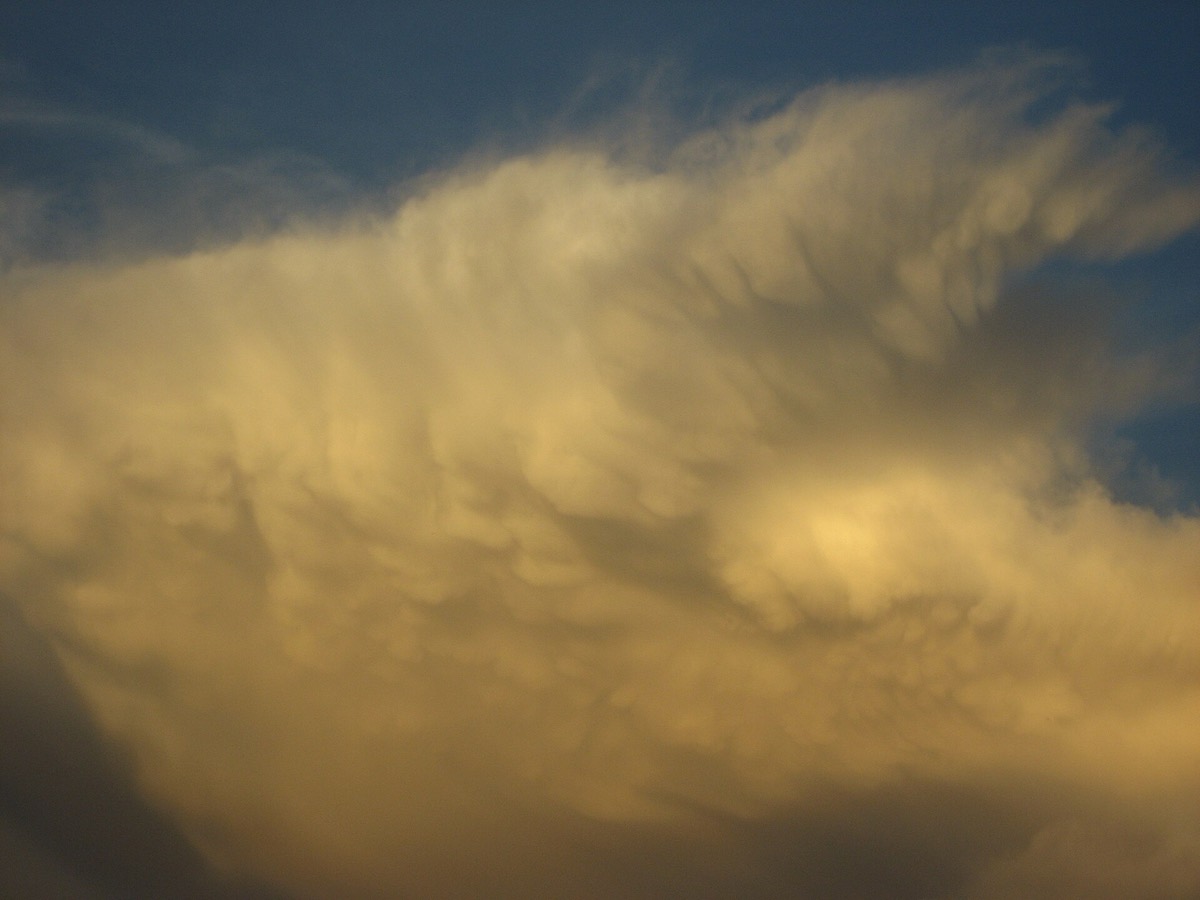
are the sagging pouches that appear under a thunderstorm anvil, and they also turn up beneath cirrus, altocumulus, stratocumulus, jet contrails and volcanic ash clouds. For something this photographed they have almost no quantitative research behind them. A review gathered what exists and listed the proposed mechanisms. The answer is more interesting than a mechanism. How many candidates are there?
At least ten, and none of them tested. The review lists anvil subsidence, subcloud evaporation and sublimation, melting, , cloud-base detrainment instability, radiative effects, gravity waves, and the Kelvin-Helmholtz and among the hypothesized mechanisms. All remain untested, because mammatus are too small in distance and too short in time for adequate validating measurements to exist.
Mammatus clouds are an enigma of atmospheric fluid dynamics and cloud physics. Most commonly observed on the underside of , they also occur beneath cirrus, cirrocumulus, altocumulus, altostratus and stratocumulus, as well as in contrails from jet aircraft and pyrocumulus ash clouds from volcanic eruptions.
Despite their appearance, and how often they are photographed, they have been the subject of few quantitative research studies. The observations that exist came largely through serendipitous opportunities with a single observing system, whether aircraft penetration, visual observation, lidar or radar, or as tangential data from field programs aimed at something else.
That leaves the theory unconstrained. The proposed mechanisms include anvil subsidence, subcloud evaporation and sublimation, melting, hydrometeor fallout, cloud-base detrainment instability, radiative effects, gravity waves, Kelvin-Helmholtz instability and Rayleigh-Taylor instability. Several of them would produce something that looks right.
None has been tested. Adequate measurements for validation do not exist, because mammatus occur over small distance scales and short time scales, and at the time of the review modeling studies were virtually nonexistent. So relatively little is known about the environment, formation mechanisms, properties, microphysics or dynamics of a cloud feature almost everybody has seen.
wat. Ten or more mechanisms have been proposed for mammatus clouds, and none can be tested because the pouches are too small and too brief to measure.
wat wat
It is a clean example of a familiar sight being genuinely unexplained. The obstacle is not interest or theory but scale, since the features are too small and too brief for the instruments available.
How do we know?
Schultz and colleagues reviewed the published observations of mammatus, which came largely from serendipitous single-instrument encounters, and set out the proposed formation mechanisms against what the measurements can support.
What is still unknown
A review rather than new measurement, from 2006, and it reaches no conclusion about which mechanism operates. Modeling studies were virtually nonexistent at the time of writing.
Learn something?
Where to next
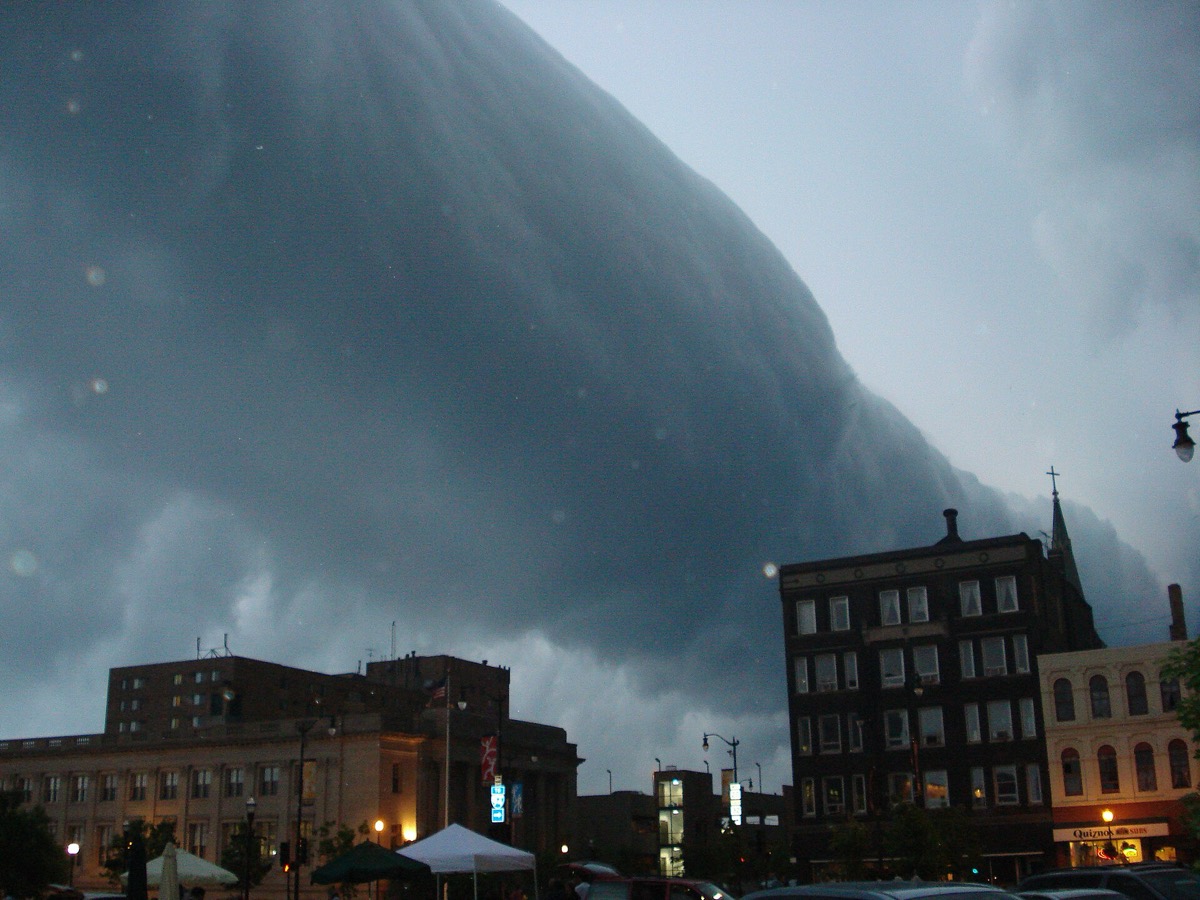 What is the difference between a shelf cloud and a roll cloud?clouds
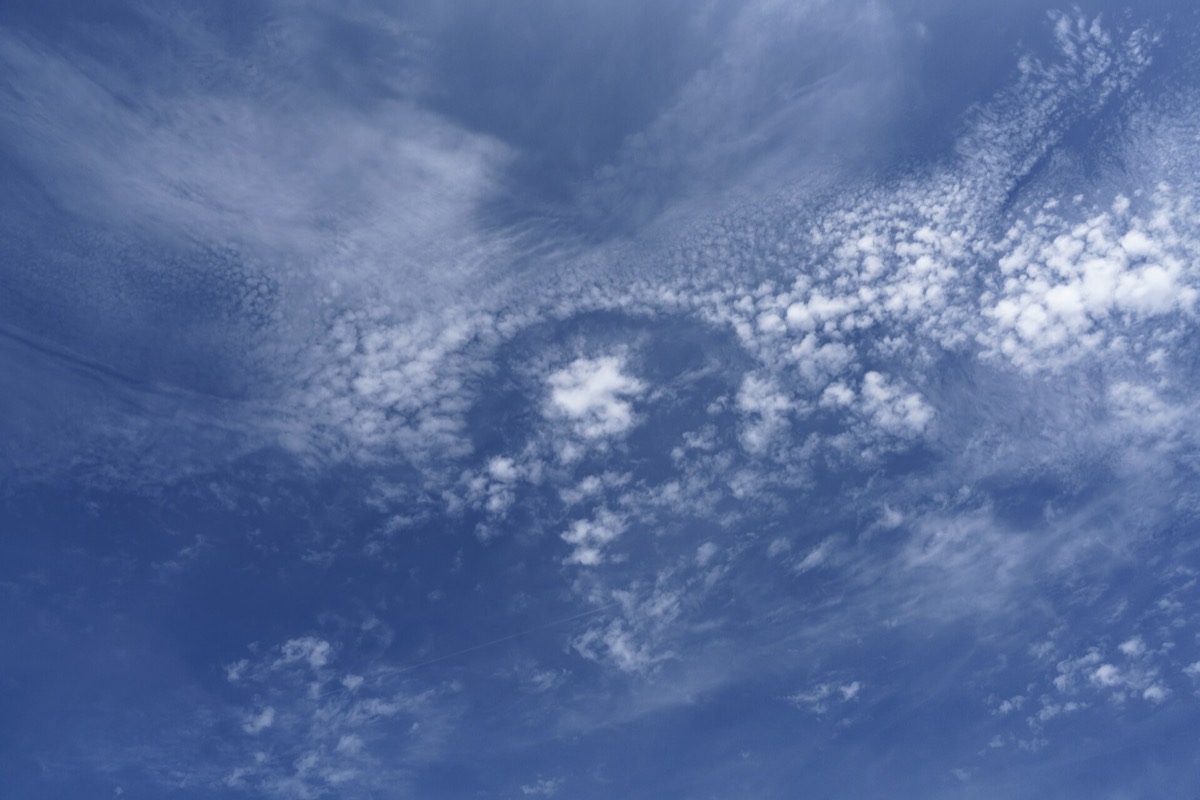 Who punches an almost perfect circle through a layer of cloud?clouds
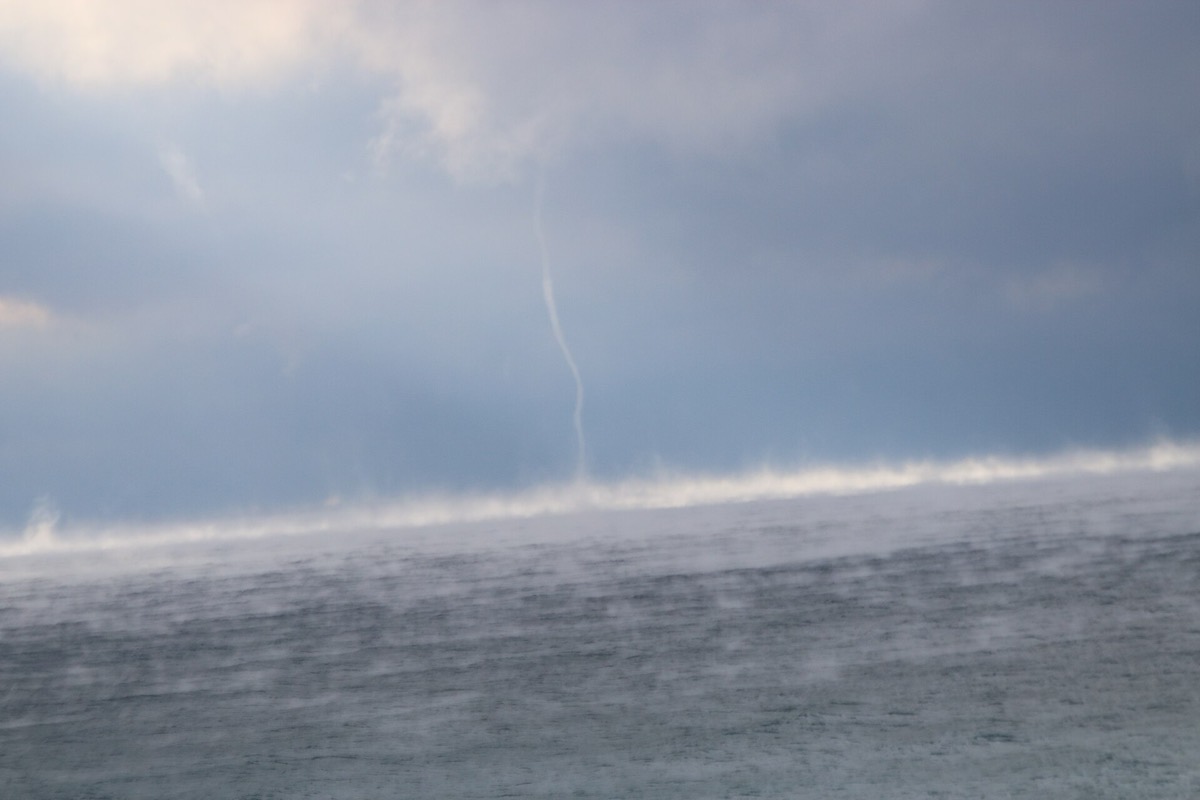 Where in the world do waterspouts actually happen?clouds