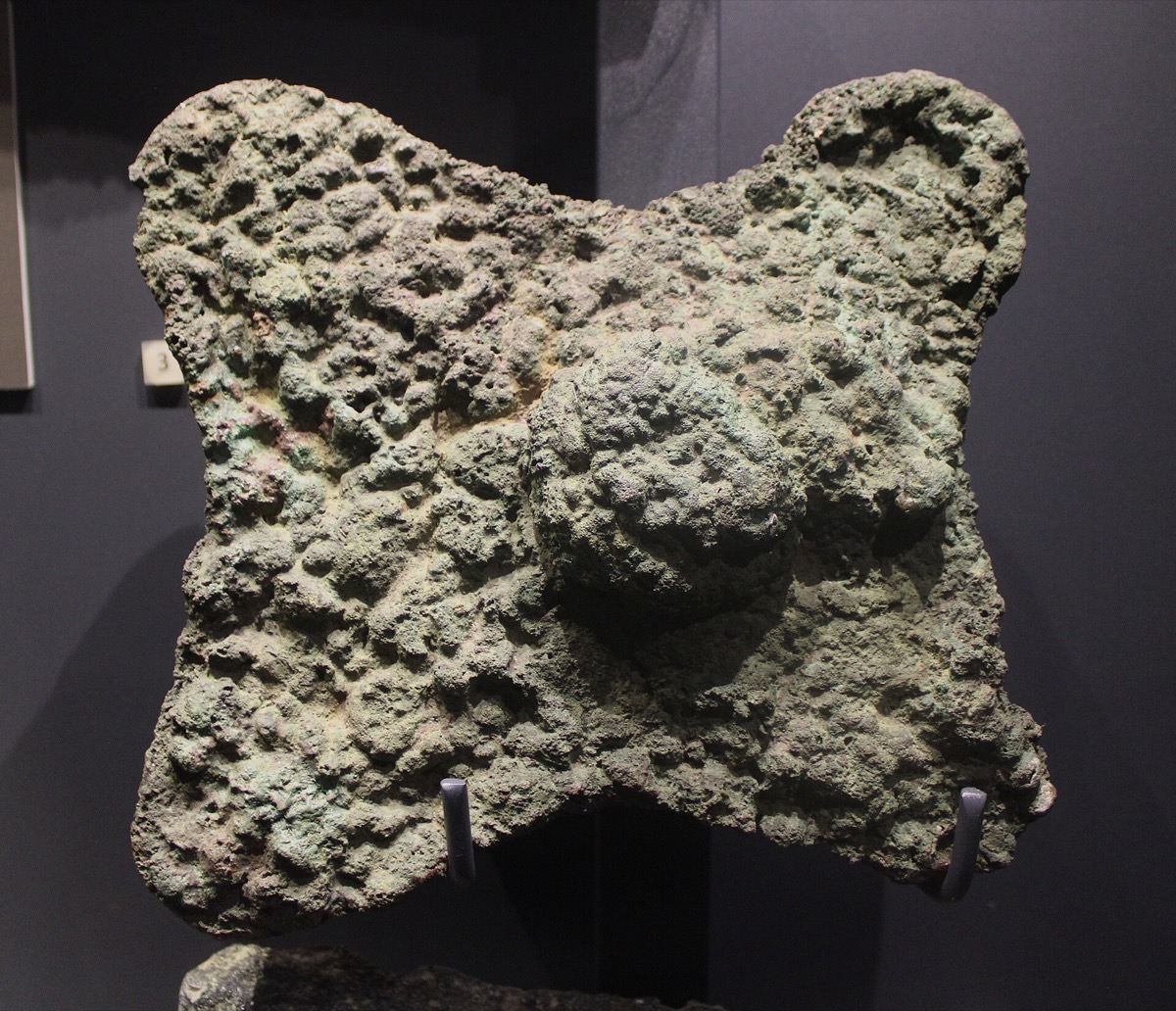
Bronze needs tin, tin is rare, and the Late Bronze Age used it across a continent. A ship that sank off the Turkish coast at Uluburun around 1320 BCE went down carrying ingots of it. Nobody had traced the metal in that cargo to its ores until this analysis.
From two very distant sources at once. Ores from Central Asia, in Uzbekistan and Tajikistan, produced one third of the Uluburun . The remaining two thirds came from the Taurus Mountains of Turkey, from and low-grade mineralization left after heavy exploitation in the Early Bronze Age.
The shipwreck found off the Turkish coast at Uluburun, dated to about 1320 BCE, is among the best-known finds of the Late Bronze Age. This paper provides the first comprehensive sourcing analysis of the tin ingots it carried.
Three methods were combined: , trace element and tin isotope analysis. Together they tie portions of the metal to particular ore sources rather than placing the whole cargo in one region.
The sources turn out to be far apart. Ores from Central Asia, specifically Uzbekistan and Tajikistan, produced one third of the ingots. The other two thirds came from the Taurus Mountains of Turkey, from stream tin and residual low-grade mineralization remaining after extensive Early Bronze Age exploitation.
Read with archaeological and textual data, the authors argue that a culturally diverse, multiregional and system underpinned Eurasian tin exchange in this period. The demonstrable scale of that connectivity reveals a vast and disparate network.
wat. A third of the tin came from Central Asia and two thirds from the Taurus Mountains of Turkey.
wat wat
One wreck shows a supply chain spanning Eurasia, which is a different picture of the period from a map of empires.
How do we know?
Powell and colleagues applied lead isotope, trace element and tin isotope analyses to the ingots, then read the results alongside archaeological and textual evidence.
What is still unknown
This is one cargo on one voyage, and isotopes point to ore sources rather than to the routes or the hands the metal passed through.
Learn something?
Where to next
 Where did the horses people ride today come from?Bronze Age
 What did gladiators drink after a fight?isotopes
 How did meteorites make it possible to measure the age of the Earth?isotopes