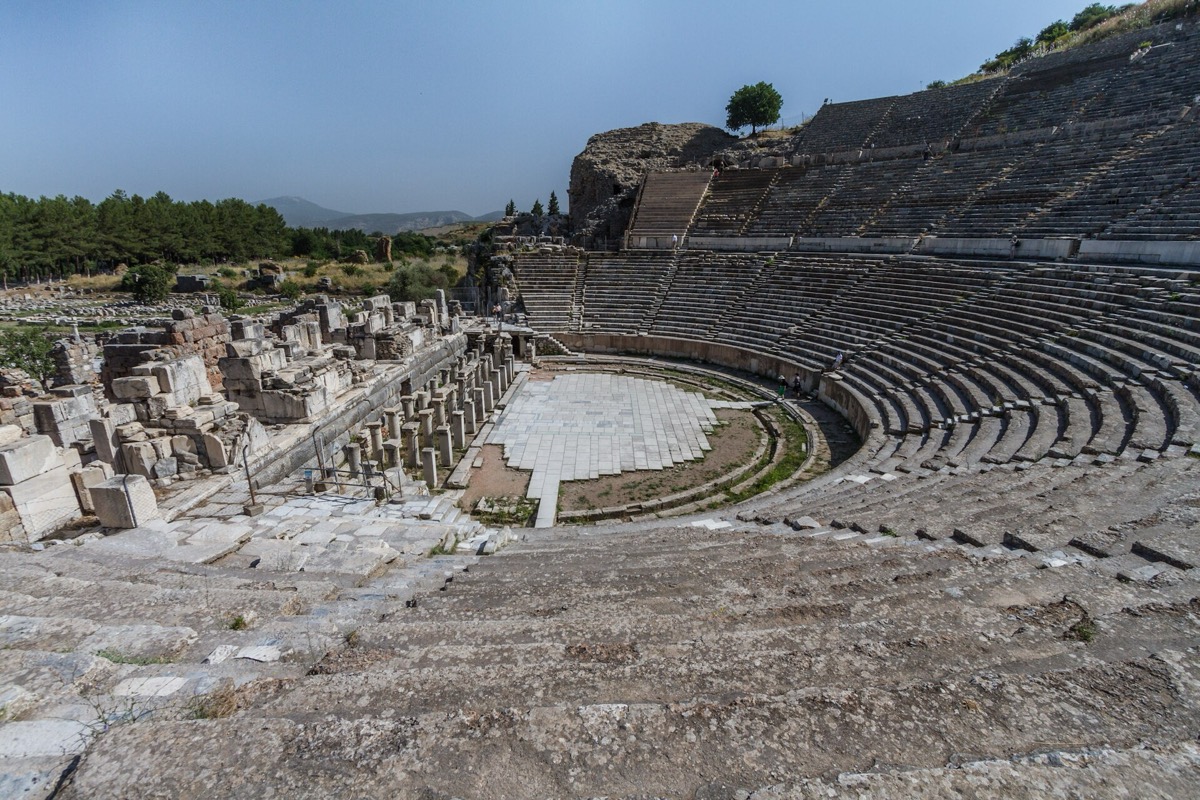
A gladiator cemetery found at Ephesus in 1993 dates to the second and third centuries AD, which gives a rare chance to compare one occupation against the city around it. Bones carry chemistry, not menus. The isotopes said the diet was mostly grain, like everyone else’s. Then came a trace element.
Something that left extra strontium in their bones. The gladiators’ were significantly higher than those of contemporary Roman inhabitants. That ratio reflects the main calcium supplier in a diet, so the authors suggest frequent use of a , which ancient texts mention.
The gladiator cemetery discovered at Ephesus in 1993 dates to the second and third centuries AD. The aim here was to reconstruct diet and social stratification among the inhabitants of Roman Ephesus and the distinct group of gladiators, and to find out who had there.
The measurements are chemical. Stable carbon, nitrogen and sulfur isotope analysis was applied, and the inorganic bone elements strontium and calcium were determined, across 53 individuals including 22 gladiators.
The dietary base came out ordinary. All individuals consumed like wheat and barley as staple food, with a few showing indications of C4 plants. The nitrogen values are relatively low compared with other Roman-era sites, which the authors attribute to frequent consumption of legumes.
The gladiators separate on one measure. Their strontium to calcium ratios were significantly higher than those of the contemporary Roman inhabitants. Since that ratio reflects the main calcium supplier in the diet, the elevated values might suggest frequent use of a plant ash beverage, as mentioned in ancient texts.
wat. The gladiators ate what the city ate and carried far more strontium in their bones.
wat wat
A drink described in Roman texts and long treated as a curiosity turns out to have left a measurable signature in the drinkers.
How do we know?
Lösch and colleagues measured stable carbon, nitrogen and sulfur isotopes plus bone strontium and calcium in 53 individuals from Ephesus, 22 of them gladiators.
What is still unknown
The plant ash beverage is the authors’ suggested explanation for an elevated ratio, not a residue anybody found.
Learn something?
Where to next
 Where did the tin in a Bronze Age cargo come from?isotopes
 How did meteorites make it possible to measure the age of the Earth?isotopes
 Did a nuclear reactor ever start without people?isotopes