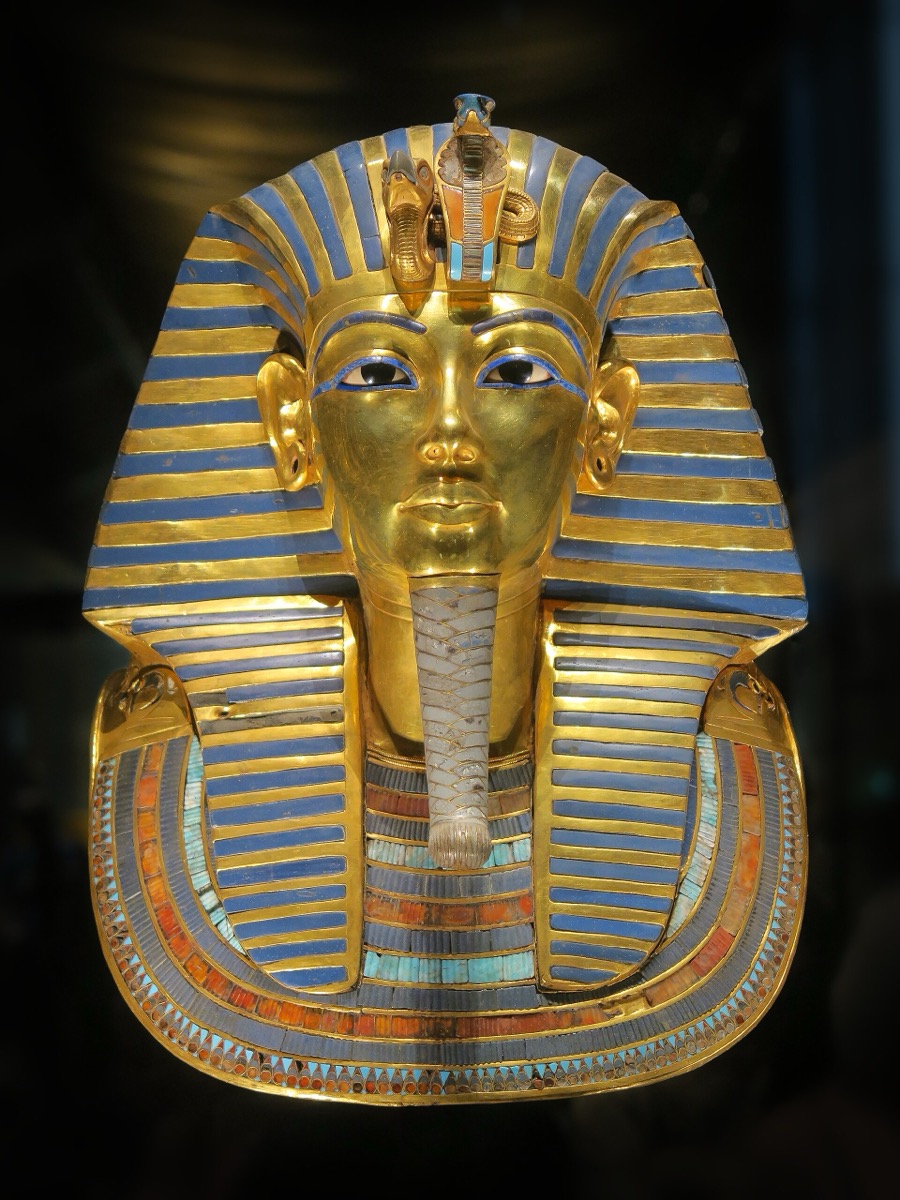
In early nineteen eighteen, Carter’s workmen uncovered a group of ancient workmen’s huts in the , undisturbed, forty feet from a known cache tied to Tutankhamun. Nobody had broken through the flood debris beneath them since the second millennium BCE. It was the perfect place to look for an intact tomb. Carter left it alone and worked elsewhere for five seasons. Why?
He may have been saving it. Carter later said digging under the huts would have cut off visitor access to the popular tomb of Ramses VI. The other explanation is that he knew how promising the site was and kept it in reserve against the day his patron’s enthusiasm for funding flagged. By nineteen twenty-two Carnarvon had invited him to Highclere intending to end the partnership, and Carter finally told him about the spot.
Carter came to Egypt as an artist. His father painted animal portraits for local clients, and through him Carter met the Egyptologist Percy Newberry. In eighteen ninety-one Newberry arranged for the seventeen-year-old to travel out and record artwork being uncovered in tombs and temples. He learned rigorous method from Flinders Petrie, who more or less invented archaeology as a science.
Getting to untouched ground in the Valley of the Kings was mostly haulage. Carter borrowed a railway track with hand-pushed trucks, and his team of local workmen and boys filled baskets with picks and hoes thousands of times a day, clearing hundreds of square feet. The waste was so fused with natural soil that they watched for charcoal and fish bones to tell disturbed layers from untouched ones.
had given up the digging rights in nineteen fourteen, declaring the valley exhausted. Then in early nineteen eighteen Carter’s team hit the workmen’s huts: nineteenth-dynasty, undisturbed, in front of the tomb of Ramses VI and only forty feet from the cache. Nothing had penetrated the flood debris beneath them for three thousand years. Carter worked elsewhere for five depressing seasons instead, finding a few foundation deposits and a cache of thirteen alabaster vases. The Egyptologist John Romer later noted that most of Carter’s activity in the valley was of this type, aimed at settling scholarly questions about dating and origin.
By nineteen twenty-two Carnarvon was tired of funding so little reward and of the jokes of other Egyptologists, and invited Carter to Highclere to end it. Carter told him about the site beneath the huts, and probably also about Winlock’s new reading of the KV55 jars as Tutankhamun’s . In October of nineteen twenty-two, with Carnarvon’s support, Carter returned for one final season.
wat. He found the best place to dig in nineteen eighteen and did not dig it until the money was about to run out.
wat wat
The myth has a lone genius following a hunch. The archive has a careful excavator checking unglamorous ground for five seasons and managing a sponsor who was losing patience.
How do we know?
Jo Marchant’s account for Smithsonian Magazine works from Carter’s own notebooks, sketches, diaries and diagrams held in the Griffith Institute archive at the University of Oxford.
What is still unknown
Carter’s motive for the delay is not recorded. The article offers his stated reason and an alternative, and treats both as possible.
Learn something?
Where to next
 What was found in the village where the pyramid builders lived?excavation
 What were ancient Egyptians doing when they played senet?egypt
 How do you find a color that has worn away?egypt