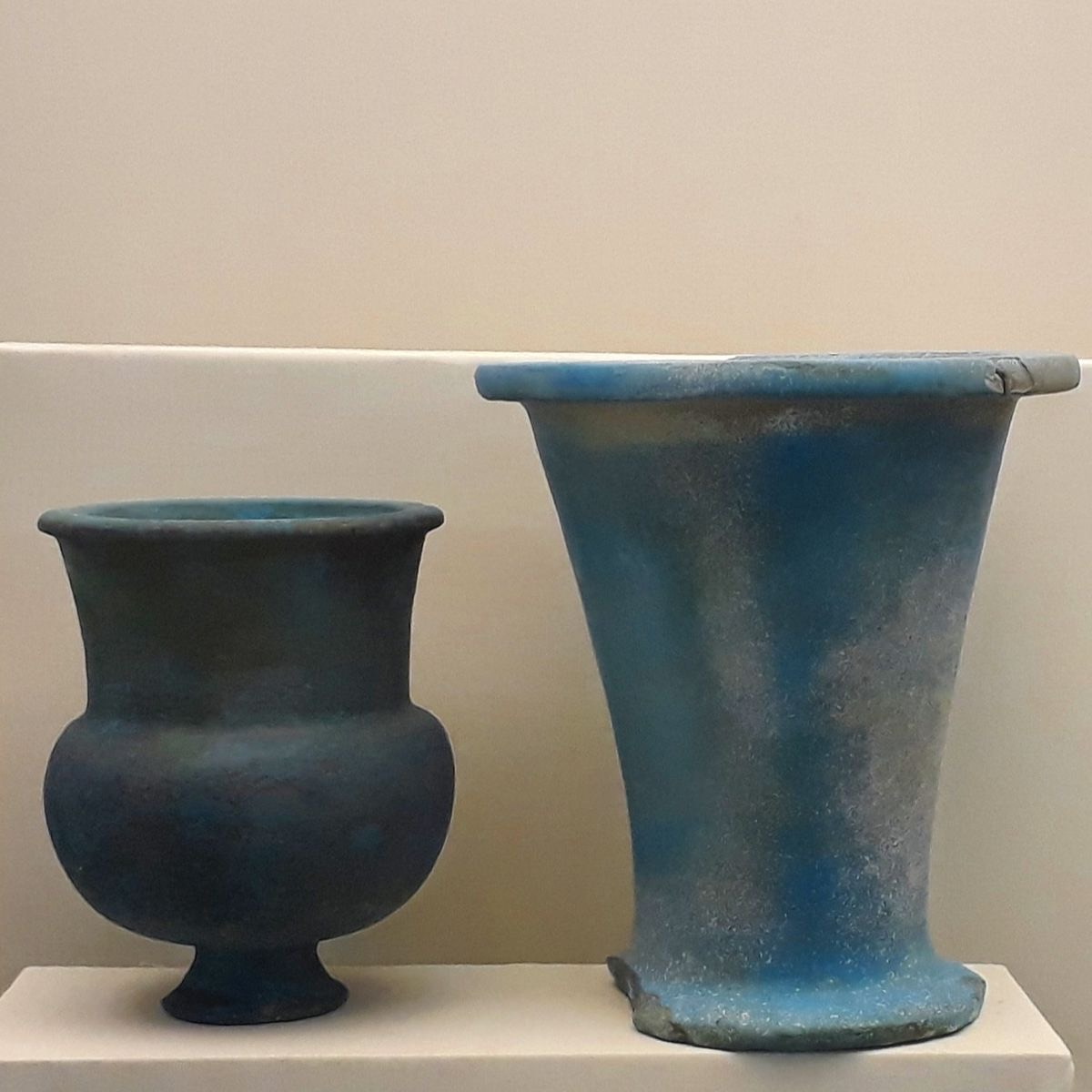
Painted limestone reliefs from the , excavated by Flinders Petrie between nineteen oh eight and nineteen ten, survive as fragments in Copenhagen. What remains of the paint is patchy, and sampling a sculpture weighing about a thousand kilograms is not something anybody wants to do often. One of the pigments on them has an unusual property. What is it?
re-emits light in the infrared. The artificial pigment absorbs visible radiation and gives it back as infrared between eight hundred and a thousand nanometres, peaking around nine hundred and ten. Photograph the object under visible light with an infrared-sensitive camera and a visible-blocking filter, and any Egyptian blue on it lights up, even where a human eye sees nothing.
The fragments come from the Palace of Apries in Egypt, excavated by Flinders Petrie between nineteen oh eight and nineteen ten and now in the Ny Carlsberg Glyptotek. Knowledge of painting from the Third Intermediate and Late Periods is thin, and what exists mostly covers coffins and papyri from temples and tombs. A secular building is a gap, which is why these were worth the trouble.
The obstacle is sampling. One capital weighs about a thousand kilograms, so moving it to the analytical facility was unnecessarily hazardous. The investigation therefore leaned on non-invasive methods: microscopy, photographic techniques and micro X-ray fluorescence, with samples taken only where compositional questions resisted every other approach.
does the mapping. Egyptian blue absorbs visible radiation and re-emits it as infrared in the eight hundred to one thousand nanometre range, peaking around nine hundred and ten. An infrared-sensitive camera behind a visible-blocking filter therefore records it alone. On one capital the images show bright coherent luminescence on the base and between the palm leaves, with weaker emission in veins radiating from the midribs, indicating smaller but still considerable amounts.
The pigments identified were mainly lead-antimonate yellow, lead-tin yellow, , atacamite, gypsum or anhydrite, and Egyptian blue. Both of the lead yellows are new to ancient Egyptian painting, and are the earliest known examples of those pigments anywhere. Gas chromatography in the companion paper had found no organic pigments at all, so what survives here is entirely inorganic, which is also why it survived.
wat. Shine ordinary light at it, photograph it in the infrared, and a pigment nobody can see reappears.
wat wat
The method is non-invasive and maps a whole surface at once, which is what you need when the object is fragile, enormous and already nine tenths lost.
How do we know?
Hedegaard and colleagues examined the fragments with visible-induced luminescence imaging, micro X-ray fluorescence, laser ablation mass spectrometry, micro X-ray powder diffraction and infrared spectrometry.
What is still unknown
Luminescence identifies Egyptian blue and nothing else. Everything else on these fragments had to be pinned down by sampling or by other instruments, and some compositional questions needed a sample anyway.
Learn something?
Where to next
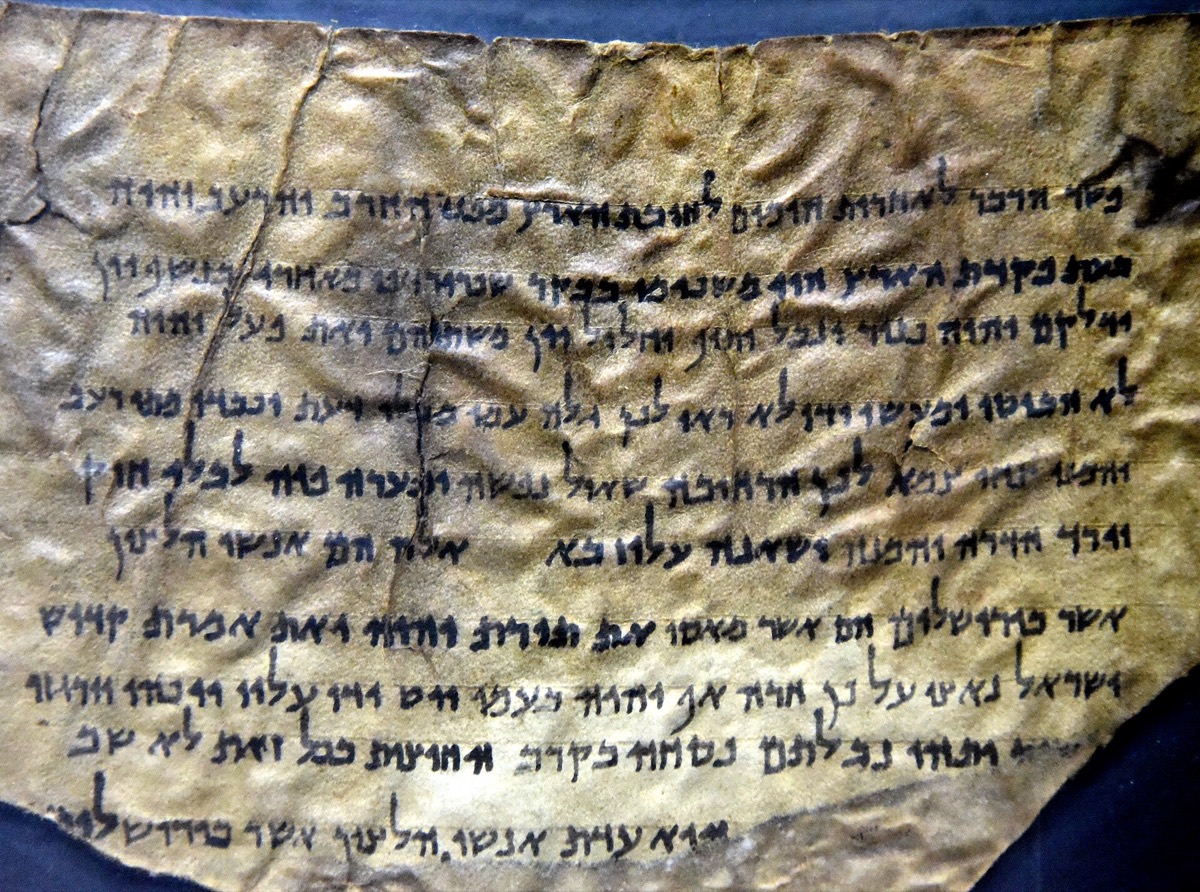 How do you let everyone see a manuscript without anybody handling it?imaging
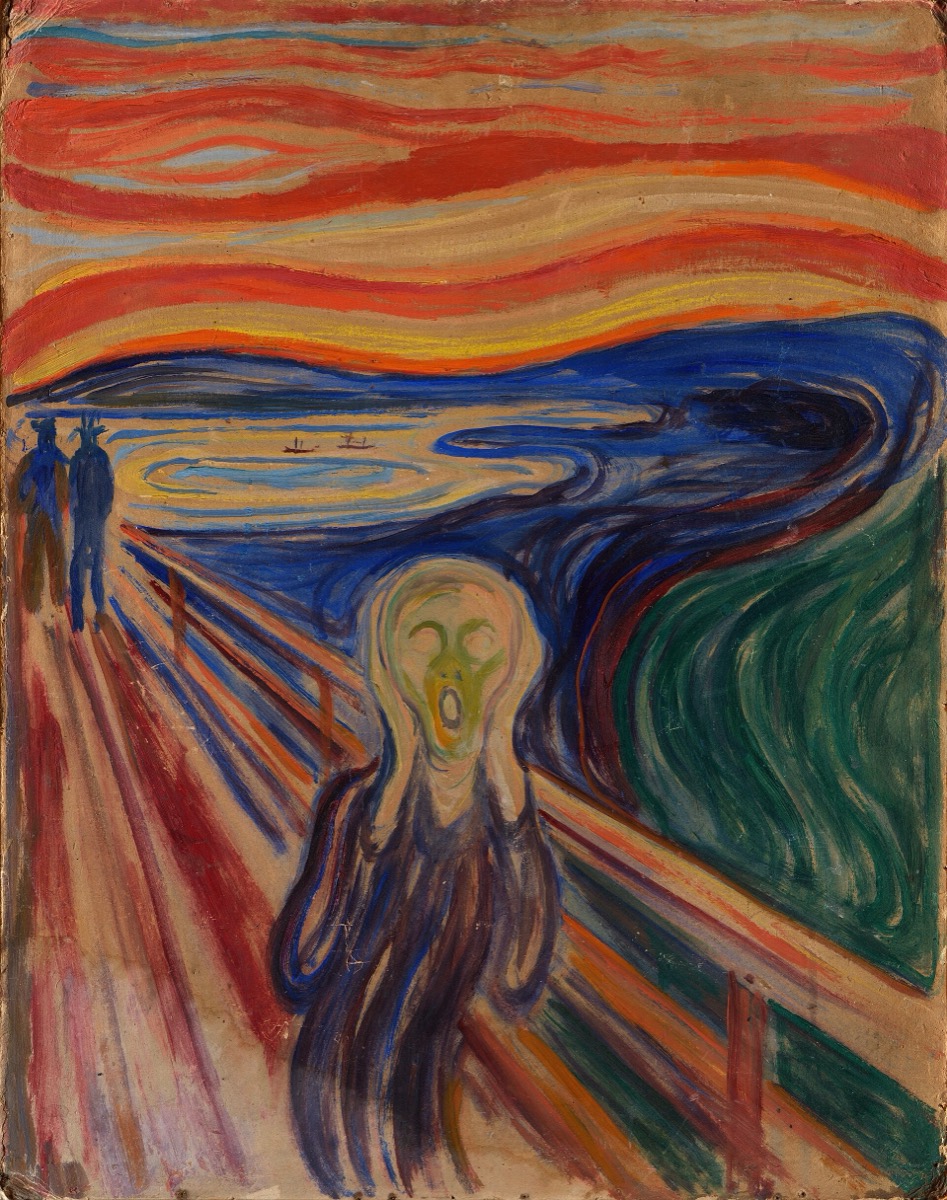 What is actually fading The Scream?conservation
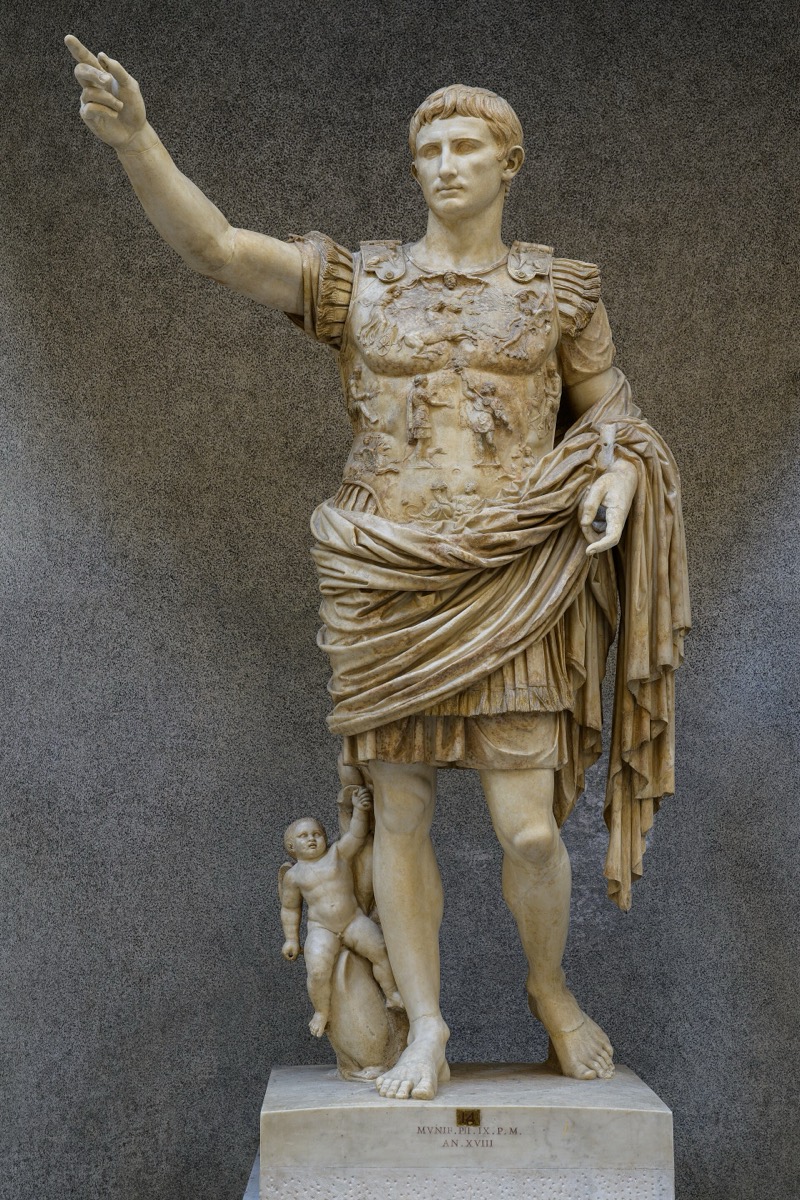 How do you find paint that is no longer there?imaging