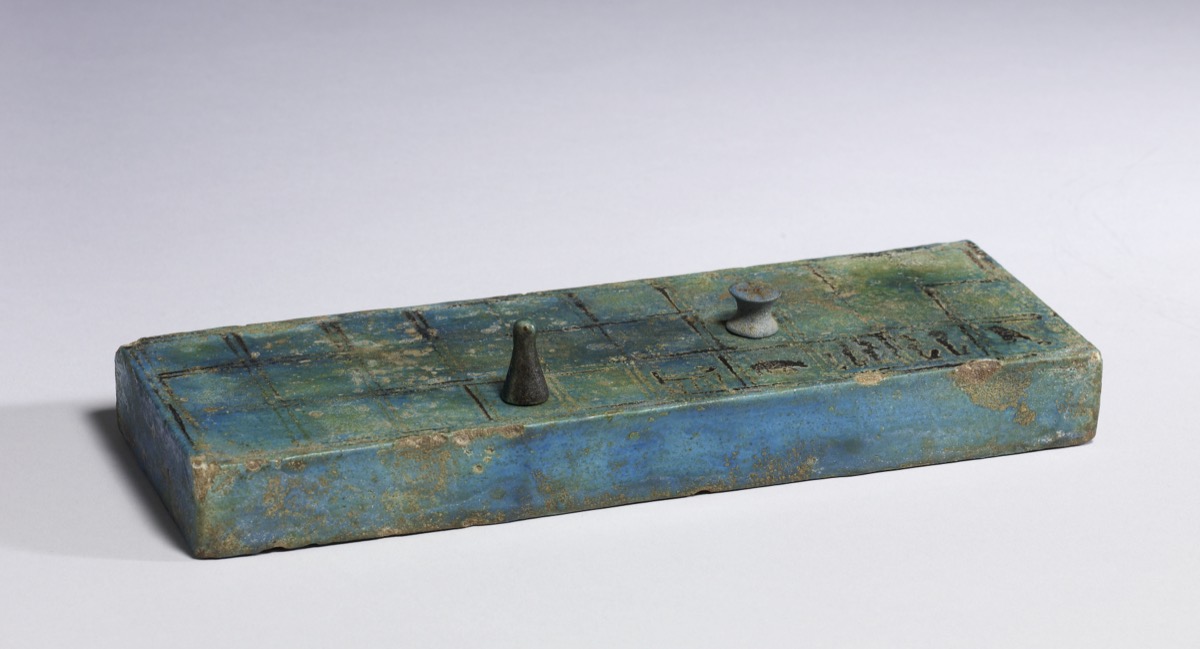
Egyptians enjoyed board games and most of all. The name means passing. A board holds thirty squares and the game took fourteen pieces, spool-shaped and cone-shaped, with standing in for dice. During the eighteenth dynasty something happened to it that does not usually happen to board games. What changed?
It acquired religious significance. The game was transformed into a simulation of the soul’s journey through to achieve immortality, so the board a family played on in the evening modeled what they expected to happen after death. The mechanics did not change to suit that: throw sticks still determined the moves, and winning still required both skill and luck.
Egyptians enjoyed playing board games, and senet above all. The name translates as passing. A board of thirty squares needed fourteen game pieces, in spool and cone shapes, and the moves were determined by throw sticks, which work much as dice do.
Then its meaning shifted. During the eighteenth dynasty the game acquired religious significance, which transformed it into a simulation of the soul’s journey through the underworld to achieve immortality. Nothing about the equipment had to change for that to happen.
What is striking is what was left alone. Winning still required both skill and luck, so the model of the journey to immortality kept its element of chance. The game was not redesigned into a test of virtue or knowledge once it took on the heavier meaning.
This particular board is glazed Egyptian from the New Kingdom, between thirteen hundred and seven and ten hundred and seventy BCE. An inscription names its owner: Nesi-amun-ipet, a priest of Amun at the Temple of Amun-Re. The board came out of the Rev. William MacGregor collection sale in London in nineteen twenty-two and reached the Walters by bequest in nineteen thirty-one.
wat. They kept the dice. The route to immortality was a board game you could lose on a bad throw.
wat wat
A game of chance recast as a model of the afterlife leaves the chance in place, which says something uncomfortable about how its players expected the journey to go.
How do we know?
The Walters Art Museum’s record for a New Kingdom senet board in Egyptian faience describes the game, its religious turn, the equipment it needed and the inscription it carries.
What is still unknown
A catalogue record for one board from one period. It describes what senet became in the eighteenth dynasty rather than tracing how the religious reading spread or how literally anybody took it.
Learn something?
Where to next
 Why did Howard Carter wait five years to dig the most promising spot he had?egypt
 How do you find a color that has worn away?egypt
 Was an ancient Egyptian artificial toe a real prosthesis or a funeral prop?egypt