
A migrating animal can read two things off the earth’s field: a direction, like a compass, and a position, like a map. The leading guess about the hardware is , since a brief strong pulse that would flip the magnetism of a crystal also disturbs how several animals orient. Which of the two senses the pulse hits has been hard to tell apart. Mackiewicz and colleagues ran the test on loggerheads in an assay that uses the map and not the compass. Which sense breaks?
The map. Loggerhead turtles trained on a that requires magnetic position information, and not magnetic direction, stopped responding correctly after a . Because the assay cannot be solved with a compass, the disruption has to land on the itself. That is consistent with the map resting at least partly on magnetite-based magnetoreceptors rather than on some other mechanism.
Two separate abilities hide inside the phrase magnetic sense. A compass gives direction, which is enough to hold a heading. A map gives position, which is what lets an animal taken far off course work out where it has ended up and head back.
The leading mechanism on offer is magnetite, crystals of iron oxide embedded in tissue. The supporting evidence has largely come from magnetic pulses: a brief, strong field capable of reversing the magnetic moment of such a crystal, which disturbs the orientation behavior of several animals.
The trouble is interpretation. A disturbed animal might have lost its heading or lost its position, and most orientation experiments cannot tell those apart, so the pulse results have been suggestive without being decisive.
Mackiewicz and colleagues used a conditioning assay with loggerhead sea turtles that requires magnetic map information and specifically does not require the compass. A magnetic pulse disrupted the turtles’ responses on that task. Since a compass cannot solve it in the first place, the damage falls on the map sense, which supports a map built at least partly on magnetite-based magnetoreceptors.
wat. A pulse strong enough to flip a crystal left the turtle’s direction sense alone and took out its sense of where it was.
wat wat
Magnetic sensing has resisted explanation for decades partly because nobody could say which of its two jobs an experiment was interfering with. This separates them.
How do we know?
Mackiewicz and colleagues conditioned loggerhead sea turtles on an established assay that demands magnetic map information, applied a brief strong magnetic pulse, and compared responses afterwards.
What is still unknown
A pulse is a blunt instrument, and disrupting a behavior does not identify a receptor. The result is consistent with magnetite without locating a single cell that contains it.
Learn something?
Where to next
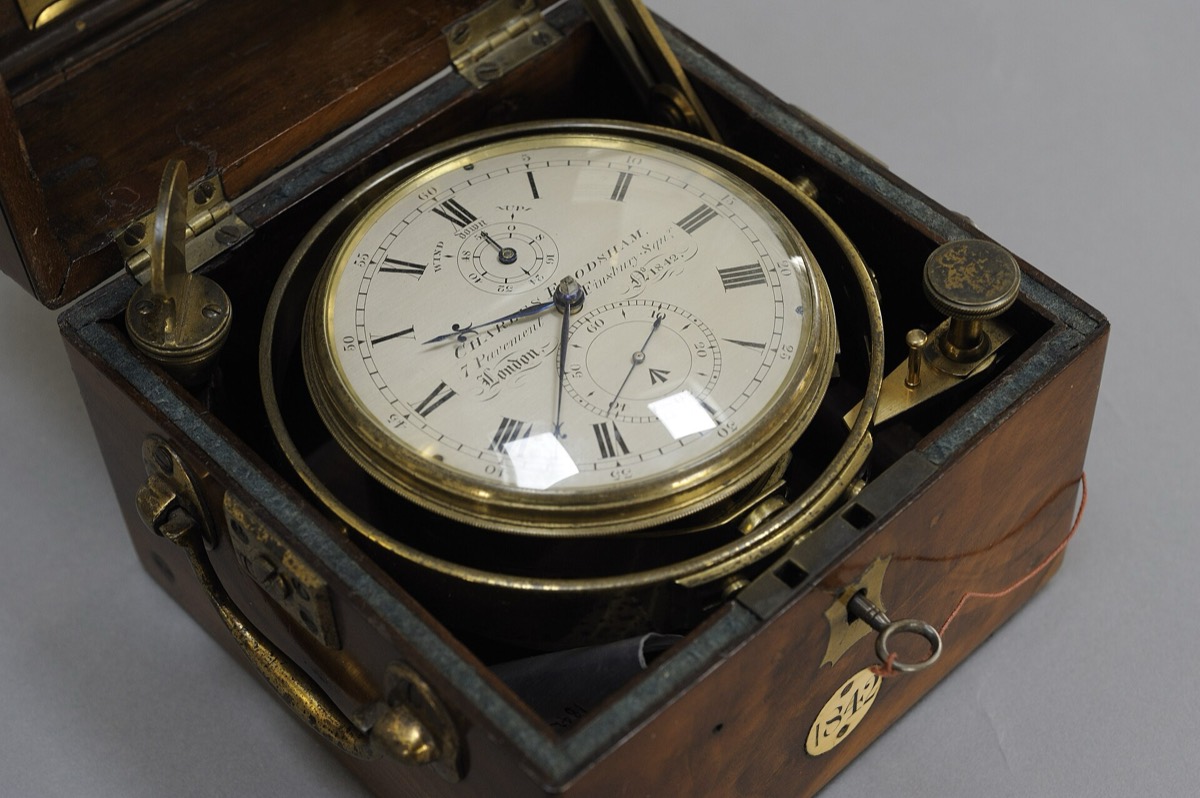 Which problem sank whole ships until one clock was invented?navigation
 Why does living near water seem to be good for you?sea
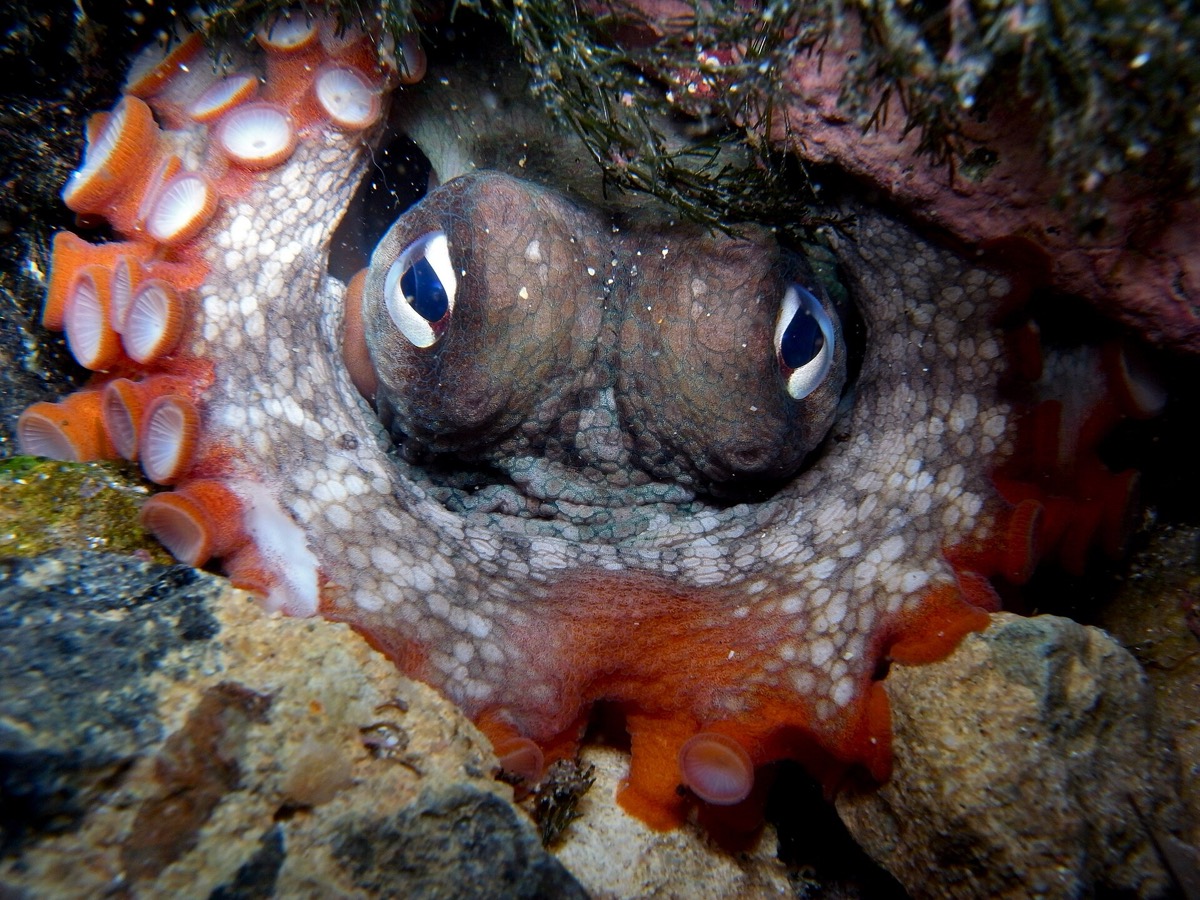 Is an octopus throwing silt at a neighbor, or just tidying up?sea