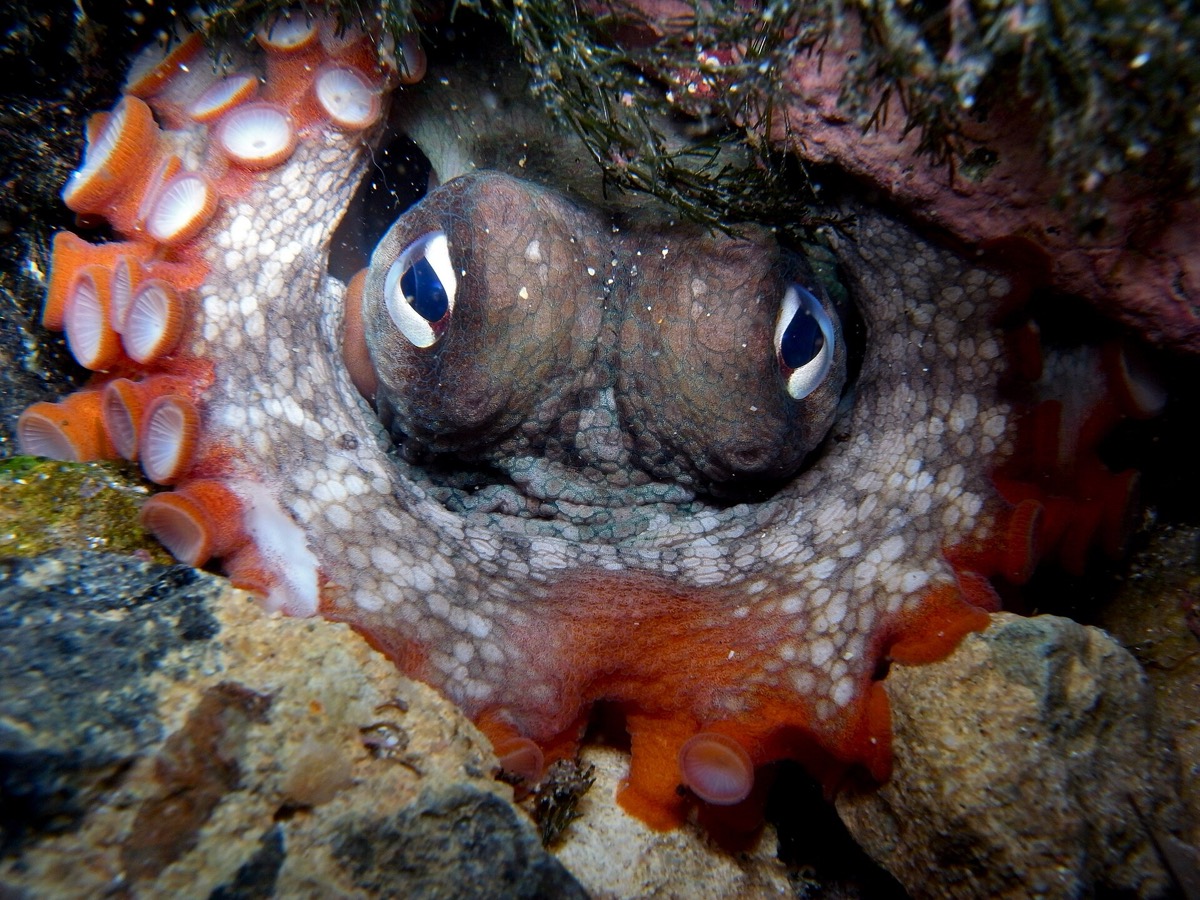
Octopuses at one site in Jervis Bay gather shells, silt and algae into their arms and blast the material away with a jet from the , which could be housekeeping and nothing more. Godfrey-Smith and colleagues filmed the throws and compared the throws during encounters with other octopuses against all the rest. Is anybody being aimed at?
Some of them look aimed. Throws during an interaction hit other octopuses often, and they differed from ordinary throws in several ways at once. They were more vigorous, more likely to use silt instead of shells or algae, and more often paired with a uniform or dark . Some also left from a different point beneath the arms, and those connected most often.
Octopus tetricus at a site in Jervis Bay, Australia, does something odd. The animal gathers shells, silt or algae into its arms, holds the siphon under the , and fires a jet of water that sends the material sailing off through the sea.
On its own that is unremarkable. A den needs clearing, and pushing debris away from the entrance is ordinary maintenance. The interesting question is whether any of the throws are addressed to somebody, since that would put an octopus on a very short list of animals using projectiles against their own kind.
Godfrey-Smith and colleagues filmed the site and split the throws by context. Those thrown during interactions with other octopuses frequently hit another animal. They were also more vigorous than the rest, more often made with silt rather than shells or algae, and more often accompanied by a uniform or dark body pattern.
A handful were released from a different position beneath the arms, and those were the ones that connected most often, which is about as close to aim as video can take you. The authors stop short of calling it intentional. directed at members of the same population had been seen before only in some social mammals, so even a cautious reading of this is strange.
wat. Throwing something at another member of your own species was a mammal trick until a cephalopod turned up doing it in Jervis Bay.
wat wat
Throwing things at your own kind has turned up only in some social mammals, which makes a mollusc doing it a problem for any tidy story about where the behavior comes from.
How do we know?
Godfrey-Smith and colleagues filmed wild Octopus tetricus at one site, coded every throw for vigor, material, body pattern and release point, then compared interactive contexts against the rest.
What is still unknown
One population at one site, scored from video. Hits are not proof of aim, and the paper is careful to say only that some throws appear to be targeted.
Learn something?
Where to next
 How do penguins decide who has to stand on the cold outside?behavior
 Why does a wombat go to the trouble of leaving its mark up high?behavior
 What is an octopus doing when its skin flickers in its sleep?octopuses