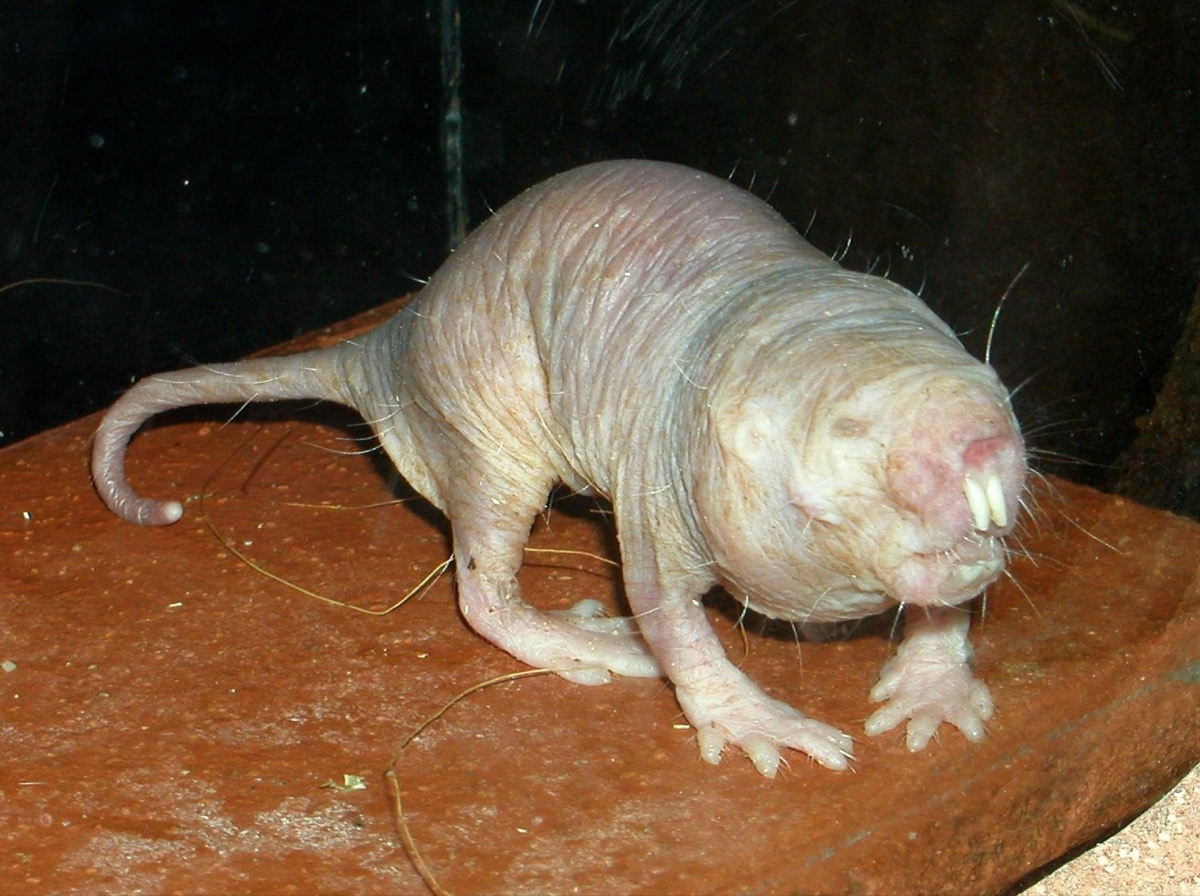
Body size predicts lifespan across mammals fairly well, and a rodent the size of a mouse should get a few years. The naked mole rat gets more than thirty. It also shows , no age-related rise in mortality, and high fecundity right up to death, and it resists both spontaneous and experimentally induced cancer. Kim and colleagues sequenced its genome. What is in there?
Adaptations matching the whole strange package. The genome shows unique features consistent with cancer resistance, , hairlessness and insensitivity to low oxygen, along with altered visual function, circadian rhythms and taste sensing. Those are not incidental traits: this animal lives in full darkness, at low oxygen and high carbon dioxide, cannot sustain thermogenesis, and does not feel certain kinds of pain.
Heterocephalus glaber is a strictly subterranean, extraordinarily long-lived mammal. It is the size of a mouse and its maximum lifespan exceeds thirty years, which makes it the longest-living rodent. It shows negligible senescence, no age-related increase in mortality, and high fecundity until death.
Ageing is not the only thing it resists. Naked mole rats resist spontaneous cancer and experimentally induced tumorigenesis too. They also pose a challenge to theories linking ageing, cancer and . Although significant oxidative stress characterizes them, their proteome shows no age-related susceptibility to oxidative damage or increased ubiquitination.
The life they lead is as odd as the lifespan. They live in large colonies with a single breeding female, the queen, who suppresses the sexual maturity of her subordinates. They live in full darkness, at low oxygen and high carbon dioxide concentrations, are unable to sustain thermogenesis, and do not feel certain types of pain.
The sequencing used a whole-genome shotgun strategy on an individual male, reaching more than twentyfold depth over almost the entire assembly. The team assembled the mitochondrial genome too. Transposon-derived repeats make up about a quarter of it, lower than the roughly forty percent in human and thirty-seven in mouse. The predicted gene set runs to twenty-two thousand five hundred and sixty-one genes, comparable to other mammals. Within it the genome reveals features consistent with cancer resistance, poikilothermy, hairlessness, insensitivity to low oxygen, and altered vision, circadian rhythms and taste.
wat. Mouse-sized, thirty years, no rise in mortality with age, and almost no cancer, in an animal under heavy oxidative stress.
wat wat
The animal is a standing problem for theories that tie ageing, cancer and oxidative damage together, since it lives under significant oxidative stress and ages anyway.
How do we know?
Kim and colleagues sequenced the genome of an individual male naked mole rat with a whole-genome shotgun strategy, assembling the mitochondrial genome too, and compared the result against other mammals.
What is still unknown
A genome and the traits it is consistent with, not a mechanism. Identifying adaptations compatible with longevity is a long way from showing which of them produces it.
Learn something?
Where to next
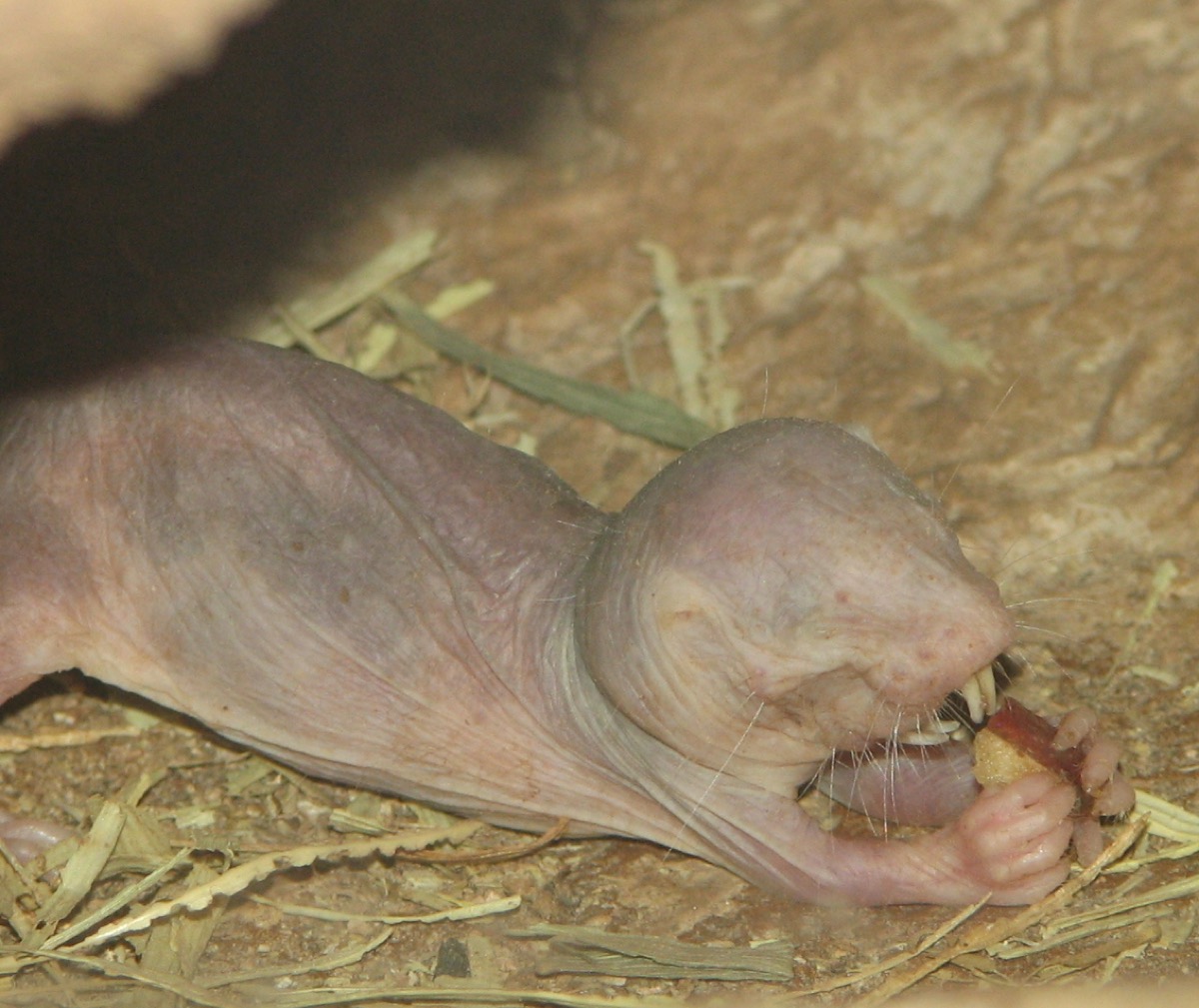 How does one rodent survive 18 minutes with no oxygen?cancer
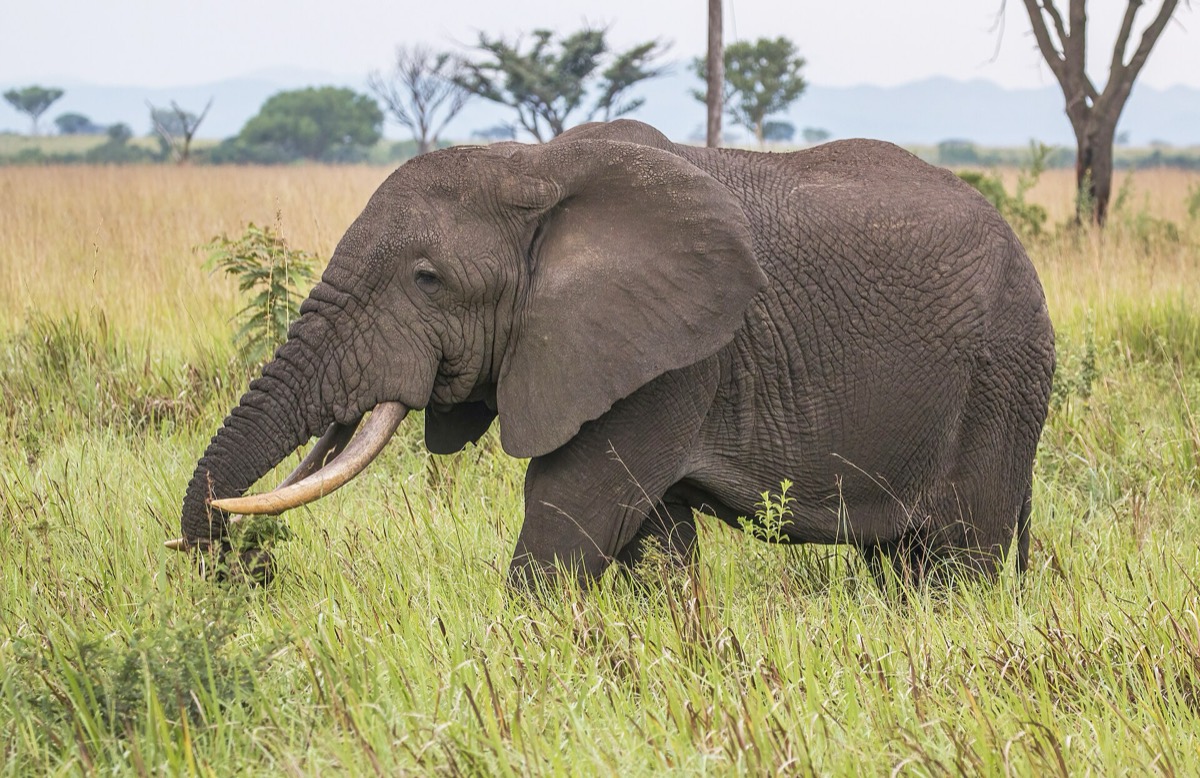 Why don’t elephants get more cancer than we do?cancer
 Can eating ice cream during chemotherapy spare a patient’s mouth?cancer