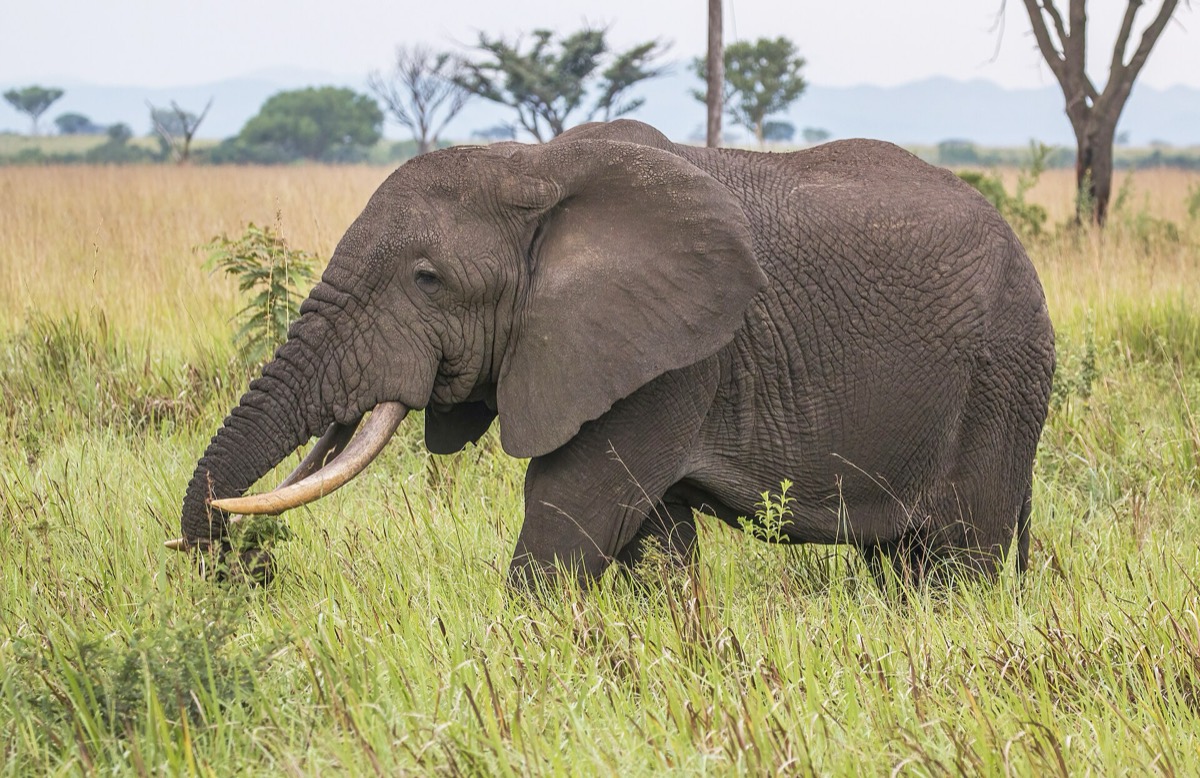
More cells and more years should mean more chances for a cell to go wrong, so the largest and longest-lived animals ought to be riddled with cancer. A survey of necropsy data across 36 mammalian species found that cancer mortality does not increase with body size or maximum life span at all.
They carry many more copies of a tumour suppressor. Elephant cancer mortality is estimated at 4.81 percent against 11 to 25 percent in humans. Where humans have one copy of , African elephants have at least 20, with 19 of them showing transcriptional activity.
The expectation is simple arithmetic: more cells and a longer life should mean more cancer. A comprehensive survey of necropsy data across 36 mammalian species found that cancer mortality does not increase with body size or maximum life span. The rates run to 1 percent in rock hyrax, 8 percent in African wild dog and 2 percent in lion.
Elephants are the sharpest case, since they are both large and long-lived. Their estimated cancer mortality is 4.81 percent, against 11 to 25 percent in humans, which is the puzzle this paper set out to explain.
The genomes supply a candidate. Humans have one copy of TP53, two alleles, while African elephants have at least 20 copies, 40 alleles, including 19 retrogenes with evidence of transcriptional activity measured by reverse transcription PCR.
The cells behave accordingly. In response to DNA damage, elephant lymphocytes underwent p53-mediated at higher rates than human lymphocytes, proportional to TP53 status. The figures are 14.64 percent for elephants, 7.17 for human controls and 2.71 for patients with . The authors put the link as potentially related, which is the right strength for a comparison across species.
wat. Twenty copies of TP53 instead of one, and cells that kill themselves sooner after damage.
wat wat
Evolution has already solved a problem oncology is working on, and in this case the solution is a gene dosage.
How do we know?
Abegglen and colleagues surveyed necropsy data across 36 mammalian species including 644 elephants, and analyzed the African and Asian elephant genomes. They then tested lymphocytes from elephants, healthy humans and Li-Fraumeni patients for DNA damage response.
What is still unknown
The genomic finding and the cell response are consistent with each other, and the paper puts the link as potentially related rather than established.
Learn something?
Where to next
 What do elephants hear through the soles of their feet?elephants
 How does one rodent survive 18 minutes with no oxygen?cancer
 How does a group of male elephants decide it is time to leave?elephants