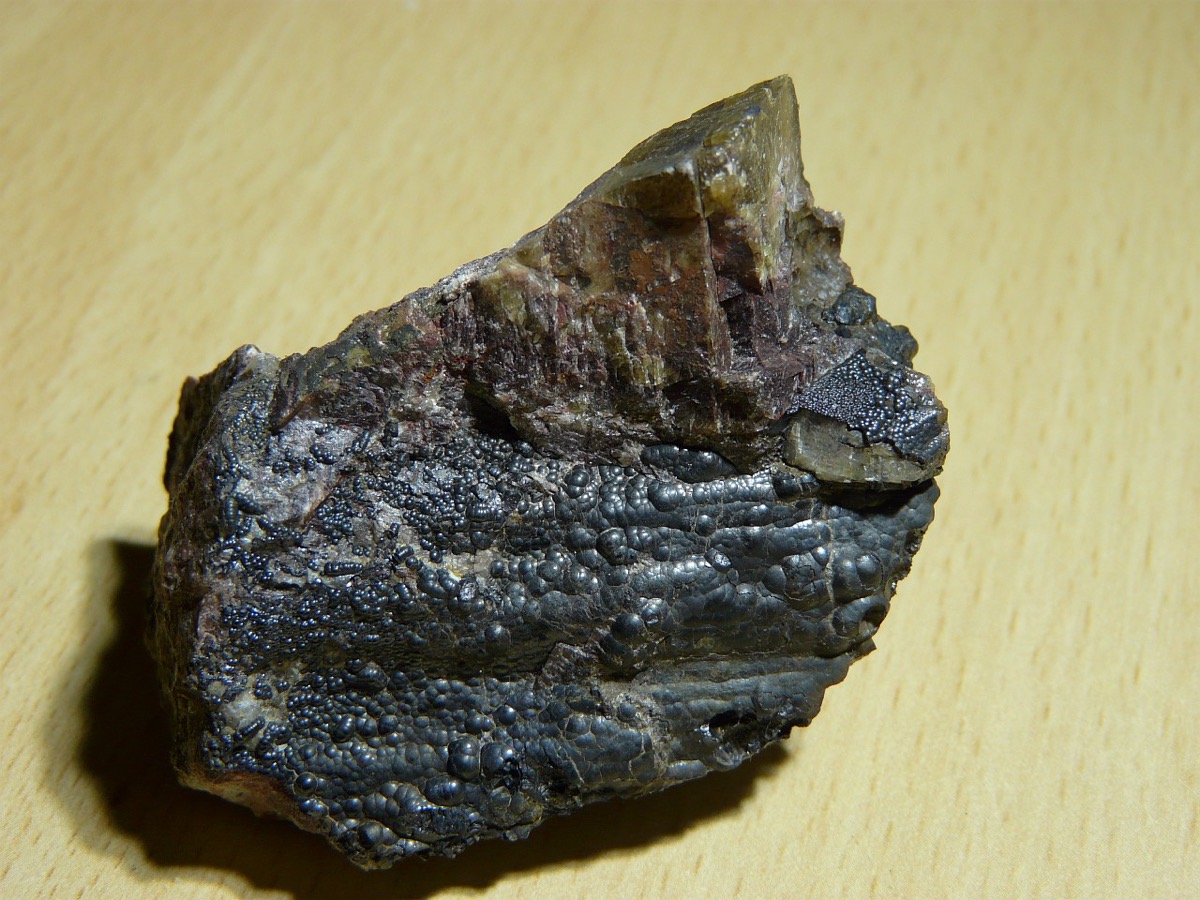
At Oklo in Gabon, uranium ore went critical on its own about two billion years ago, when natural uranium still held enough of the fissile isotope to sustain a chain reaction. That much was established. How the reaction behaved over time was not, because nothing was there to record it.
Something was: the xenon trapped in a mineral. A at the site holds the largest concentrations of fission xenon and krypton ever observed in any natural material. The specific of that xenon defines a cycling operation, with 30-minute active pulses separated by 2.5-hour dormant periods.
The Oklo deposit in Gabon hosts the remains of a natural nuclear reactor roughly two billion years old. The question this work addresses is not whether it ran but how: steadily, or in some other pattern.
The evidence is gas. Using combined with sensitive ion-counting mass spectrometry, the authors analyzed the isotopic structure of in a uranium-free aluminous hydroxy phosphate associated with the reactor.
The quantities are remarkable in themselves. Alongside elevated abundances of fission-produced zirconium, cerium and strontium, they found high concentrations of fission xenon and krypton. At up to 0.03 cubic centimeters per gram, these are the largest ever observed in any natural material.
The pattern in the xenon is the finding. Its specific isotopic structure defines a cycling operation for the reactor, with 30-minute active pulses separated by 2.5-hour dormant periods, which is a duty cycle written into a mineral and read two billion years later.
wat. Thirty minutes on, two and a half hours off, recorded in xenon for two billion years.
wat wat
A natural reactor that pulsed rather than burned steadily is a record of geology regulating a chain reaction without anybody designing the control.
How do we know?
Meshik, Hohenberg and Pravdivtseva used selective laser extraction with sensitive ion-counting mass spectrometry on an aluminous hydroxy phosphate associated with the reactor.
What is still unknown
The cycle is inferred from the isotopic structure of gas trapped in one mineral, which is a reconstruction rather than an observation.
Learn something?
Where to next
 How did meteorites make it possible to measure the age of the Earth?isotopes
 Where did the tin in a Bronze Age cargo come from?isotopes
 What did gladiators drink after a fight?isotopes