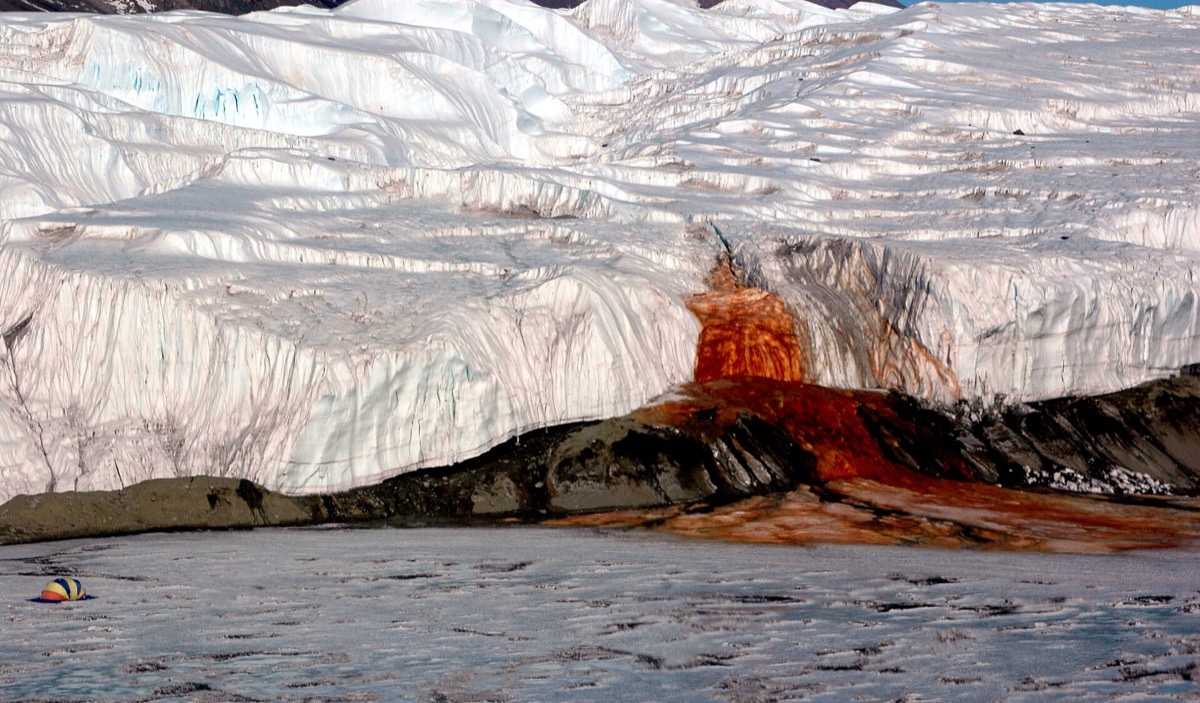
Blood Falls is the surface manifestation of released from below the Taylor Glacier in the McMurdo Dry Valleys. The color is iron, and the interesting question is where the brine comes from and whether anything lives in it. Geochemistry says the water is marine in origin.
From a buried sea, with a microbial community still in it. Of the clones and isolates from Blood Falls, 74 percent share high sequence homology with from marine systems, which supports the marine origin. The library is dominated by a relative of a cold-loving marine .
Blood Falls is the surface manifestation of brine released from below the Taylor Glacier in the McMurdo Dry Valleys of Antarctica. Geochemical analyses show that this brine is of marine origin, which already makes it a relic rather than meltwater.
The biology supports that reading. Of the clones and isolates recovered, 74 percent share high 16S rRNA gene sequence homology with phylotypes from marine systems. Two independent lines of evidence agreeing is what settles an origin question.
One organism dominates. A single phylotype made up 46 percent of the and had 99 percent sequence identity with Thiomicrospira arctica, a psychrophilic marine autotrophic sulfur oxidizer. That means a cold-adapted microbe that builds itself from sulfur chemistry.
The rest is a mixed community: phylotypes related to the Betaproteobacteria, Deltaproteobacteria and Gammaproteobacteria and to the Bacteroidetes. A clone library tells you who is present, and what they are doing under the ice is a further question.
wat. The red outflow is iron-rich marine brine, and three quarters of its microbes look marine too.
wat wat
A community sealed under ice for a long time is the closest thing on Earth to the habitats people hope to find elsewhere.
How do we know?
Mikucki and Priscu built a bacterial 16S rRNA gene clone library from Blood Falls and compared the phylotypes against known sequences, alongside geochemical analysis of the brine.
What is still unknown
A clone library describes which sequences are present, not what the organisms are doing down there.
Learn something?
Where to next
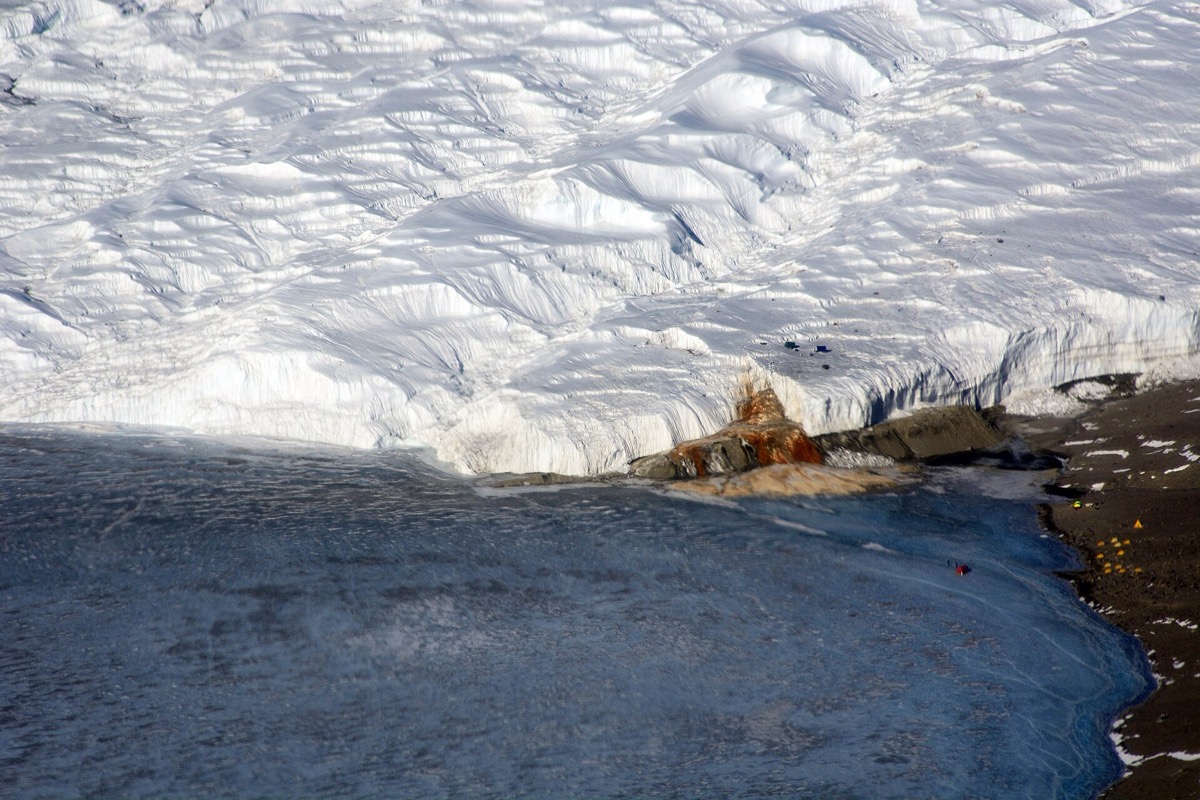 What makes the red stain pouring down an Antarctic glacier?Blood Falls
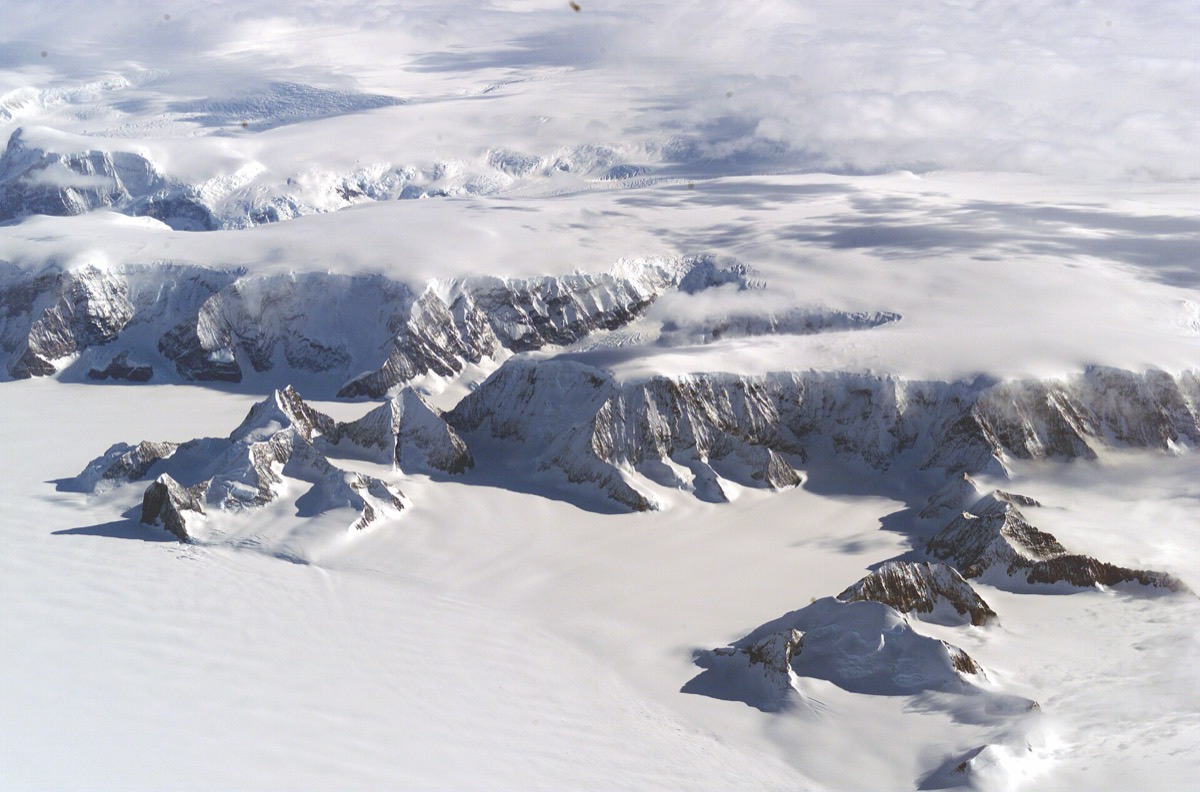 Why does an ice shelf already floating in the sea still matter for sea level?Antarctica
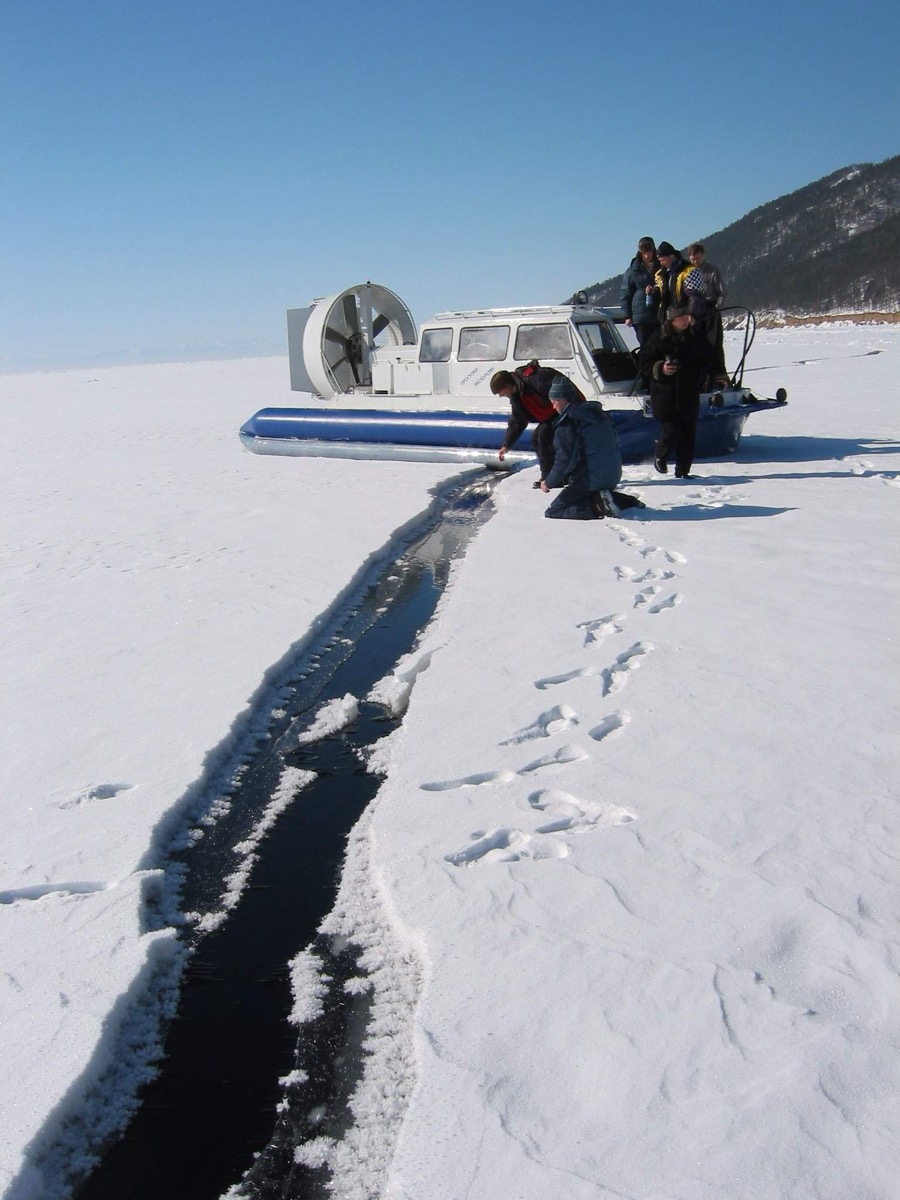 Does a crack race through sea ice as fast as through lake ice?brine