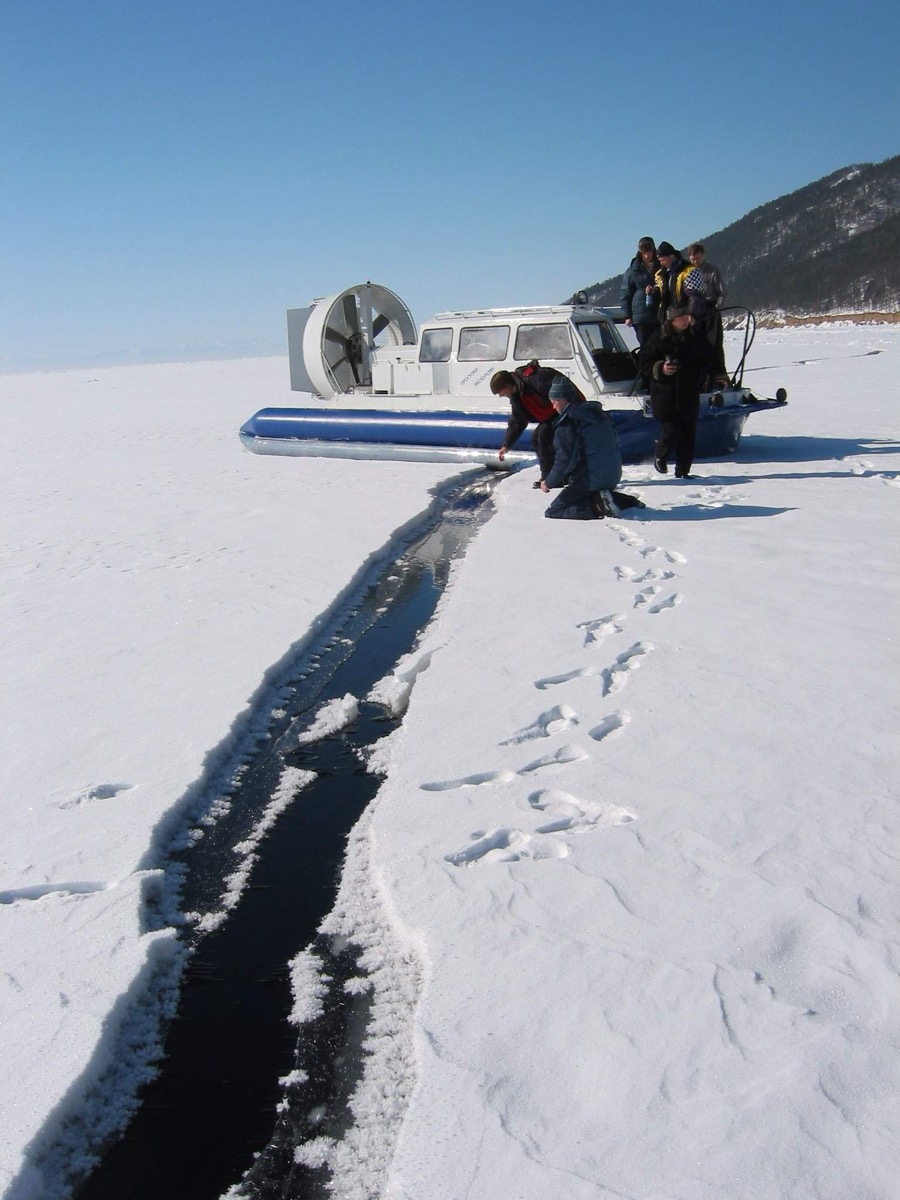
A crack in ice looks like a brittle fracture, and brittle fractures run at a large fraction of the speed of sound. Sea ice is not pure ice, though: it keeps pockets of unfrozen brine and threaded through it. Whether that changes how fast a crack travels was an open question across ice types. So one lab recorded crack velocities in lake, sea and laboratory-grown ice.
Freshwater cracks run a hundred times faster. In laboratory-grown freshwater ice and in lake ice, average crack velocities varied from a few hundred up to 1320 meters per second. In natural sea ice and laboratory-grown saline ice, crack velocity was very low, around 10 meters per second. Cracks in saline ice also propagate discontinuously, interacting strongly with microstructural elements such as drainage channels.
A crack in ice is a brittle fracture, and brittle fractures in stiff solids travel fast, at a substantial fraction of the material’s sound speed. Sea ice complicates that picture because it is not pure ice. It retains pockets of unfrozen brine between the crystals, and as it ages those pockets connect into drainage channels.
This study measured both mode 1 and mode 2 crack velocities across a wide variety of ice types. They were columnar sea ice, columnar lake ice, laboratory-grown columnar saline ice, and freshwater columnar and granular ice, over a temperature range from five to thirty-five degrees below zero. Samples ranged from 0.05 to 30 meters in size.
Timing a crack requires indirect methods. Measurements of ice electrical conductance, electrical capacitance and from the cracks as a function of time were used to determine the velocities, since the events are far too fast to follow by eye.
The difference was stark. In laboratory-grown freshwater ice and in lake ice, average crack velocities varied from a few hundred to 1320 meters per second. In natural sea ice and laboratory-grown saline ice, velocity was very low, about 10 meters per second. The authors attribute this probably to the dynamic resistance of unfrozen water in , or to a large in saline ice, or both. They also found cracks propagate discontinuously in saline ice, owing to strong interaction with microstructural elements such as drainage channels.
wat. A crack crosses lake ice at over a kilometer a second and crawls through sea ice at walking pace, because of the brine in the way.
wat wat
A hundredfold difference is not a refinement, it is a different fracture process. The brine that makes sea ice salty also makes it resist a running crack in a way pure ice does not.
How do we know?
Petrenko and Gluschenkov measured mode 1 and mode 2 crack velocities in columnar sea ice, lake ice, laboratory-grown saline ice and freshwater ice, using electrical conductance, capacitance and electromagnetic emissions from the cracks over time.
What is still unknown
Samples spanned 0.05 to 30 meters, so this is laboratory and field-sample scale rather than a floe breaking up. The explanation for the difference is offered as probable rather than established.
Learn something?
Where to next
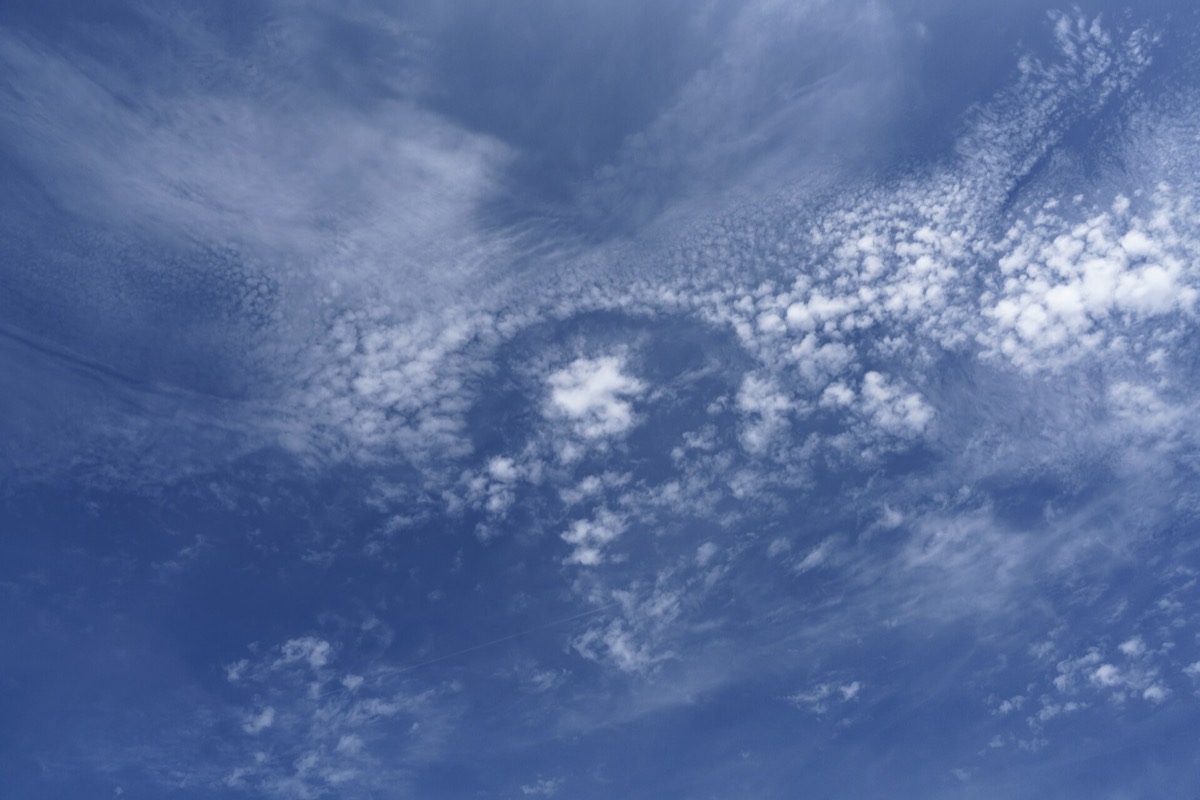 Who punches an almost perfect circle through a layer of cloud?ice
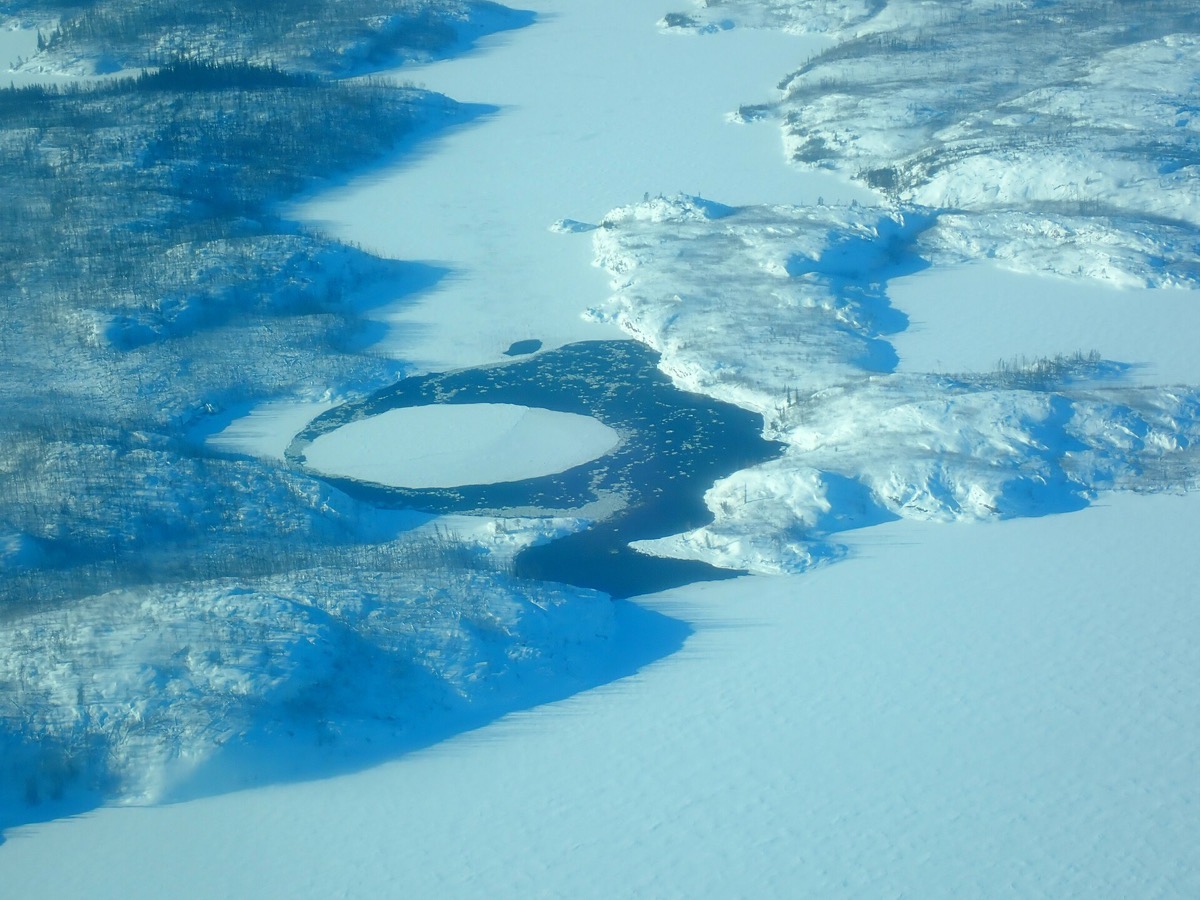 How does a round disk of ice start turning on still water?ice
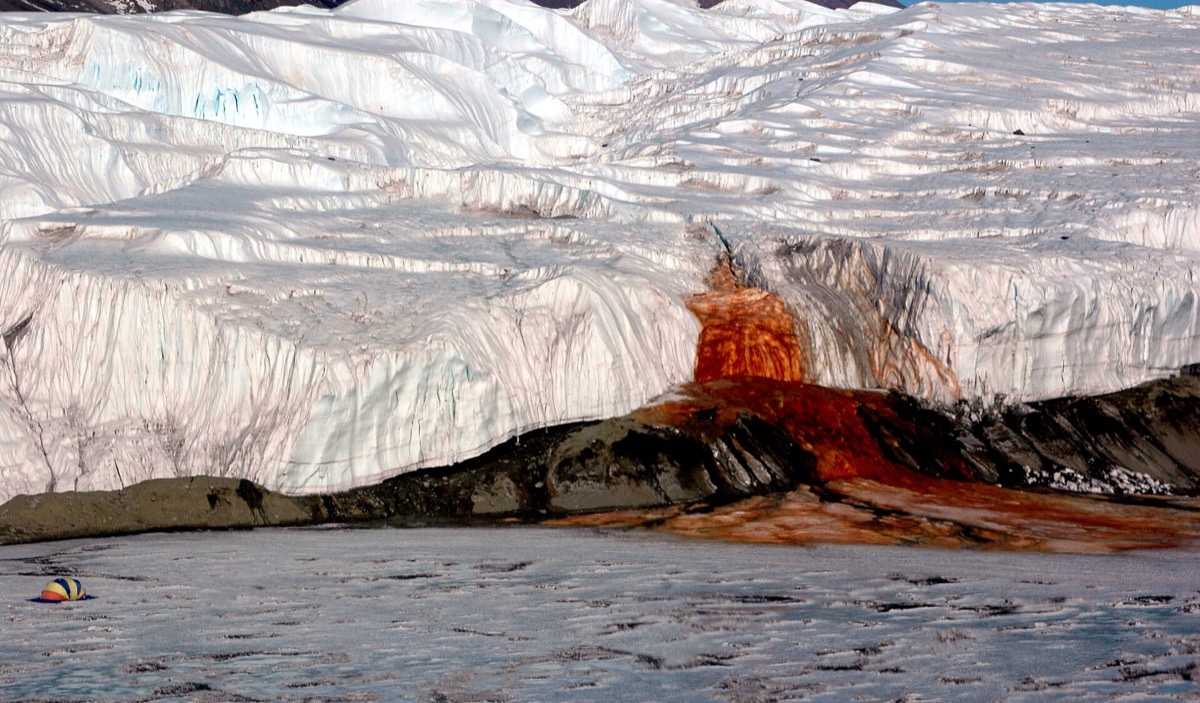 Why does a glacier in Antarctica run red?brine