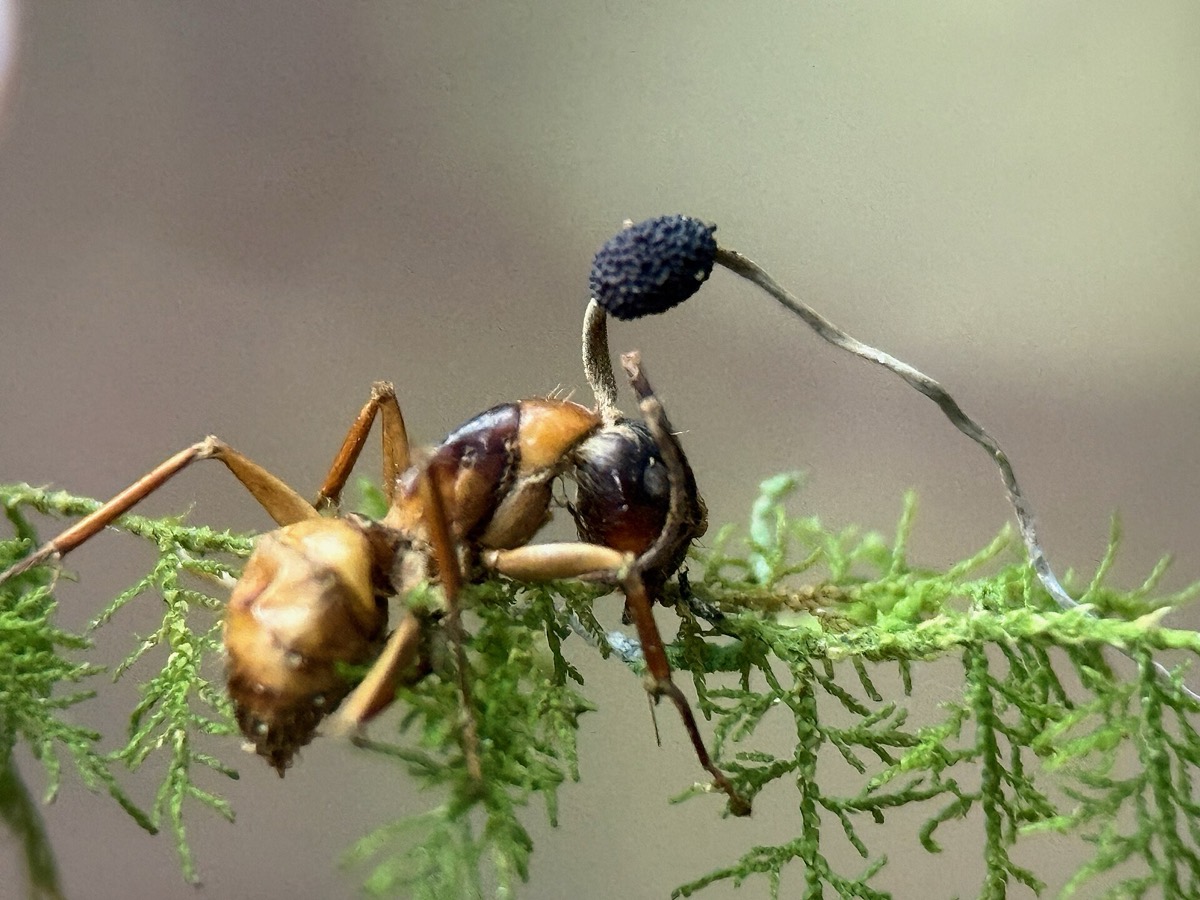
Ants infected by Ophiocordyceps fungi leave their canopy nests, climb down to understory vegetation and bite into a leaf vein before dying. The deaths cluster in patches, on sapling leaves about 25 centimeters above the soil, where conditions for the parasite are best. Which part of that is the fungus?
The timing and the grip, at least. Infected ants walk randomly rather than directionally and suffer repeated convulsions that make them fall, which rules out going back up. The switch from erratic wandering to the on a vein was abrupt and synchronized around solar noon.
Parasites that manipulate host behavior provide prominent examples of , where a parasite genome controls a host’s behavior. The death grip of ants infected by Ophiocordyceps fungi is among the most dramatic of them.
The setting is a Thai rainforest, with the fungus and its host ant Camponotus leonardi. Infected ants descend from their canopy nests to understory vegetation and bite into the underside veins of leaves before dying. Mortality concentrates in on sapling leaves about 25 centimeters up, where conditions for parasite development are optimal.
The behavior on the way there is specific enough to be described as a syndrome. Infected ants walk randomly rather than directionally and suffer repeated convulsions that make them fall, which precludes returning to the canopy. The transition from erratic wandering to a death grip on a leaf vein was abrupt and synchronized around solar noon.
The anatomy explains how the grip holds. The mandibles penetrate deeply into vein tissue, accompanied by extensive of the mandibular muscles. Histology shows a high density of single-celled parasite stages inside the head capsule of dying ants, which the authors consider the likely cause of that atrophy.
wat. The fungus wastes the jaw muscles so the bite cannot let go, and the bite happens around noon.
wat wat
It is a parasite genome producing a behavior in another animal, which is as literal as an extended phenotype gets.
How do we know?
Hughes and colleagues studied the interaction between the fungus and its host ant Camponotus leonardi in a Thai rainforest, recording the behaviors in sequence and examining the heads of infected workers histologically.
What is still unknown
One fungus and one host ant in one forest, and the link from parasite cells to behavior rests on anatomy rather than on a step-by-step account.
Learn something?
Where to next
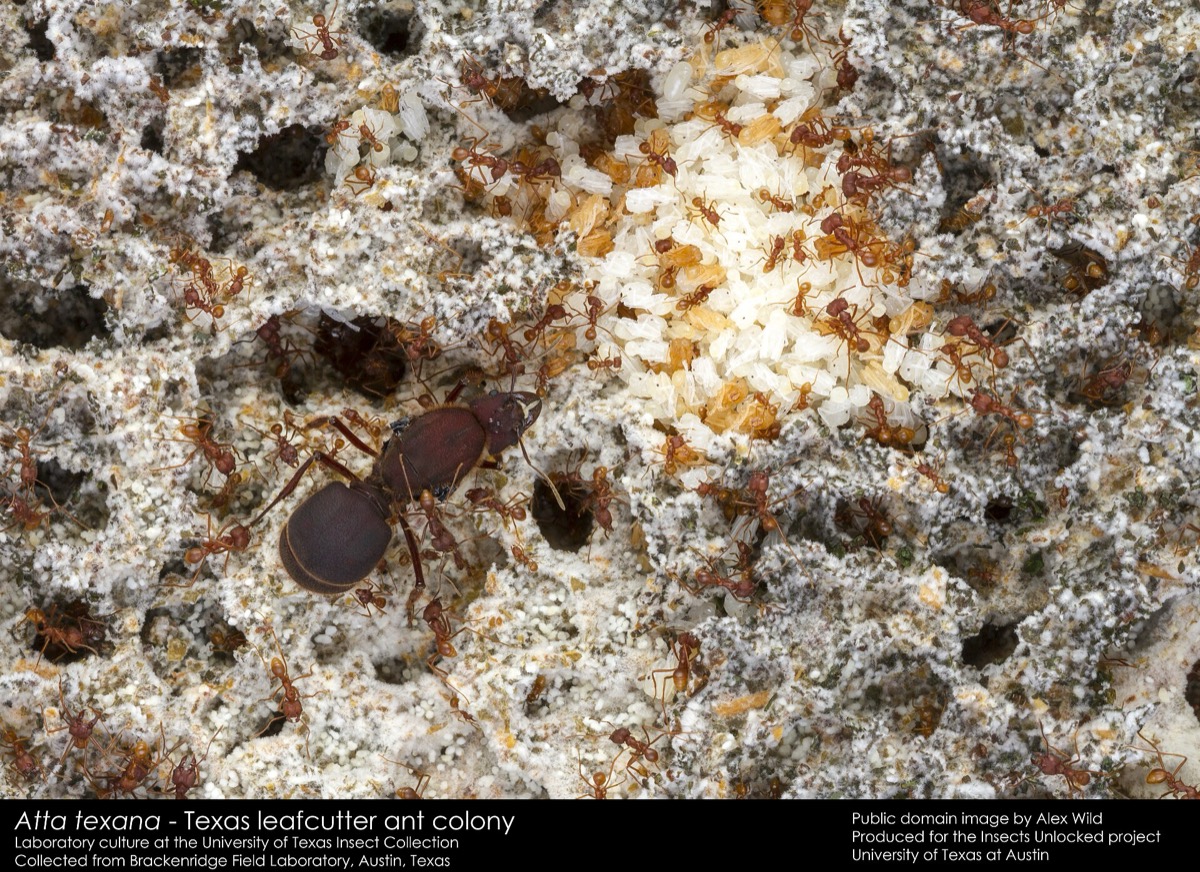 How do ants find a short route when none of them has the map?ants
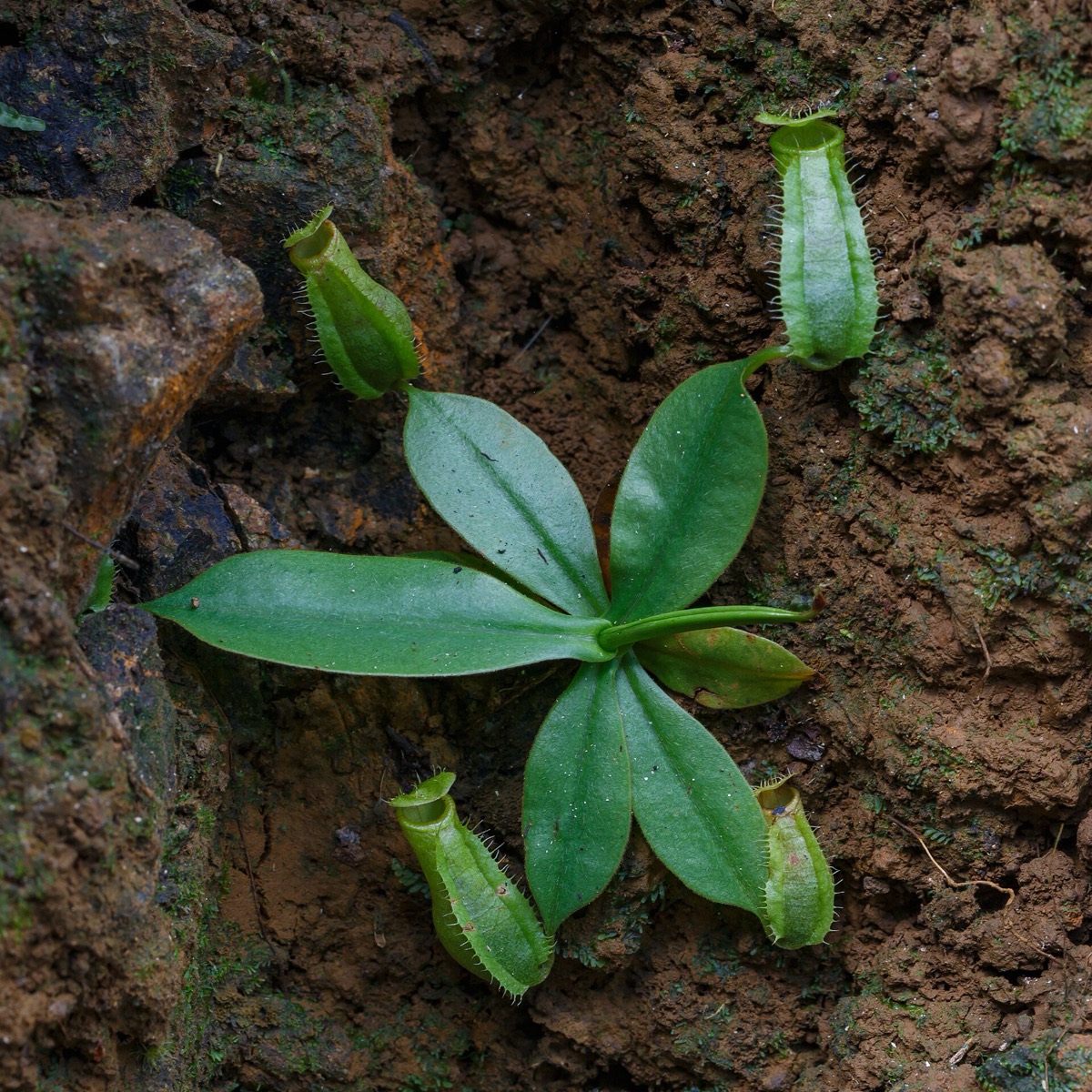 Where exactly does an ant lose its footing on a pitcher plant?ants
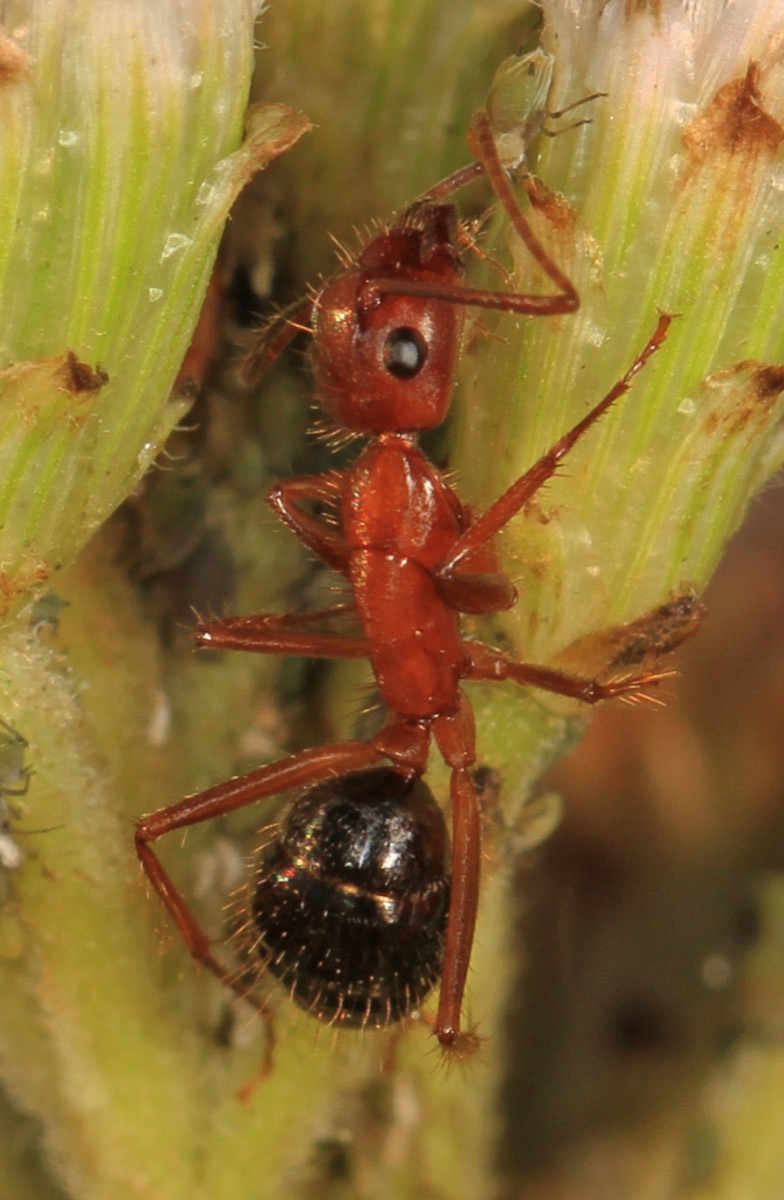 What does an ant colony do with a nestmate whose leg is infected?ants