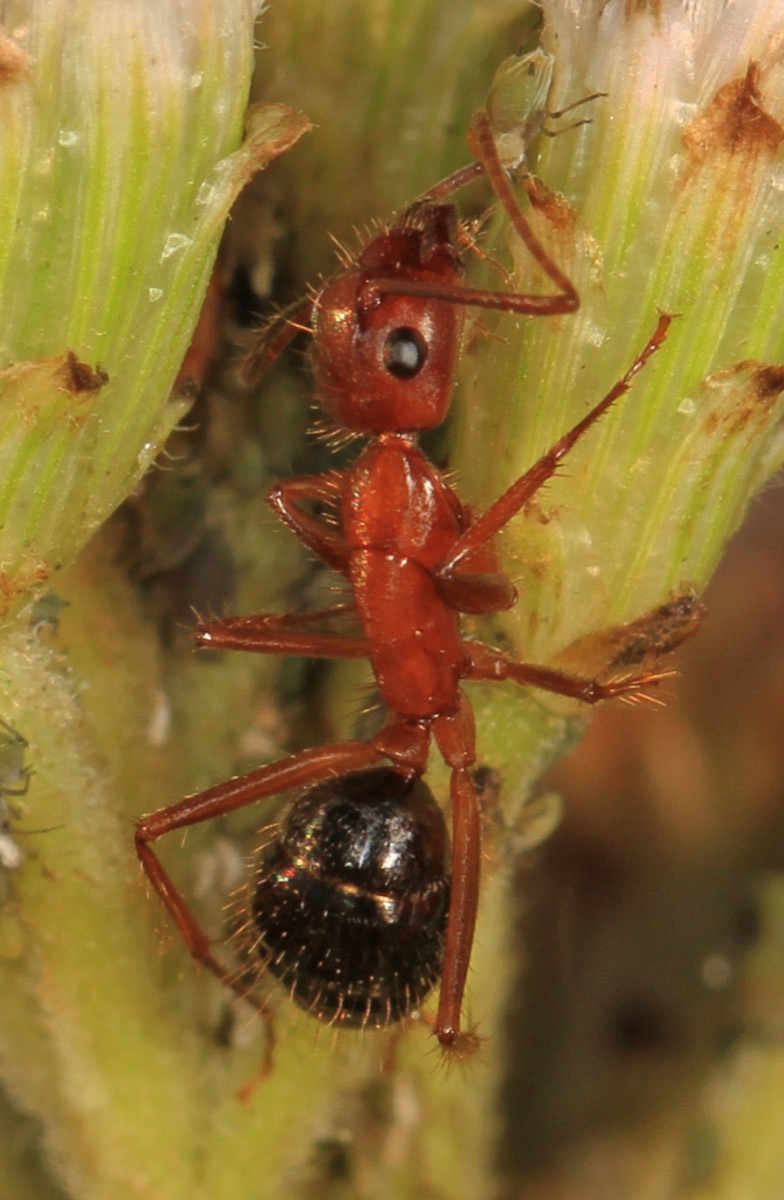
Many ants disinfect wounds with secretions from the , but several genera lost that gland over evolutionary time, Camponotus among them. Those colonies still have injured workers and still have soil full of pathogens. Frank and colleagues injured Camponotus floridanus workers at two different points on the leg and watched what nestmates did about it. What is left when the chemistry is gone?
Surgery, chosen by where the wound is. When the injury was at the femur, nestmates bit through the base of the leg until it came off, and the amputated ants survived significantly better than ants left intact. When the injury was further down at the tibia, nestmates did not amputate and gave the site more instead. Scans show the muscles pumping leg sit mostly in the femur.
An open wound in a crowded nest is an infection waiting to happen. Ant societies normally meet that with antimicrobial secretions from the metapleural gland, but several genera, including Camponotus, no longer have the gland at all.
Frank and colleagues injured workers of Camponotus floridanus at the femur and watched the nestmates. They bit at the , the base of the leg, until the limb was severed. Ants that received an amputation survived significantly better than ants that did not.
Move the injury further down the leg and the treatment changes. With a wound at the tibia, nestmates did not amputate; they directed more wound care at the site instead. Experimental amputation of a tibia injury failed to improve survival unless the leg came off immediately after pathogen exposure, so declining to amputate is the right call rather than a failure to notice.
Micro-CT scans suggest why the two wounds differ. The muscles that most likely circulate hemolymph through the leg sit predominantly in the femur, so a femur injury slows the flow and buys the workers time to cut before a pathogen spreads. A tibia wound leaves that pump intact, and by the time a limb could come off the infection has already gone past it.
wat. Cut high and the ants take the leg off; cut low and they clean it instead, and the difference is where the plumbing is.
wat wat
This is the first case of amputation used as a treatment by any animal other than us, and the ants pick the treatment by the location of the wound rather than applying one rule.
How do we know?
Frank and colleagues injured Camponotus floridanus workers at the femur or the tibia, with and without pathogen exposure, recorded what nestmates did, tracked survival, and scanned leg anatomy with micro-CT.
What is still unknown
One species under experimental injury in the laboratory. Whether colonies in the field encounter femur wounds often enough for this to matter is a separate question.
Learn something?
Where to next
 Does a rescuing ant understand what is holding its nestmate?ants
 How do ants find a short route when none of them has the map?ants
 How do penguins decide who has to stand on the cold outside?behavior