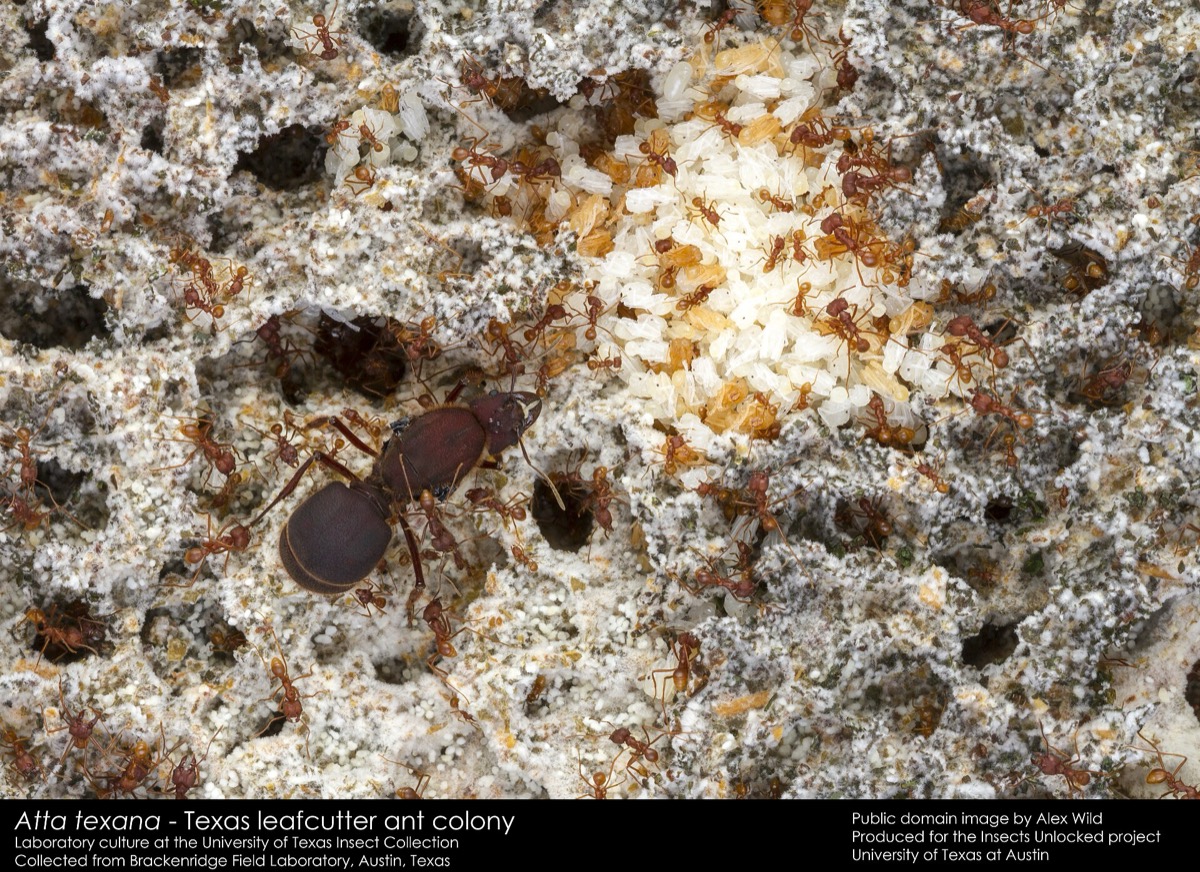
An ant that finds food walks home leaving a trail of behind it, and other ants tend to follow wherever the smell is stronger. No ant compares two routes, and none of them knows what is happening anywhere else. So how does the short one get picked?
A short route is walked faster, so it gets reinforced more often and accumulates more pheromone, while on a long one the smell has time to evaporate. Nobody weighs the options and nobody holds the whole picture. The efficient answer grows out of the interaction rather than out of a decision, which is what makes it , and it is why the colony usually gets the short branch and not always.
The classic experiment is almost absurdly simple: a bridge with two branches of different length between the nest and the food. At first the ants split more or less evenly between them, and after a while nearly all of them are marching along the short one.
The explanation asks no cleverness of the ant at all. Whoever took the short branch gets back sooner, and so lays pheromone on that route twice in the time it takes an ant on the long branch to do it once. A stronger smell pulls in more ants, and those ants strengthen it further, which is and nothing cleverer than that.
The part that is easy to miss is the evaporation. Without it the long route would also accumulate smell until everything looked equal. Because the pheromone fades, a route that is not reinforced often enough decays on its own. Time, and not comparison, is what does the arithmetic here.
The failure deserves saying too. The system can get stuck: if the long branch happens to be reinforced early, the colony may lock onto it and never find the short one. So this is behavior that is usually efficient rather than always optimal, and it is exactly how , the family of algorithms derived from here, behaves as well.
wat. No ant knows which of the two routes is shorter. The short one wins by itself, only because its smell builds up faster than it fades.
wat wat
The principle became a method called ant colony optimization, used for routing in communication networks and in logistics.
How do we know?
The classic experiment puts a bridge with two branches of different length between the nest and the food, and counts what fraction of the ants takes each branch over time.
What is still unknown
The system can get stuck. If a long branch happens to get reinforced early, the colony may lock onto it. This is behavior that is usually efficient, never guaranteed optimal.
Learn something?
Where to next
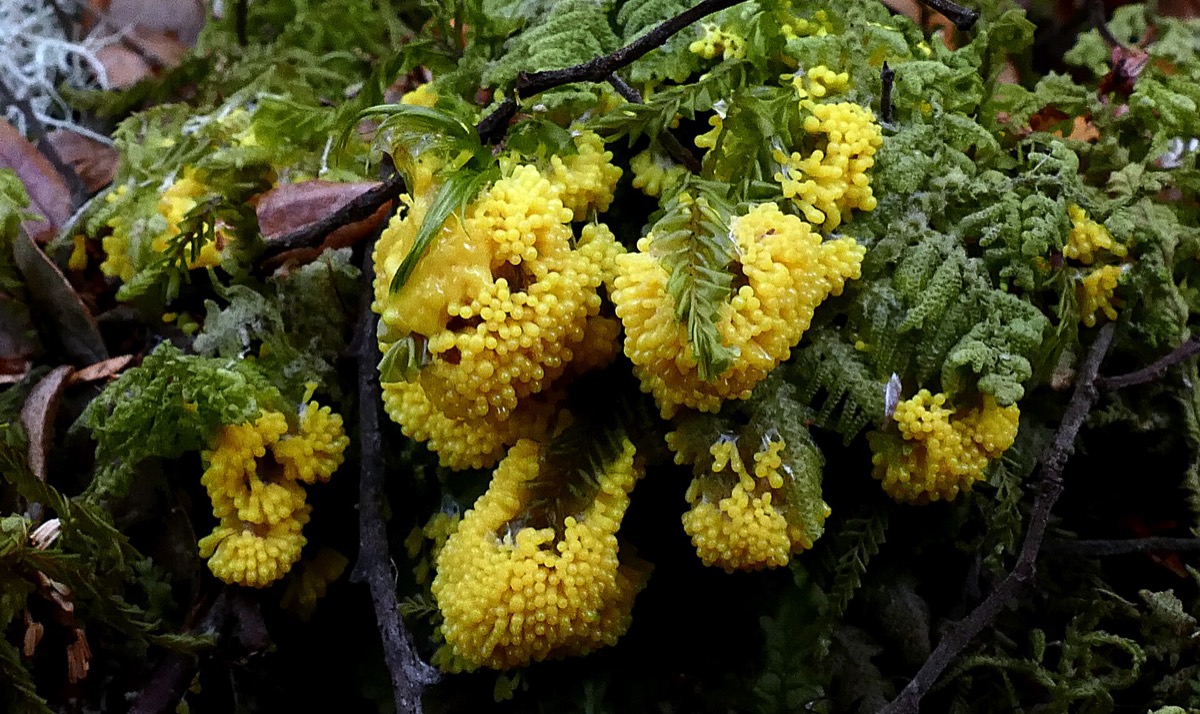 What happened when a brainless organism designed a rail network?self-organization
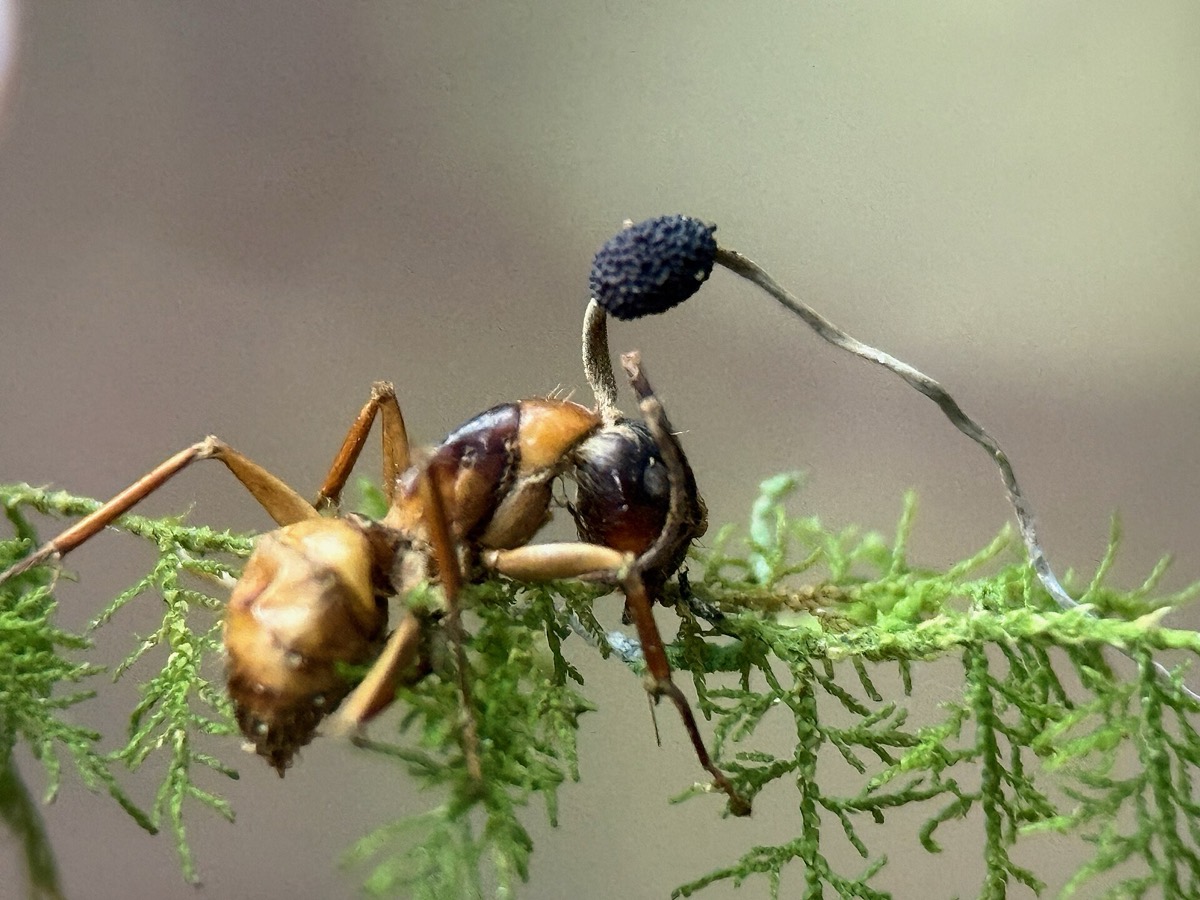 Why do infected ants die in the same place and at the same hour?ants
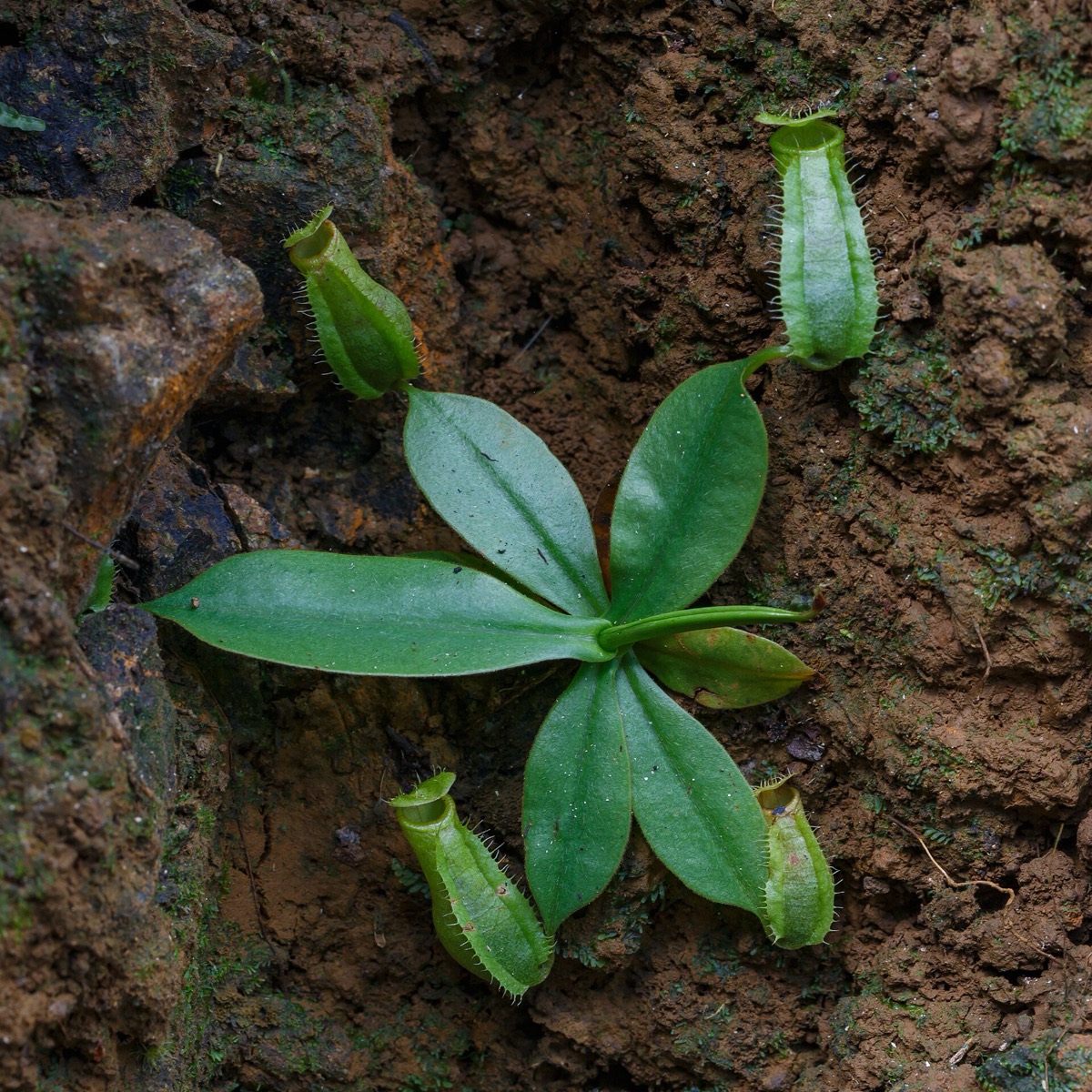 Where exactly does an ant lose its footing on a pitcher plant?ants