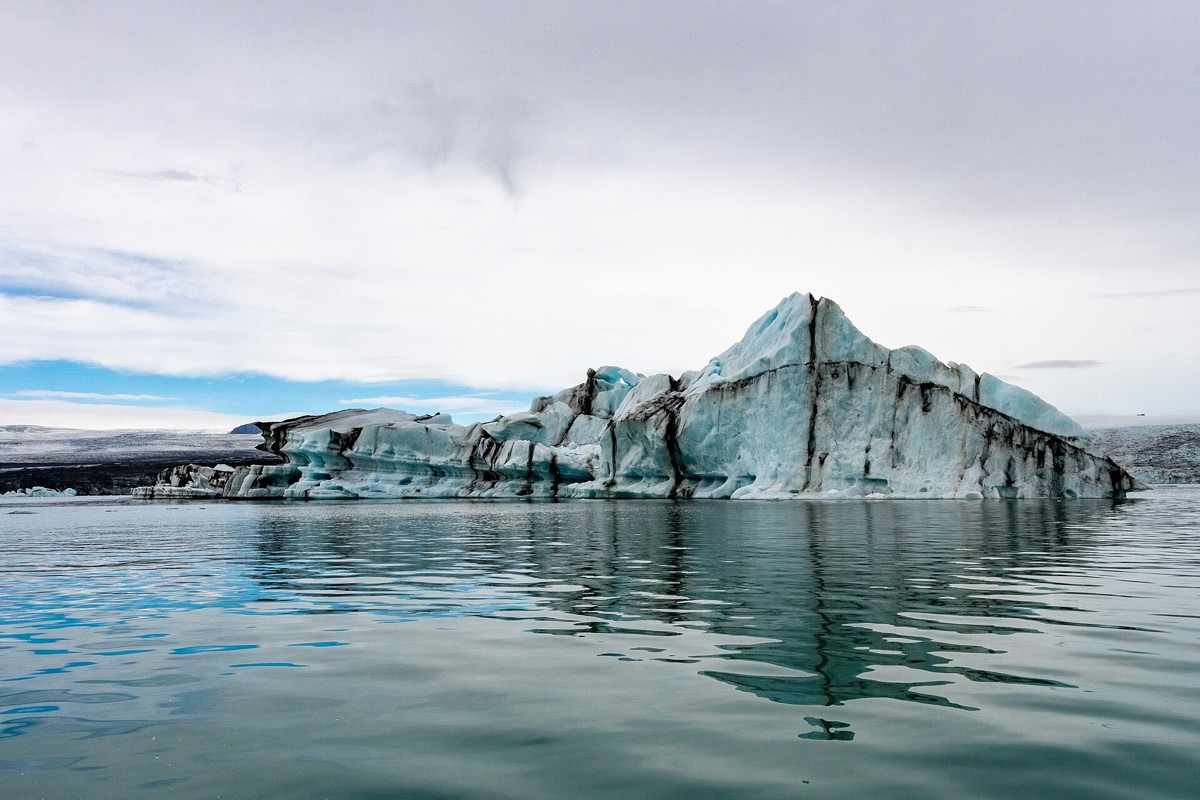
Ice is blue because it absorbs red light. Some Antarctic icebergs are green, which requires something else in the ice absorbing blue. had been the proposed culprit for decades. Then measurements of green icebergs came back low in it, while from the Amery Ice Shelf turned out to be loaded with something else. What is actually coloring them?
Iron-oxide minerals, scavenged from the seawater. Ice crystals form in beneath several Antarctic ice shelves, and as they rise to the shelf base they particles from the water and build them into the growing basal ice. Low dissolved organic carbon in green icebergs, together with large iron concentrations in Amery marine ice, points at iron oxide rather than organic carbon.
Ice crystals form in supercooled seawater beneath several Antarctic ice shelves. As they rise toward the ice-shelf base they scavenge particles from the water and incorporate them into the growing basal ice. The resulting marine ice can be around 100 meters thick, and it differs from sea ice in being clear, desalinated and bubble-free.
Icebergs made of this marine ice vary in color from blue to green, depending on the nature and abundance of the foreign constituents in the seawater that were trapped as the ice grew. The optics are straightforward: a red or yellow material, meaning one that absorbs blue light, combined with the blue of ice, shifts the wavelength of minimum absorption to green.
The question is which material. Dissolved organic carbon had been proposed, and it would work optically. Subsequent measurements, though, found low dissolved organic carbon values in green icebergs, which leaves the color unexplained by the standing account.
A different candidate arrived with the recent finding of large concentrations of iron in marine ice from the Amery Ice Shelf. Taken together, those two results suggest the color of green icebergs is caused more by iron-oxide minerals than by dissolved organic carbon. There is a consequence beyond appearance: these icebergs travel great distances from their origin, and when they melt they deliver iron as a nutrient to the Southern Ocean. Note that the conclusion combines separate lines of evidence rather than analyzing the colorant directly.
wat. A green iceberg is marine ice carrying iron scavenged from the sea, and it will hand that iron to the Southern Ocean when it melts.
wat wat
The color is a label for cargo. These icebergs travel great distances from their origin, and when they melt they can deliver iron as a nutrient to the Southern Ocean, where iron is the limiting factor for life.
How do we know?
Warren and colleagues revisited the green iceberg problem using measurements of dissolved organic carbon in green icebergs together with the finding of large iron concentrations in marine ice from the Amery Ice Shelf.
What is still unknown
The conclusion rests on combining separate measurements rather than on a direct analysis of the pigment in a green iceberg. Iron-oxide minerals are inferred as the better explanation, which is a revision of the previous one rather than a demonstration.
Learn something?
Where to next
 Why does an ice shelf already floating in the sea still matter for sea level?Antarctica
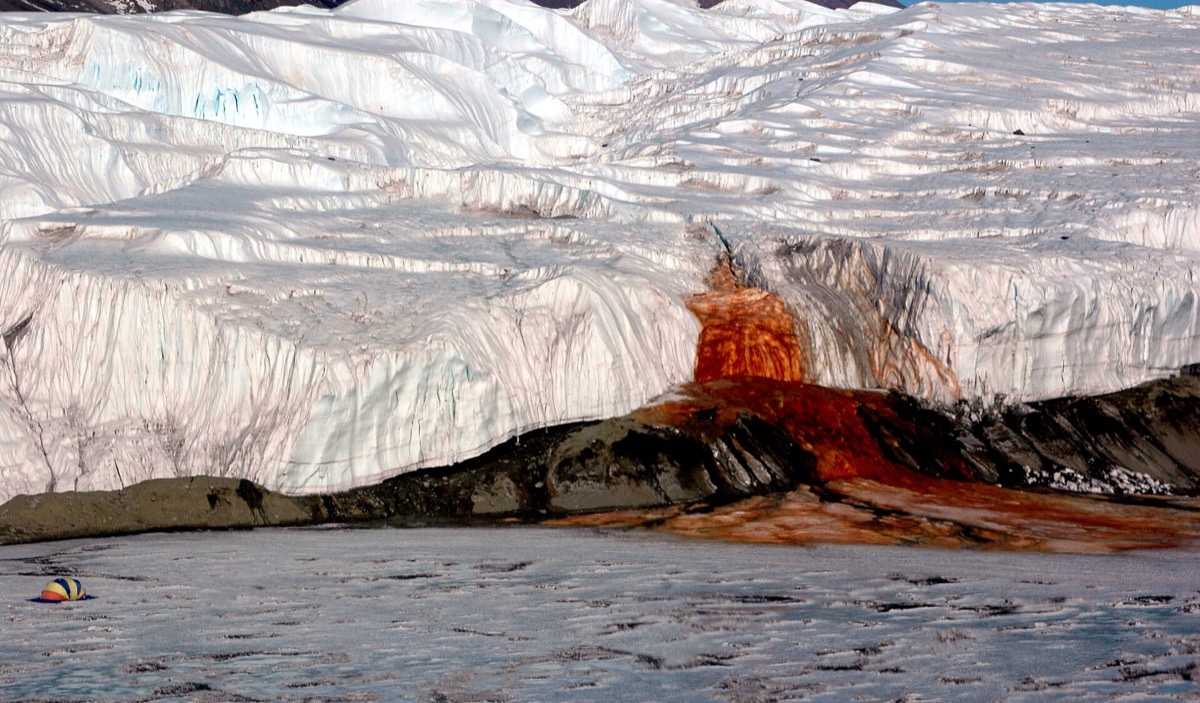 Why does a glacier in Antarctica run red?Antarctica
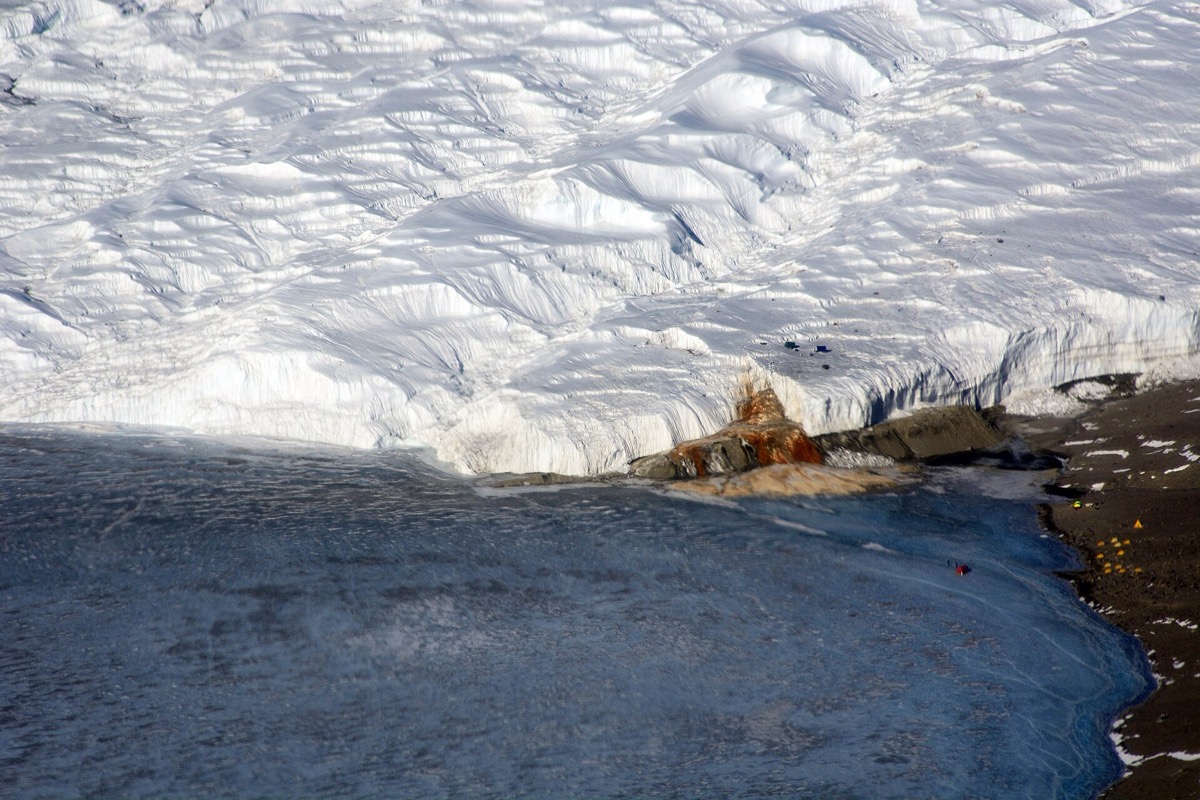 What makes the red stain pouring down an Antarctic glacier?Antarctica