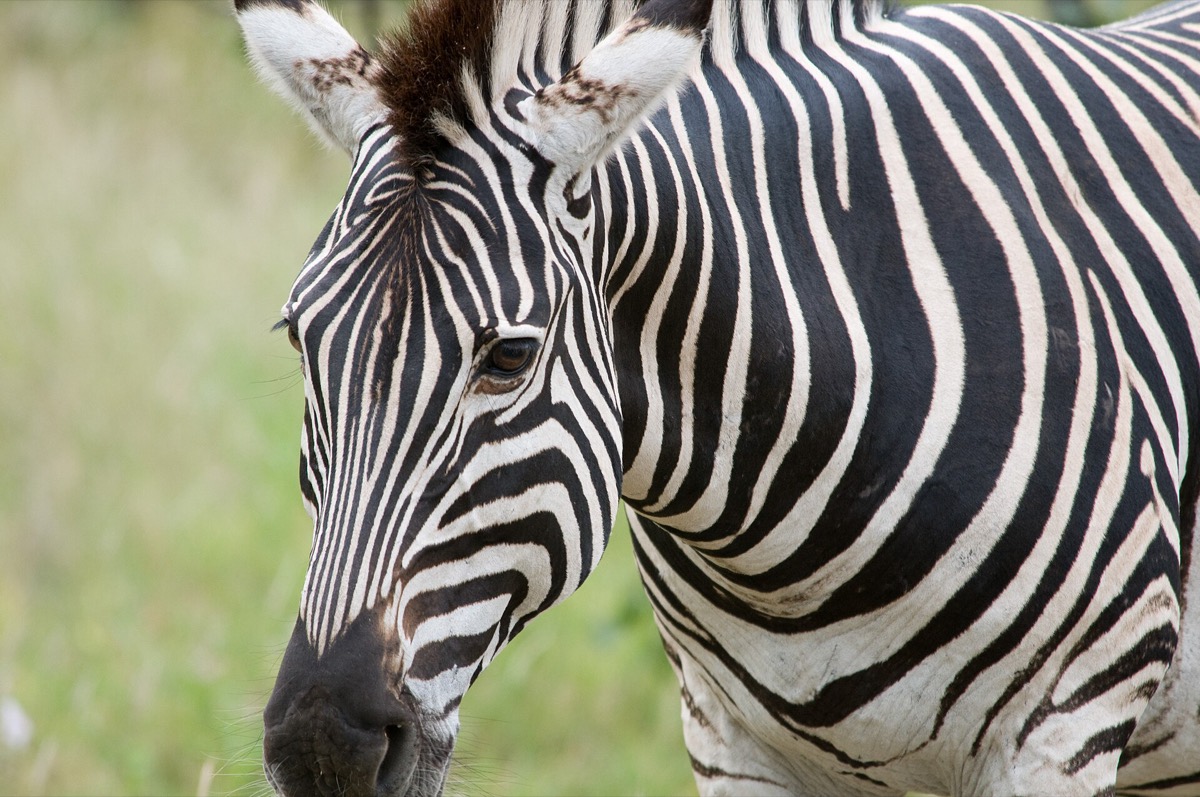
A familiar idea says black and white reach different temperatures in the sun, so the stripes set up tiny air currents that carry heat away from the skin. If that is right, it can be tested on wearing hides. The barrels stood outdoors for four months with their inside temperature logged. What happened in there?
Curiosity counts. Here is the answer.
No advantage. The familiar idea holds that black and white absorb differently and that the temperature difference from stripe to stripe raises small air currents which cool the skin. Tested directly, the striped surfaces did behave like real zebra hide in the sun, and the water inside the striped barrel was no cooler than under a gray cover. The ranking by average core temperature ran from white cattle hide at the coolest up to black cattle hide at the warmest, with both zebra patterns in the middle.
Nothing happened in there. The surfaces did heat differently, and the striped barrels reproduced the surface temperatures of real zebras in the sun, which confirmed. The of the striped barrels was no lower than the gray ones, on many hot days included, whatever the air temperature and the wind were doing. The thermal explanation failed its own test.
As many as 18 published theories compete over what zebra stripes are for, and cooling is one of them. It is a reasonable one, which is what makes it worth testing. Black and white really do reach different surface temperatures in the sun, and the proposal is that the difference drives along the coat and carries heat off the skin.
The right question is not whether a temperature difference exists but whether it is strong enough. Convection on the scale of centimeters is a small effect, and a body in the sun is being heated from every direction, so the measurement that matters is not the surface but the inside.
The experiment did exactly that. Water-filled barrels were covered with horse, cattle and zebra hides, and with artificial black, white, gray and striped patterns. Their core temperature was logged continuously for four months, while thermography checked the covers against living zebras.
The striped surfaces matched real zebras well, and the water inside them was no cooler than inside the gray barrels. Averaged over the whole period the order ran from white cattle hide through gray cattle, real zebra, artificial zebra and gray horse up to black cattle, so the pattern bought nothing thermally. With 18 theories on the table, closing one is useful, and a barrel that cannot sweat or walk into shade leaves the living animal a wider story.
wat. Zebra stripes changed the surface temperature, and the core of the model body stayed as warm as it did under a gray hide.
wat wat
A mechanism that looks convincing in a thermal image is not enough. The question is whether the difference reaches the biological measure it is supposed to change.
How do we know?
A zebra body was modeled by water-filled metal barrels under horse, cattle and zebra hides, and under artificial black, white, gray and striped patterns. Core temperature was logged continuously for four months, and thermography compared the barrel surfaces with living zebras.
What is still unknown
A barrel of water is not a living zebra. It has no sweating, no blood flow, no muscle movement and no option of walking into the shade, so this rules out a mechanism rather than ruling out a function.
Learn something?
Where to next
 Why is a toucan's beak so absurdly large?heat
 Does a bee see the world differently once it starts moving?heat
 Do zebra stripes put a fly off from far away, or only up close?stripes