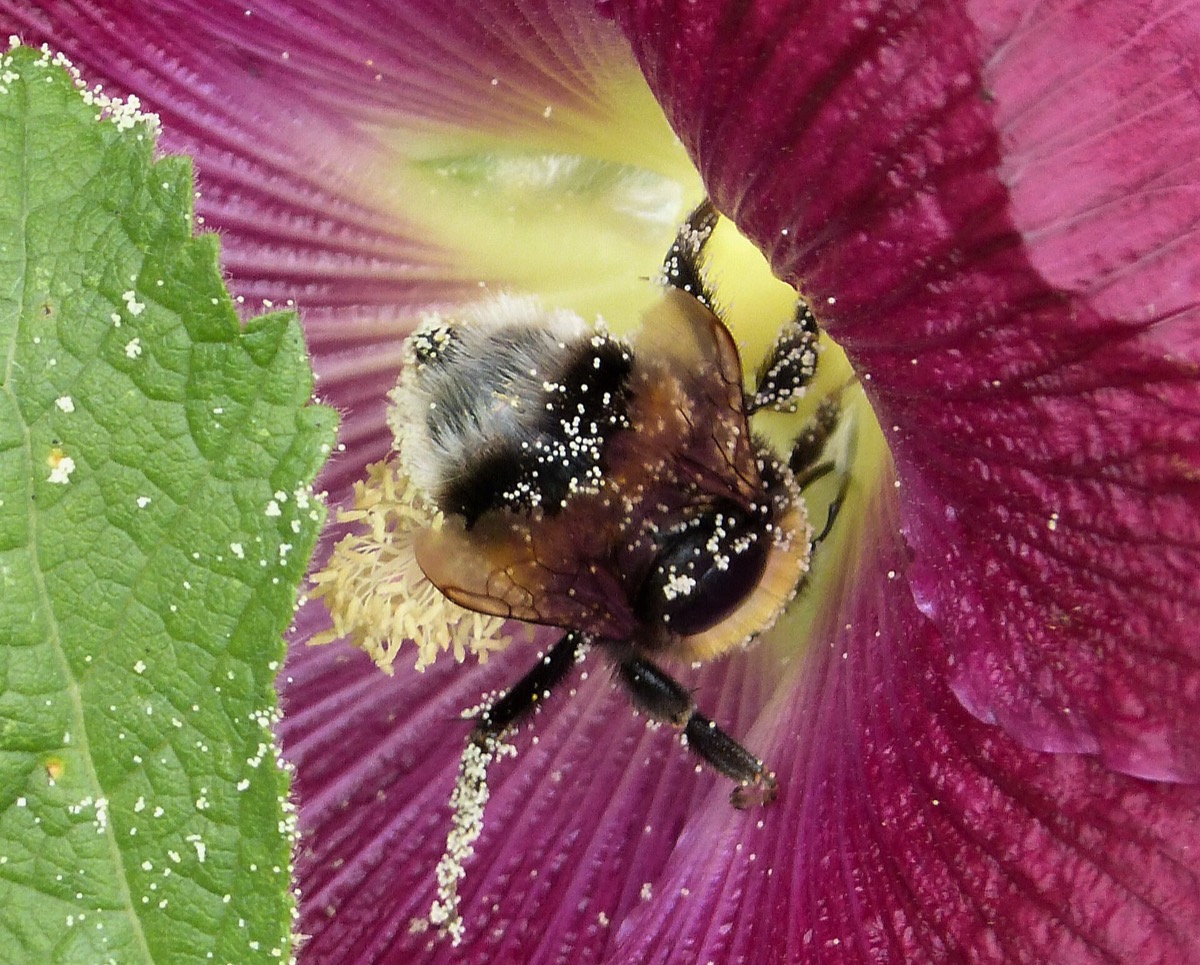
Culture, in the minimal sense, means a group-specific behavior passing from an innovator to everybody else. Whether that needs a clever brain is the open question. So one lab set bumblebees an unnatural task, pulling a string to drag an out-of-reach reward closer, and then watched what happened when a single trained bee was put back among untrained nestmates. Does the trick travel, and does it need insight?
It travels, and it needs no insight at all. Only a small minority of bees solved the string task spontaneously, while most learned it after training in small steps, and naive bees picked it up simply by watching a trained from a distance. In the diffusion experiments the skill spread from one knowledgeable forager to the majority of the colony, through several successive sets of learners who then became demonstrators themselves.
Social insects get elaborate outcomes out of simple rules, which makes them a good place to ask what the minimum requirements for culture actually are. Culture here means something modest: a group-specific behavior that spreads from innovators to others by social learning.
The task was , dragging a thread to bring a reward presented out of reach. Only a small minority of bumblebees and solved it unaided. Most could learn it after training in small steps, and, more importantly, naive bees learned it by watching a trained demonstrator from a distance.
The mechanism turned out to be unglamorous, which is the paper’s best result. Learning rested on simple associative processes plus trial and error, and it did not require insight. Naive bees failed the , where tugging gave them no instant visual feedback of the target moving closer. Without that feedback, there was nothing to associate.
Then the diffusion experiments. The skill spread rapidly from a single knowledgeable individual to the majority of a colony’s foragers, through several sequential generations of learners, each cohort of observers going on to show for the next. So the skill could outlast the lives of the bees who first held it. The authors conclude that a basic toolkit of associative and motor learning already contains the key ingredients for cultural spread. Note the setting all the same: an artificial task, a managed colony, and nothing here about traditions among wild bumblebees.
wat. One trained bee was enough to seed a colony, and the bees were plainly not thinking it through: a coiled string defeated them.
wat wat
It lowers the bar for culture. If associative and motor learning are enough to carry an unusual skill across a population and down the generations, then cultural transmission does not require sophisticated cognition.
How do we know?
Alem and colleagues tested spontaneous solving, training in small steps, observational learning from a demonstrator, a coiled-string control, and the spread of the skill through colonies of foragers.
What is still unknown
String pulling is an artificial task in a managed colony, and a skill outlasting its first teachers in a laboratory is not the same thing as a tradition in the wild.
Learn something?
Where to next
 Can a raven hold on to a tool for a job that is seventeen hours away?tools
 How does a crow that has never been caught learn which face to avoid?social learning
 What can a bumblebee learn but never invent on its own?social learning