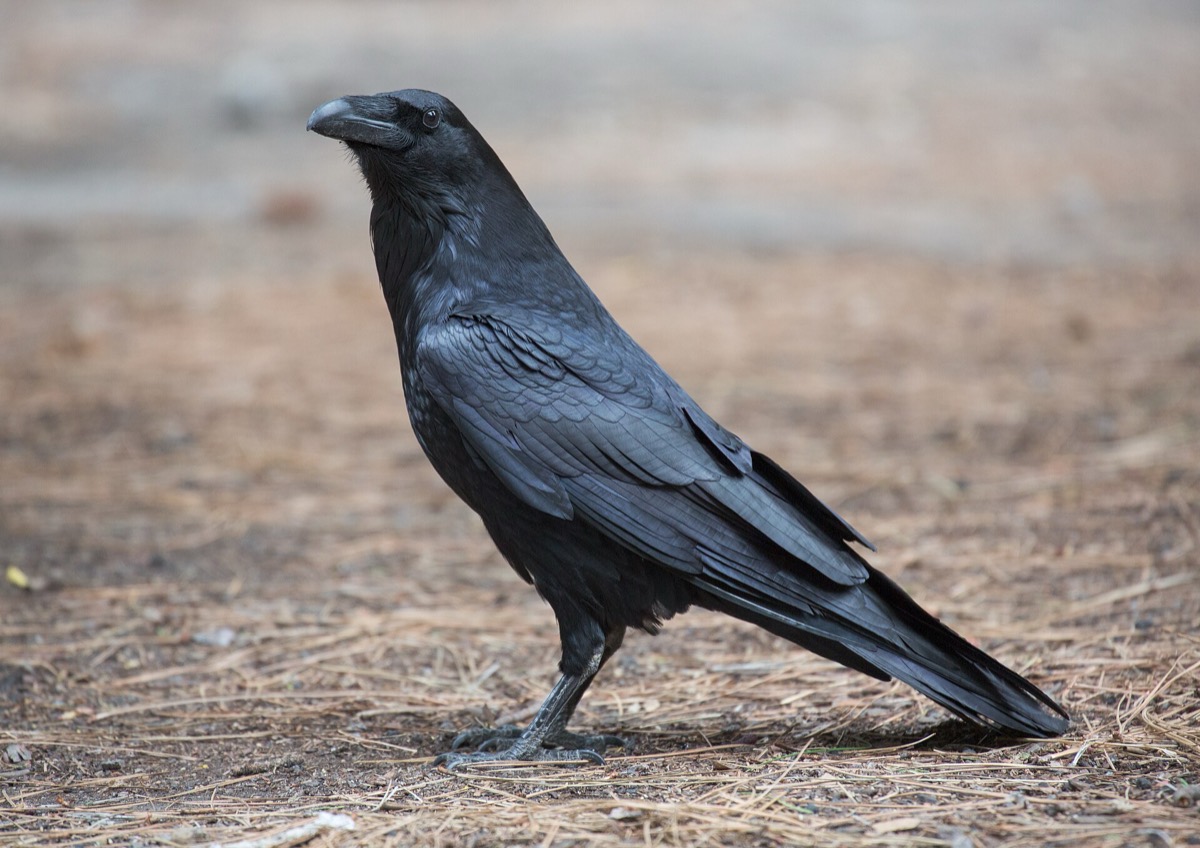
Planning for something outside the present moment has long been treated as a hominid invention, with the ape studies as its evidence. Corvids do cache food for later, which looked like a narrow adaptation for hoarding rather than planning in general. So two researchers set ravens tasks with nothing to do with : using a tool, and with a person. What did the birds do with the delay?
The ravens planned across both tasks, with delays of up to 17 hours. They selected and kept the tool, or the token worth bartering, for a reward that was not on offer yet, in jobs that have nothing to do with hoarding food. They also exerted , turning down a smaller immediate option, and they took the to the future event into account.
Acting now for an event outside the current sensory scope sits close to the core of what people take to be distinctively human. Decades of ape studies shaped a belief that the ability evolved inside the hominid lineage, and the comparative evidence came mostly from our nearest relatives.
Corvids complicated that, because they plan where and when to recover hidden food. The objection was that caching is a special-purpose adaptation, honed by natural selection for one job, rather than a general ability to think about the future. Testing it properly meant finding tasks with no connection to hoarding at all.
Ravens were given two. One required using a tool to get at a reward, the other required bartering a token with a human. In both cases the useful object had to be chosen and kept across a delay, in some conditions as long as 17 hours, before it could be used for anything.
The birds did it. They also exerted self-control, refusing an immediately available but smaller option, and their choices reflected how far off the future event was. The authors conclude that planning evolved independently in corvids, which is a stronger claim than ravens being clever. Set against that, these are a few captive and heavily trained birds on laboratory tasks, and parallel performance across two sets of experiments is a looser comparison than it sounds.
wat. Ravens kept a tool for a job seventeen hours off, turned down a smaller reward to do it, and had never needed to hoard a thing.
wat wat
If planning turns up in a bird whose last common ancestor with us was a reptile, then it evolved at least twice. That makes it a general solution to a problem rather than a human inheritance.
How do we know?
Kabadayi and Osvath set ravens tool-use and bartering tasks where a choice had to be made and then held across delays of up to 17 hours, alongside tests of self-control.
What is still unknown
A small number of captive, intensively trained ravens on laboratory tasks. Performance paralleling apes is a comparison between two sets of experiments, not between two species in the wild.
Learn something?
Where to next
 Can a new trick spread through a colony of bumblebees like a custom?tools
 A cockatoo wants the seed inside a hard fruit. Why is one tool not enough?tools
 How did the great stone city of Africa secure its water?planning