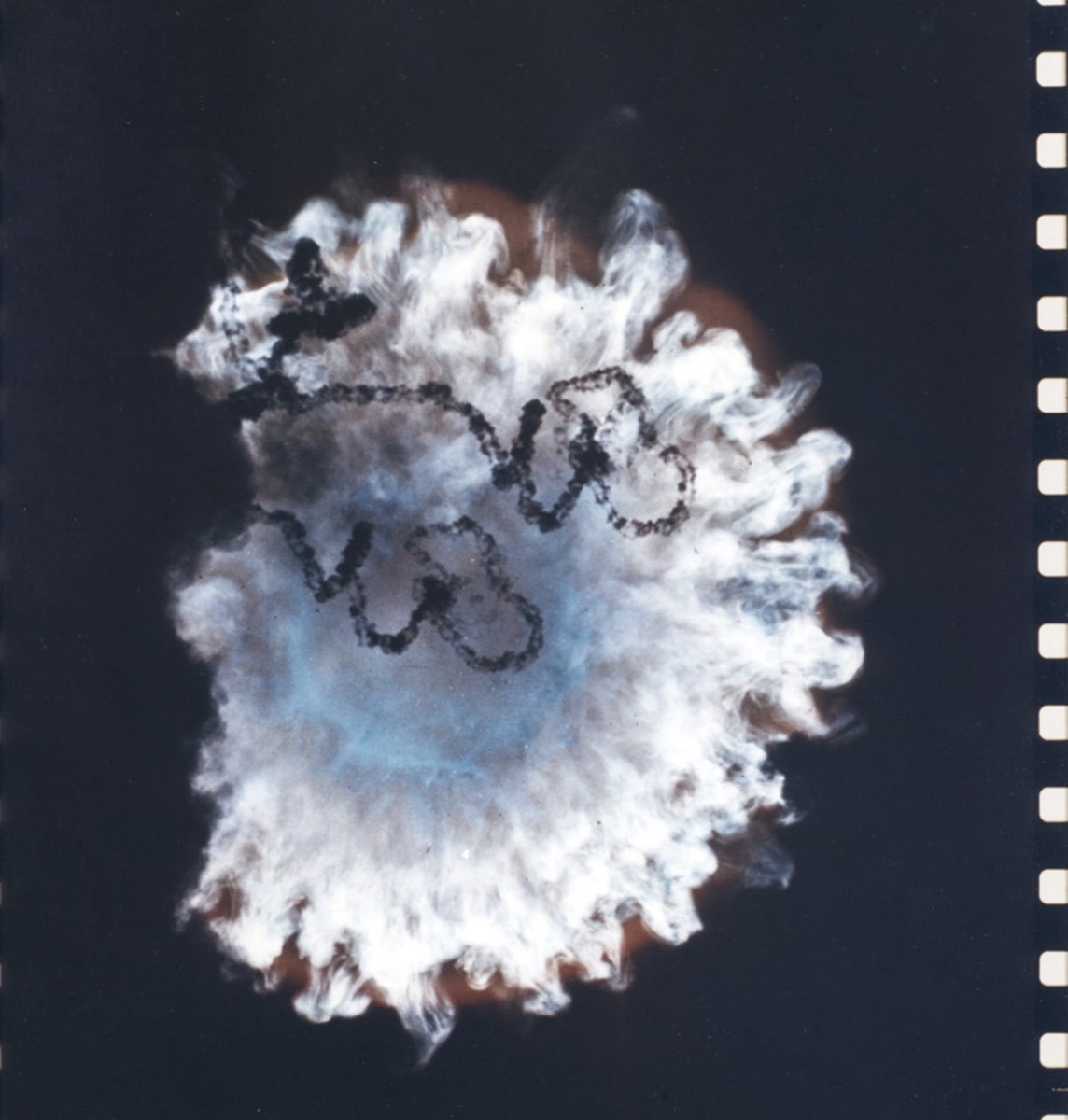
A month after Sputnik, a physicist at Livermore proposed intercepting incoming missiles with a cloud of electrons, produced by exploding a nuclear bomb in the upper atmosphere and trapped in the Earth’s magnetic field. The idea was tested in nineteen fifty-eight and then on a far larger scale in July nineteen sixty-two. What did the largest shot leave behind?
An that wrecked satellites. Starfish Prime, a one point four megaton device at four hundred kilometers, produced the best documented artificial belt and the best documented list of casualties. Ariel-1, TRAAC and Transit-4B were lost almost immediately, their destroyed by radiation. Telstar-1 followed, its solar cells damaged and its transistors eventually finished off.
The proposal came out of the missile age. The rockets that launched Sputnik were also able to deliver weapons across the world. In October nineteen fifty-seven Nicholas Christofilos, at what is now Lawrence Livermore National Laboratory, suggested a defense. Explode a nuclear bomb in the upper atmosphere, and the electrons from fission would be trapped in the Earth’s magnetic field, as a cloud that would destroy an incoming missile.
The idea was tested before anyone knew much about the natural environment it would disturb. The experiments of nineteen fifty-eight, backed by the director of the Advanced Research Projects Agency, used small devices at several hundred kilometers. They showed the concept worked, and something else besides: injections of electrons damage spacecraft flying through the cloud, which is anthropogenic space weather in one sentence. Explorer IV detected all three artificial shells, each lasting roughly three weeks.
Starfish Prime, on the ninth of July nineteen sixty-two, was in another class, at one and two fifths megatons and four hundred kilometers up. It produced the best documented artificial radiation belt and, by consequence, the best documented record of satellites destroyed or damaged. Ariel one, TRAAC and Transit four B were near-immediate losses, all three from radiation damage to their solar cells. Kosmos five was reportedly damaged too. Telstar one, launched the day after the test and extensively instrumented to measure radiation damage, suffered well documented solar cell damage before radiation to its transistors finished it.
The second consequence took longer to recognize. The devastating that a high-altitude nuclear explosion can produce was only observed years later, following Starfish Prime, and its effects depend heavily on geomagnetic location and burst altitude. The review’s broader point is that the near-Earth environment today is unlikely to be entirely natural. Any future proposal to modify it deliberately deserves a careful look at the long-term implications before the experiment is designed, let alone run.
wat. The plan was to kill incoming missiles with trapped electrons. It killed satellites instead, including the one that had just carried the first live television across the Atlantic.
wat wat
The experiment worked, in the sense that it proved the point. Trapped electron clouds do form, they persist, and they will degrade anything flying through them, including your own spacecraft.
How do we know?
A review of anthropogenic space weather in Space Science Reviews by Gombosi, Baker, Balogh, Erickson, Huba and Lanzerotti, which tabulates the high-altitude nuclear explosions and the satellites each of them damaged.
What is still unknown
A review written decades later, drawing on the instrumentation of the time. Natural geomagnetic storms followed some of the tests, which makes the lifetime of each artificial belt hard to separate from the weather.
Learn something?
Where to next
 What would make low orbit unusable without a single new launch?satellites
 How do you find a ship that sank under moving ice a century ago?satellites
 Has the Earth been getting greener, and if so why?satellites