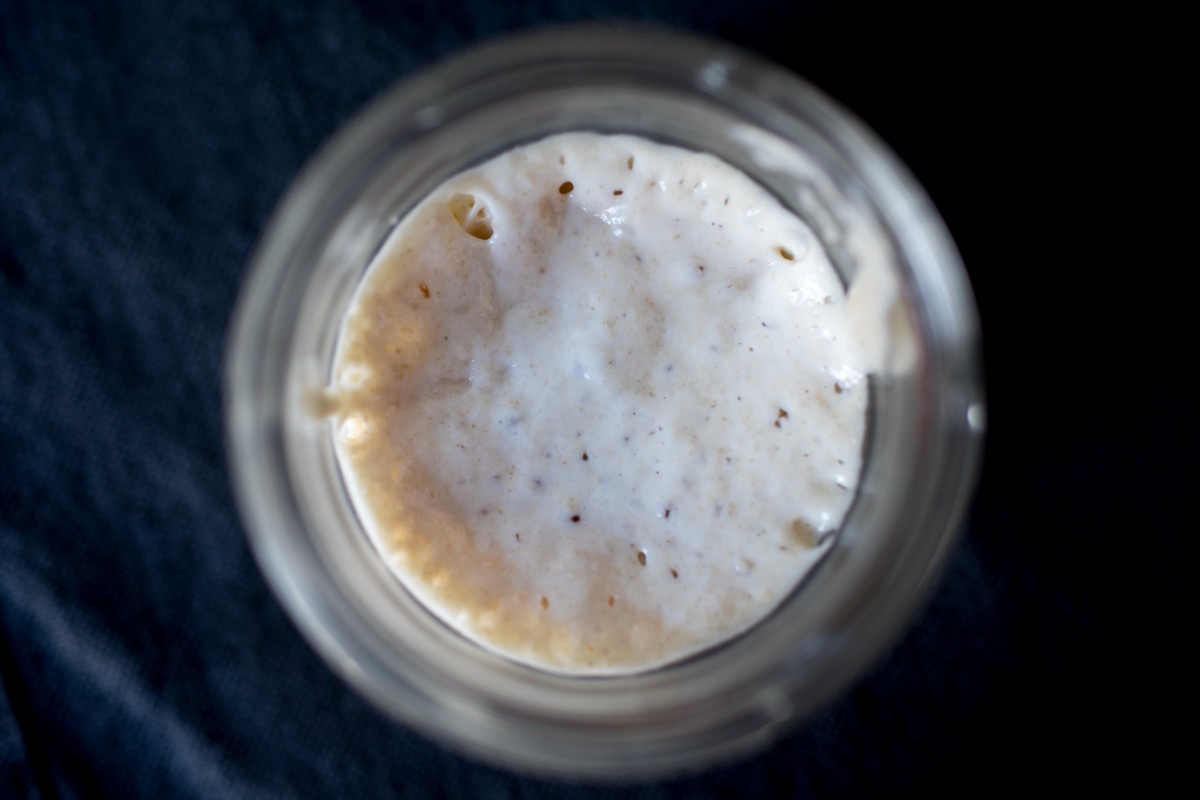
Bakers talk about a the way winemakers talk about a vineyard, as something that picks up the microbes of its city and could not be reproduced anywhere else. Nobody had checked at scale. Landis and colleagues worked with a network of community scientists to collect five hundred starters from four continents and sequenced the lot. Does geography show up in the microbes?
Barely at all. Across five hundred starters from four continents, the evidence for in the communities was slight, which cuts against the assumption almost everyone holds. What does structure a starter is the microbes themselves: strong showed up in the collected samples and were recreated in the laboratory. , a mostly overlooked group, explained much of the variation in rise rate and aroma.
People have leavened bread with sourdough starter for thousands of years, and only a small fraction of the world’s starters had ever been characterized. Into that gap grew a strong belief: that a starter absorbs the microbes of its place, so a culture from one city cannot be the same as a culture from another.
Landis and colleagues tested it at a scale no single laboratory could manage, working with a network of community-scientist bakers to assemble five hundred starters from four continents. Sequencing them gave a picture of the microbial diversity in an ancient fermented food across very different cultures and climates.
The biogeographic patterns were not there. In sharp contrast with the widespread assumption, location explained little about which organisms a starter contained. What did explain the structure was the organisms themselves: strong co-occurrence patterns in the collected samples, reproduced when the same combinations were grown in vitro, which points at microbial interactions doing the sorting.
The practical finding sits in a group nobody was watching. Variation in dough rise rates and in aroma was largely explained by acetic acid bacteria, mostly overlooked in sourdough research next to the yeasts and the lactic acid bacteria. The character of a loaf turns out to depend on a tenant most bakers have never heard of.
wat. A starter is not a souvenir of a city. It is a community that sorted itself out, and the bakery is mostly incidental.
wat wat
A starter that owes its character to interactions among its own microbes, rather than to a city, is something a baker anywhere can reproduce on purpose.
How do we know?
Landis and colleagues sequenced the microbial communities of five hundred sourdough starters gathered by community scientists across four continents, then tested co-occurrence patterns in vitro and measured dough rise and aroma.
What is still unknown
A snapshot of starters as they arrived, each with its own history of flour, water and feeding schedule. Weak geographic signal in this sample does not prove that place never matters.
Learn something?
Where to next
 How do bacteria in a mouse’s gut change the way it behaves?microbiomeWhat happens to a mouse raised with no gut bacteria at all?microbiome
 How many bacteria are there really in your body per human cell?microbiome