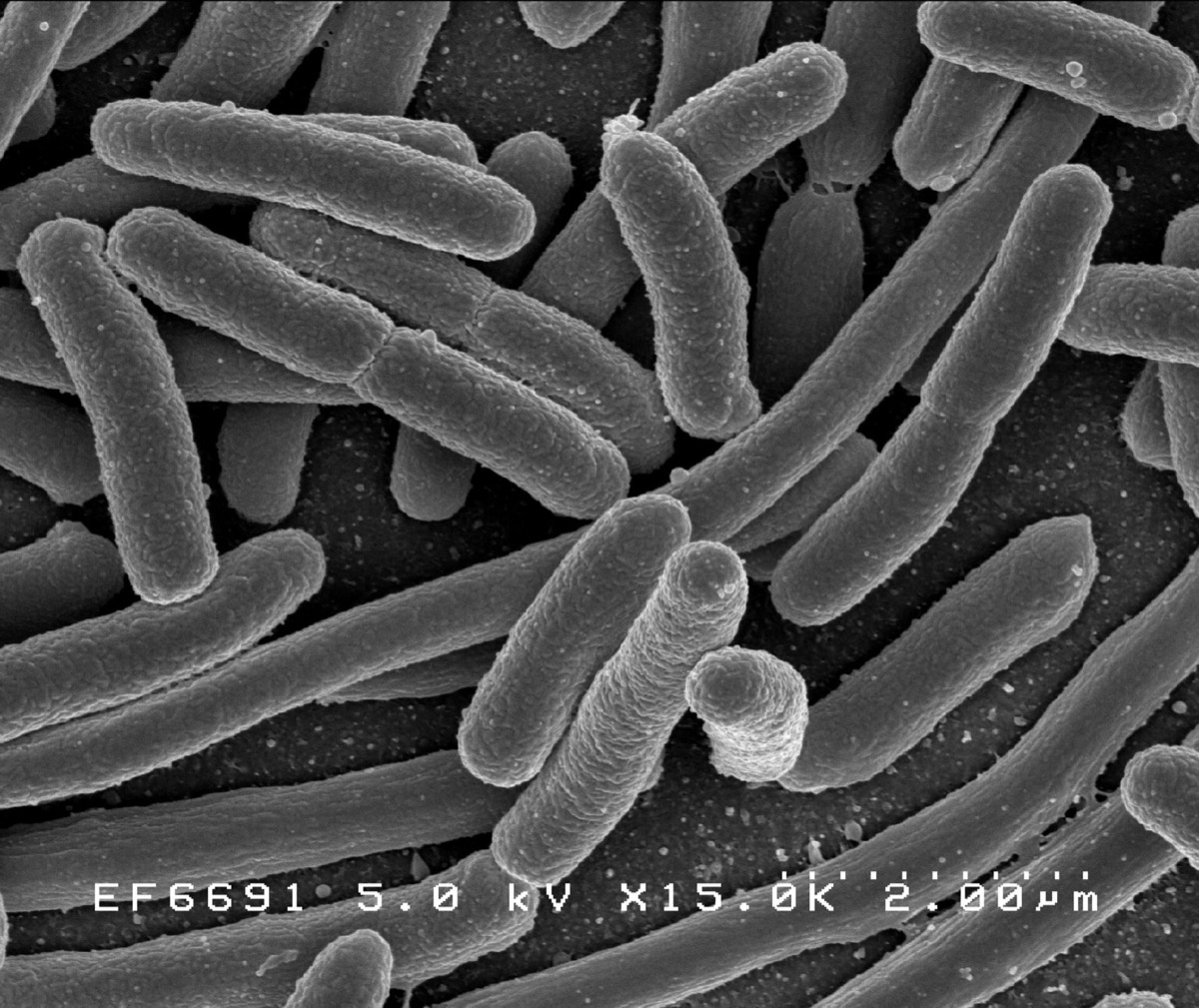
For decades the claim repeated that the human body holds ten times more bacteria than human cells, and it appeared in textbooks and in lectures. Three researchers went looking for where the number itself came from, and recalculated. What is the real ratio?
About 1.3 to one, in a . They traced the old figure to a 1972 paper containing a quick calculation never meant to be quoted widely. Then they counted both sides again: roughly 3.8 times ten to the thirteenth bacteria against roughly 3.0 times ten to the thirteenth human cells. What matters is , not the first digit, and the two are so close that a trip to the lavatory may tip the balance.
The claim that the body holds ten times more bacteria than human cells was one of those facts that turned up everywhere: in lectures, in articles, and in the opening lines of scientific papers. It also served an attractive idea, that we are more bacteria than ourselves.
Three researchers went after the source, and that in itself is an instructive exercise. The citations led one to another until they reached a 1972 paper, in which a quick calculation had been made for illustration, with no intention of being data. It is , copied onward for decades.
The recalculation was done on each side separately. Human cells were counted by tissue type, which produced a small surprise: most of the cells in the body are tiny red blood cells, not muscle or nerve. The bacteria were counted from the volume and contents of the large intestine, where nearly all of them sit.
The result: about 3.8 times ten to the thirteenth bacteria against about 3.0 times ten to the thirteenth human cells, a ratio of roughly 1.3 to one. The numbers are so close that a trip to the lavatory tips the balance temporarily. None of this diminishes the importance of the , and it does show how a number that sounds precise can roll on for decades with nobody checking where it came from.
wat. A trip to the lavatory may tip the balance temporarily toward the human cells.
wat wat
The case shows how a number that sounds precise can roll from paper to paper for decades with nobody checking where it came from in the first place.
How do we know?
The researchers rebuilt the estimate for each side of the ratio separately: human cells counted by tissue type, and bacteria counted from the volume and contents of the large intestine.
What is still unknown
The new numbers are estimates with a range of uncertainty too, and they describe a reference man of seventy kilograms rather than any particular person.
Learn something?
Where to next
 How do bacteria in a mouse’s gut change the way it behaves?microbiomeWhat happens to a mouse raised with no gut bacteria at all?microbiome
 What is the appendix actually for?microbiome