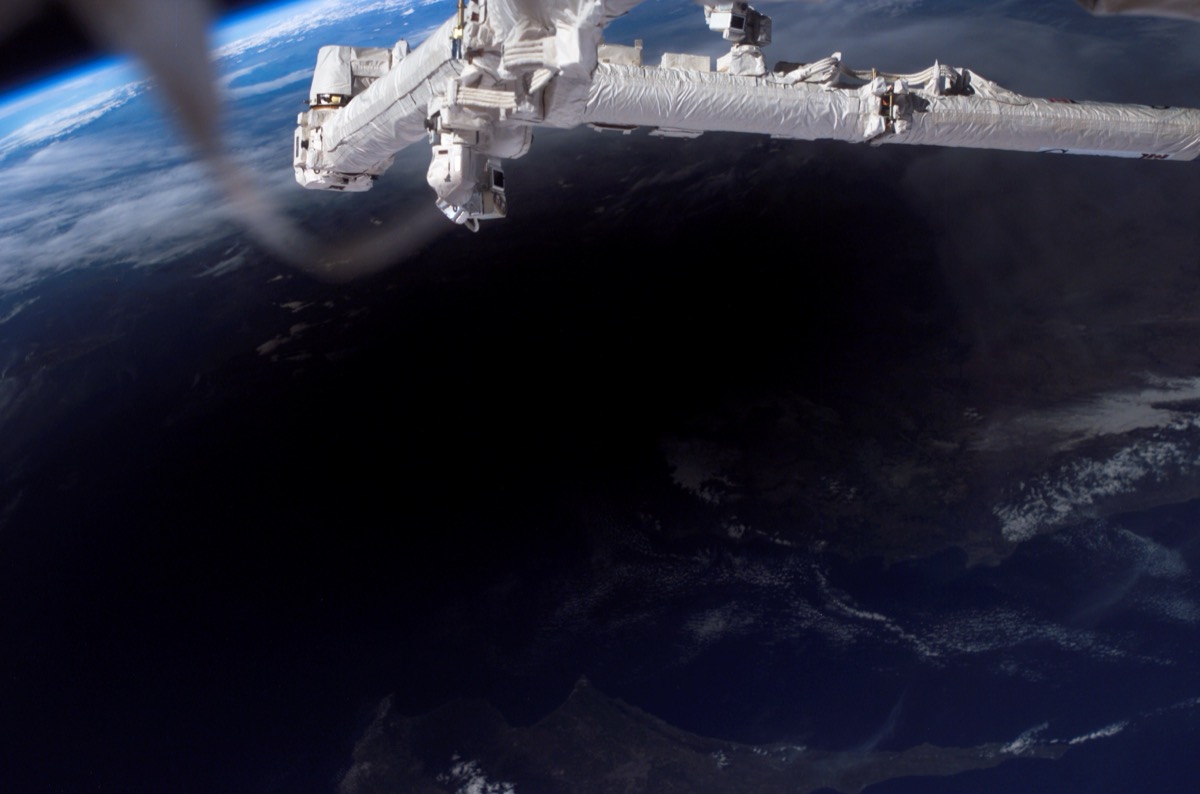
From the ground a total eclipse is an event in the sky, and the experience lasts at most . From orbit it is something else entirely: a dark patch lying on the Earth and moving across it. The patch has a structure, with a sharp core and a soft surround, and the geometry explains both.
A two-part shadow sweeping the surface. The Moon’s shadow consists of the , a cone into which no direct sunlight penetrates, and the , which is reached by light from only part of the Sun’s disk. The umbral cone is narrow at the Earth’s distance, so totality is visible only in the narrow strip the umbra passes over.
A solar eclipse is the Moon coming between the Earth and the Sun so that the Moon’s shadow sweeps over the Earth’s surface. That shadow has two parts: the umbra, a cone into which no direct sunlight penetrates, and the penumbra, which is reached by light from only a part of the Sun’s disk.
What you see depends on which part you are standing in. To an observer within the umbra the Sun’s disk appears completely covered by the disk of the Moon, and the eclipse is total. To an observer within the penumbra the Moon’s disk appears projected against the Sun’s so as to overlap it partly, and the eclipse is partial.
The geometry explains the narrow track. The umbral cone is narrow at the distance of the Earth, so a total eclipse is observable only within the narrow strip of land or sea over which the umbra passes. The maximum duration of totality is only seven and a half minutes. A partial eclipse can be seen anywhere in the much larger area covered by the penumbra. Sometimes the Earth intercepts the penumbra while missing the umbra, and then nowhere on Earth sees a total eclipse.
All of it rests on a coincidence of sizes. The Sun and the Moon happen to appear at very nearly the same from Earth, about half a degree. Both vary slightly, because the Earth’s orbit around the Sun and the Moon’s around the Earth are elliptical. When the Sun is nearest and the Moon at its most distant, the Moon’s disk is too small to cover the Sun completely and leaves a visible rim all around.
wat. From up there it is not a dark sky. It is a dark spot on the ground, with a fuzzy edge, moving fast.
wat wat
The sizes work out by a coincidence. The Sun and Moon happen to appear nearly the same angular size from Earth, about half a degree, which is the only reason a shadow this sharp exists at all.
How do we know?
Britannica’s astronomy entry on solar eclipses, which defines the two parts of the shadow, what each looks like to an observer standing inside it, and why the strip of totality is so narrow.
What is still unknown
An encyclopedia entry on the geometry rather than an account of a particular photograph. It explains what an orbital view would show without discussing any one orbital observation.
Learn something?
Where to next
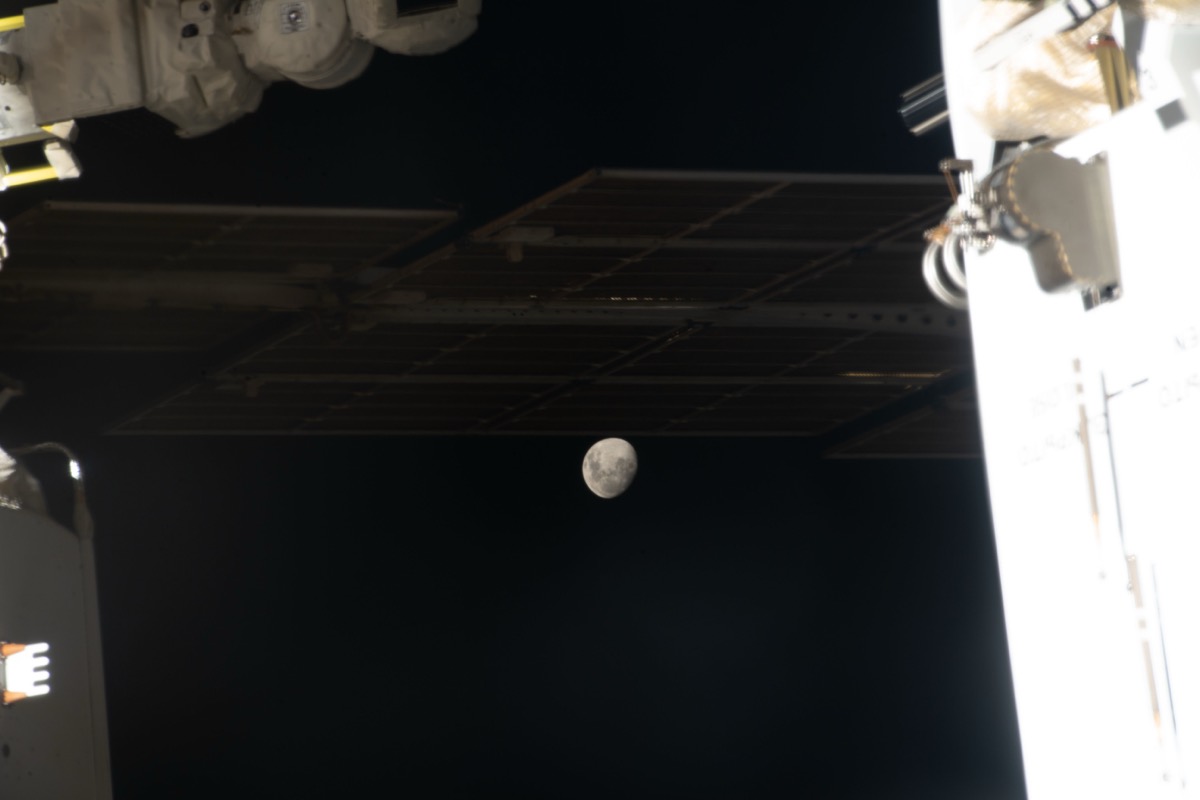 Why does the Moon turn red instead of going dark?shadow
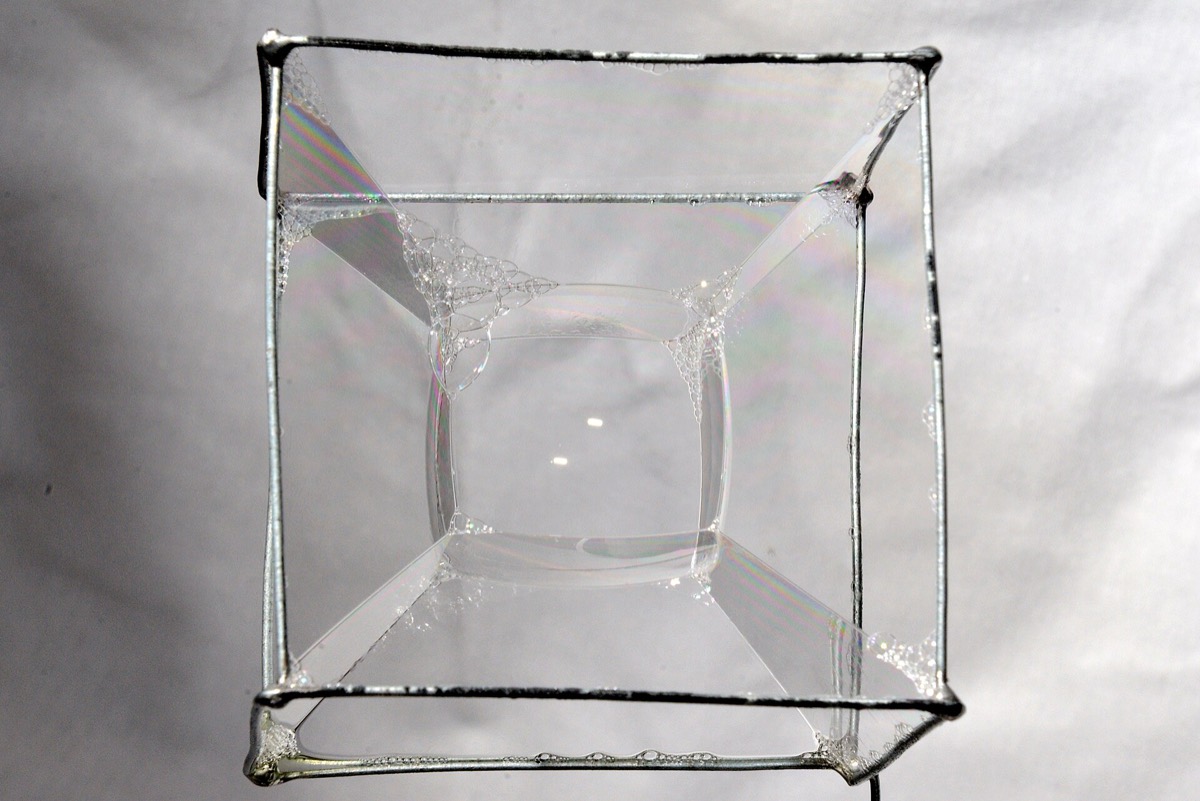 How does a thin film solve a geometry problem without calculating?geometry
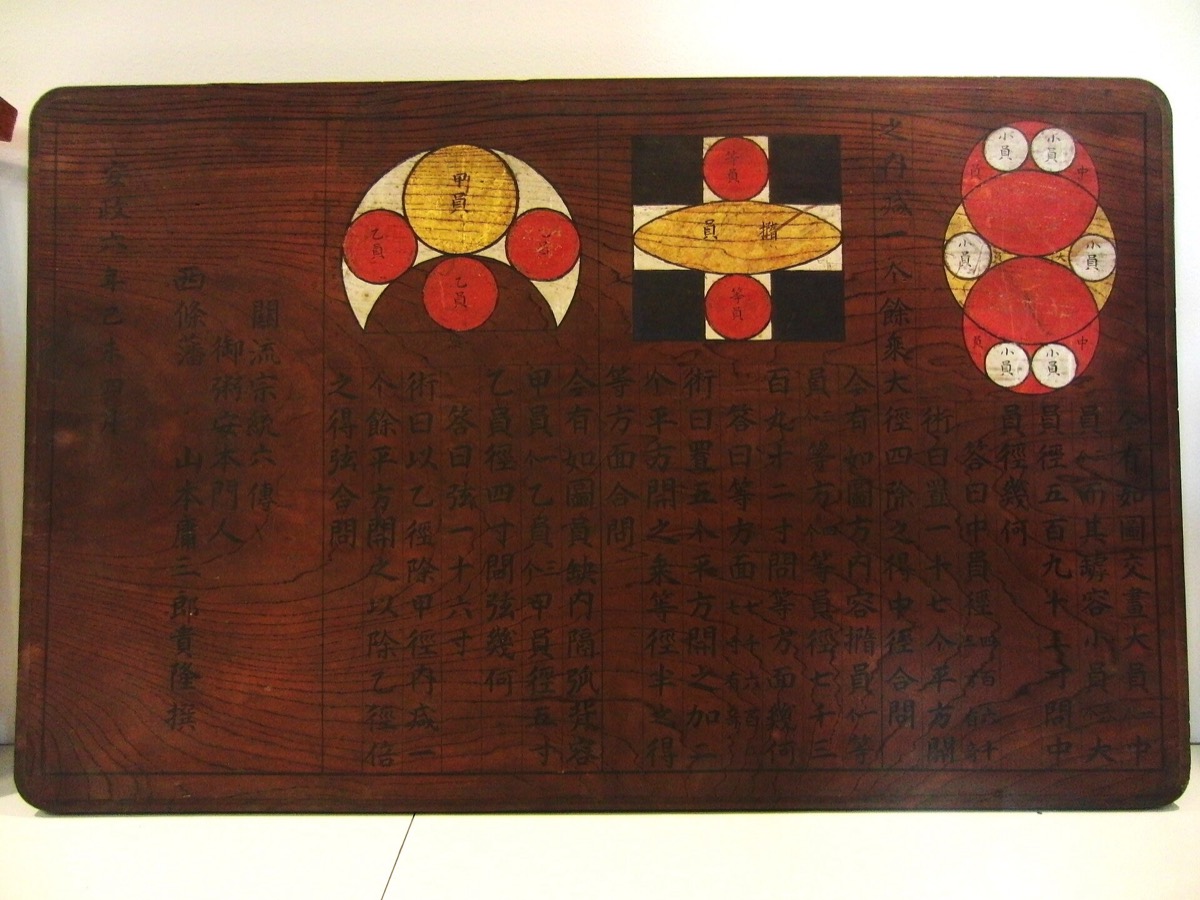 Why were geometry problems hung in temples in Japan?geometry