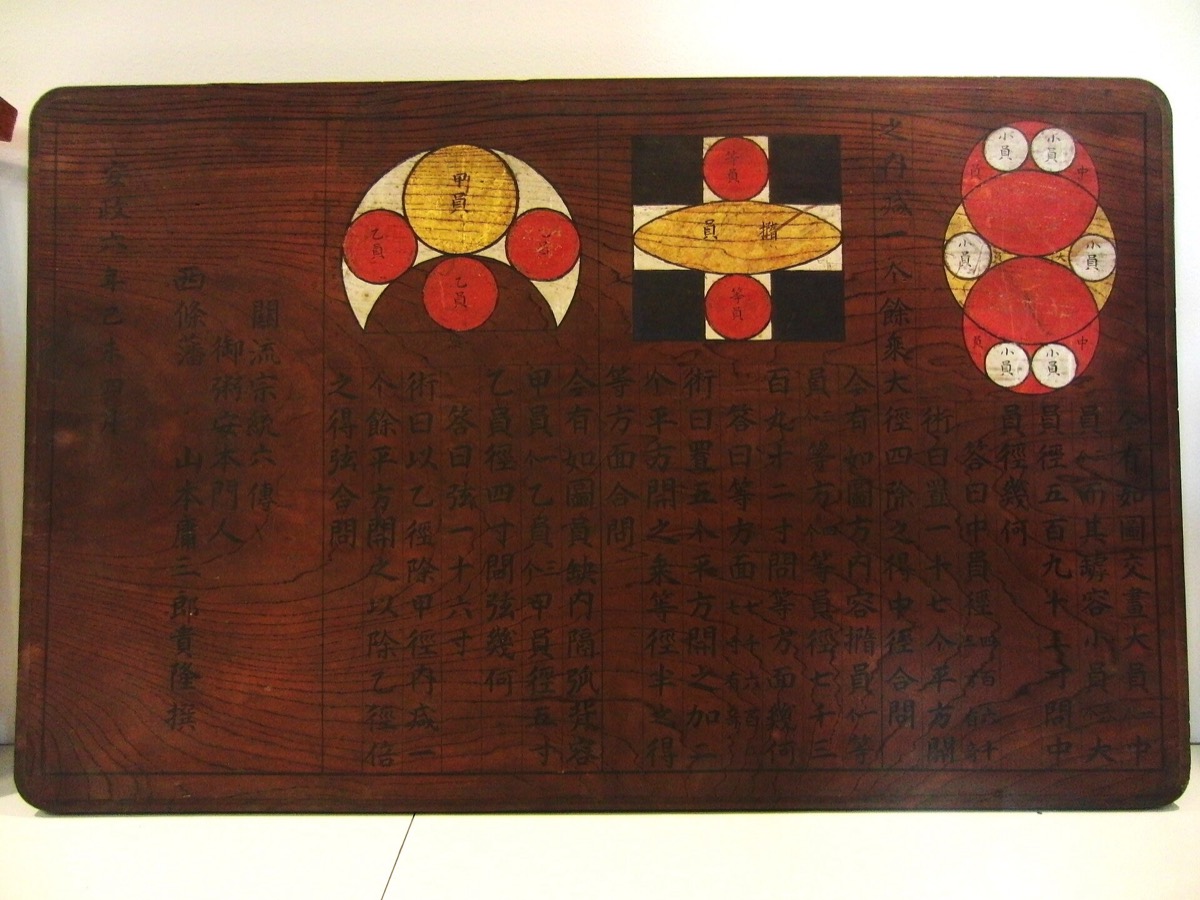
are colorful wooden tablets painted with circles, triangles and , alongside the statement of a mathematical problem. Their authors hung them in Shinto shrines and in Buddhist temples. Why there in particular?
Because the tablet was an offering, a display and a challenge at once. Some presented an achievement, others invited the visitor to solve a problem, and the dedication itself carried religious and social meaning. A study of a nineteenth-century tablet showed how its solution rests on geometric methods developed in the Japanese mathematical tradition of .
A painted wooden tablet hanging in a temple with circles and triangles on it looks like decoration, and beside the drawing appears the statement of a mathematical problem.
These tablets were dedicated to Shinto shrines and Buddhist temples in a period when Japan was almost entirely closed, and mathematics developed there separately from European mathematics, with methods of its own.
Their role is mixed. Some presented the author’s achievement, others invited the visitor to solve, and the dedication itself carried religious and social meaning. A temple is a place many people pass through, so the solution became .
A study of a nineteenth-century tablet analyzed the inscription and the drawing and reconstructed the solution by the methods of the period, showing it rests on geometry developed in that same tradition. The paper analyzes one particular tablet, and the purposes and audiences of sangaku varied between temples, authors and periods.
wat. In Edo-period Japan, a geometry problem could hang in a temple as a painting, a challenge and a dedication.
wat wat
The tablets show mathematics did not exist only in books and schools; it was presented in a public, artistic and ritual space as well.
How do we know?
Historians of mathematics analyzed the inscription and the drawing on a nineteenth-century sangaku tablet and reconstructed the solution by the methods of the period.
What is still unknown
The paper analyzes one particular tablet, and the purposes and audiences of sangaku varied between temples, authors and periods.
Learn something?
Where to next
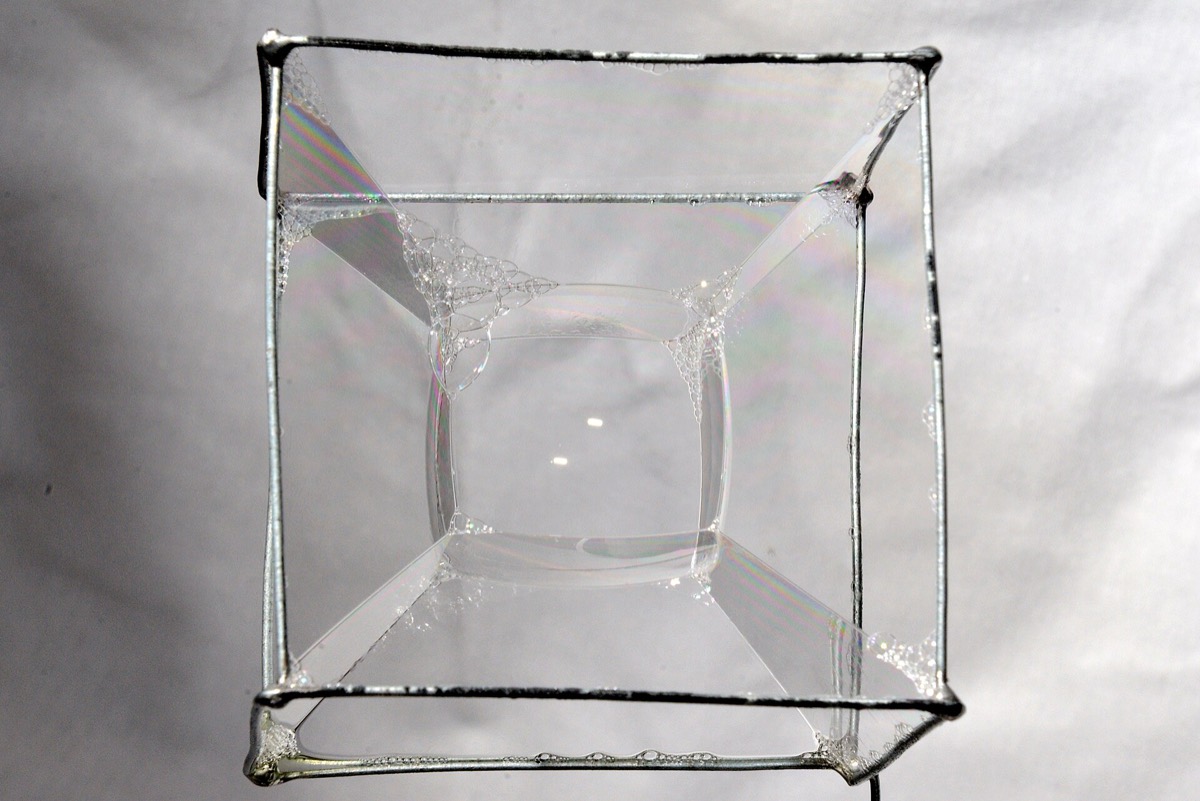 How does a thin film solve a geometry problem without calculating?geometry
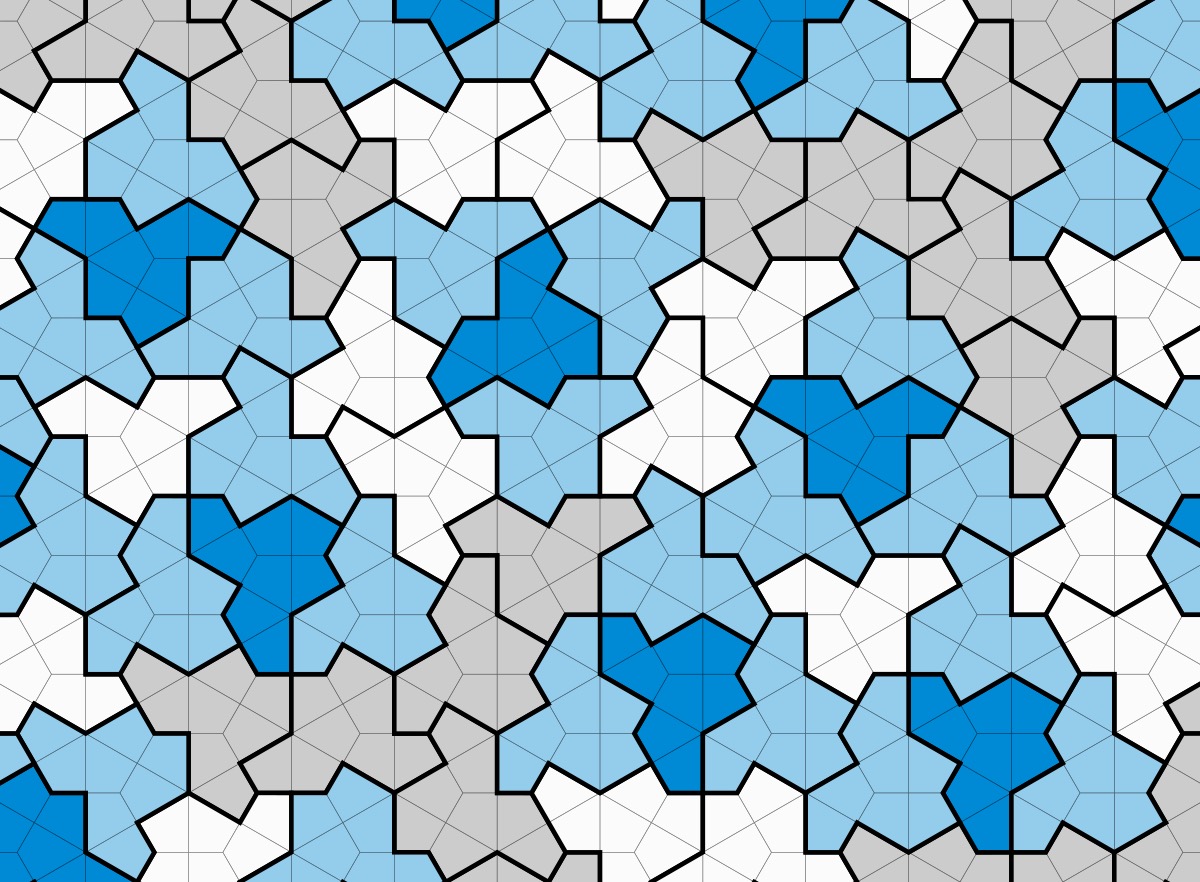 Can one shape tile a floor that never repeats?geometry
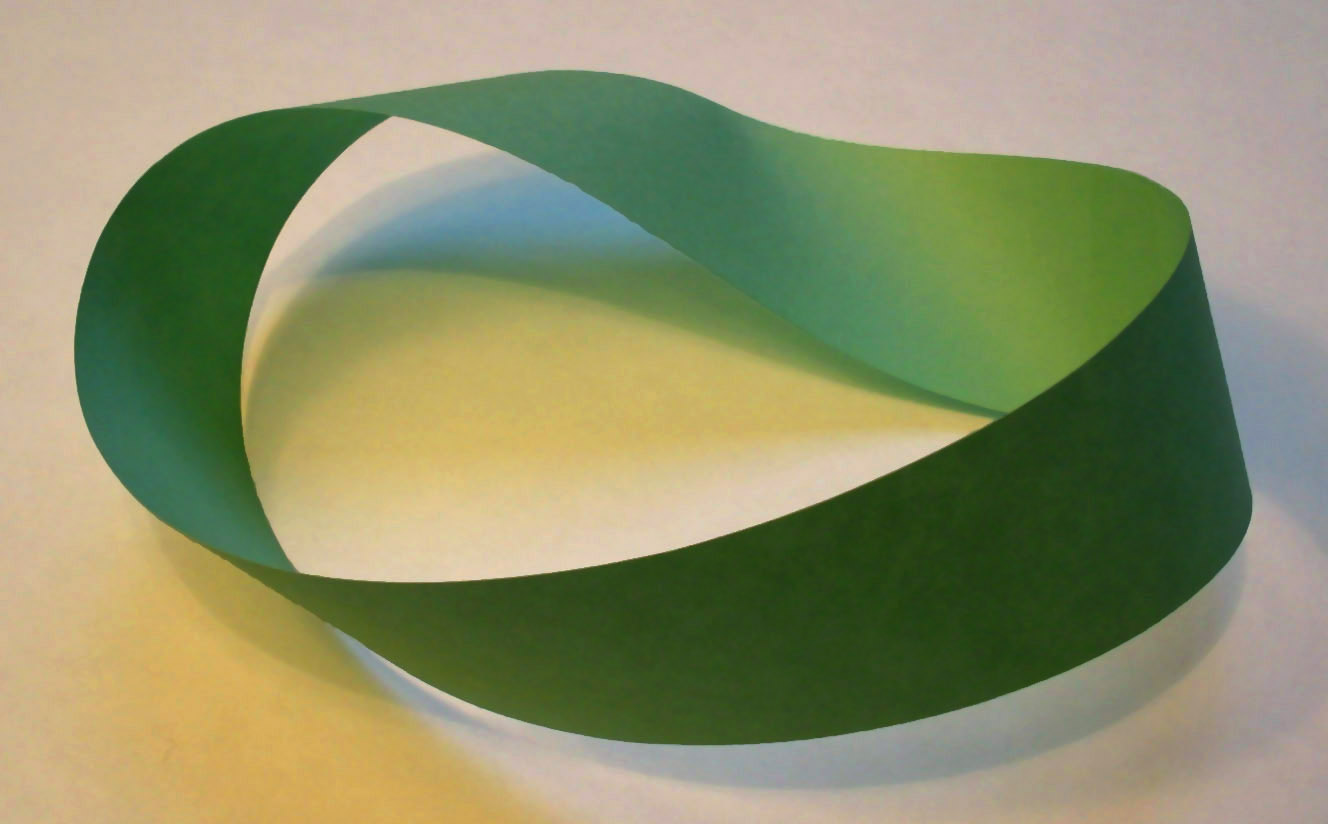 What do you get if you cut a one-sided surface down the middle?geometry