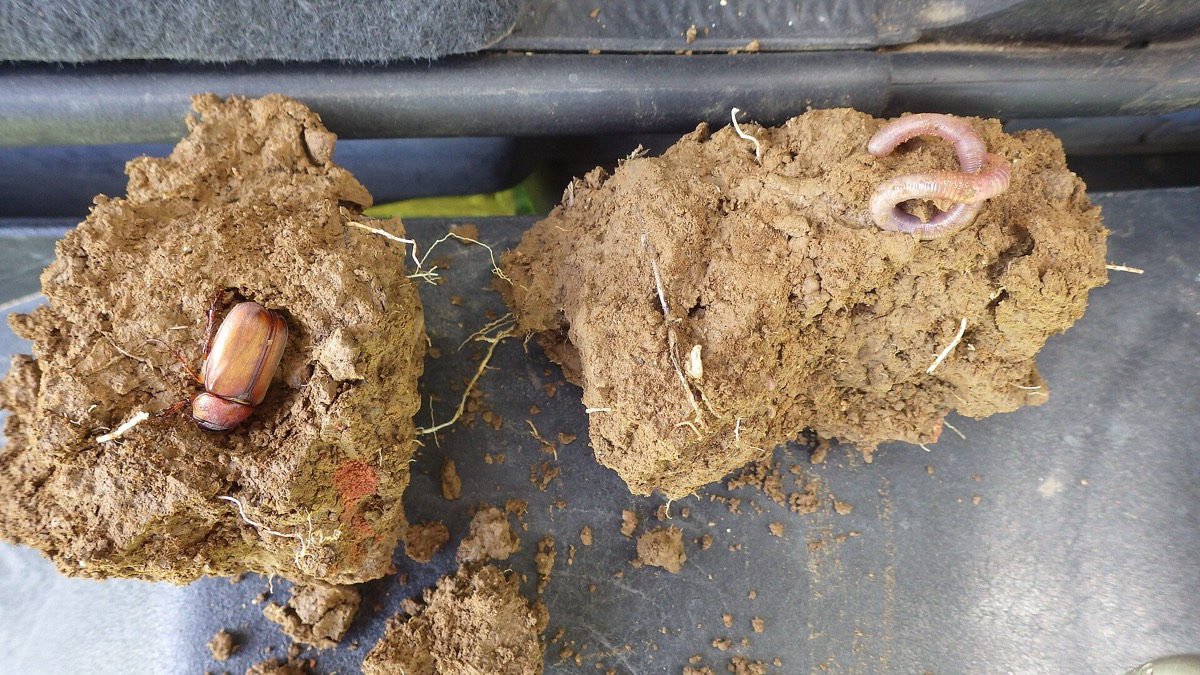
Whether species can respond evolutionarily to current climate change decides whether many of them persist. Almost all the evidence comes from models or from laboratory selection, because very few studies have looked for genetic responses in manipulated experiments under natural field conditions. So a field experiment manipulated climate in a natural setting, and the of a common annelid worm was sequenced across the plots.
About an eighth of the variation shifted with the climate. Analyzing the transcribed genome of 15 local populations, roughly 12 percent of the showed differences in associated with changes in soil temperature and soil moisture. That is an evolutionary response to realistic climate change over a short timescale, in the field rather than in a selection chamber.
Whether species can respond evolutionarily to current climate change is crucial for the persistence of many of them, and the evidence base is thinner than the question deserves. Very few studies have examined genetic responses to climate change in manipulated experiments carried out under natural field conditions, as opposed to in the laboratory or in models.
This study used a common annelid worm, an ecologically important soil invertebrate, in a controlled replicated experiment where climatic conditions were manipulated in a natural setting. That combination, a real field with a deliberately altered climate and enough replication to compare, is what makes the result interpretable.
The transcribed genome of 15 local populations was analyzed. About 12 percent of the genetic polymorphisms exhibited differences in allele frequencies associated with changes in soil temperature and soil moisture, which is a substantial fraction of the variation in the genes actually being used.
The authors read this as an evolutionary response to realistic climate change happening over a short timescale, and call for incorporating evolution into models predicting how species will respond. They add a methodological point. Designed climate change experiments coupled with genome sequencing can test whether such a response happens or fails to. Keep the inference measured, though. An association between allele frequencies and soil conditions across plots is not the same as identifying what was being selected for.
wat. Roughly one in eight genetic variants in these worms shifted with soil temperature and moisture, inside a single field experiment.
wat wat
Models that project species responses to warming usually hold evolution fixed. If a soil animal can shift allele frequencies this fast, those projections are leaving out a term that matters.
How do we know?
Bataillon and colleagues used a controlled replicated field experiment manipulating climatic conditions in a natural setting, then sequenced and analyzed the transcribed genome of 15 local worm populations.
What is still unknown
Allele frequency differences associated with soil temperature and moisture are a correlation across plots, not a proven selective mechanism. One species, one experiment, and the transcribed genome rather than the whole one.
Learn something?
Where to next
 If trees cancel almost half the urban heat effect, why does the thermometer barely move?climate
 Does the Amazon still absorb more carbon than it releases?climate
 What comes out of the frozen ground of the north when it thaws?climate