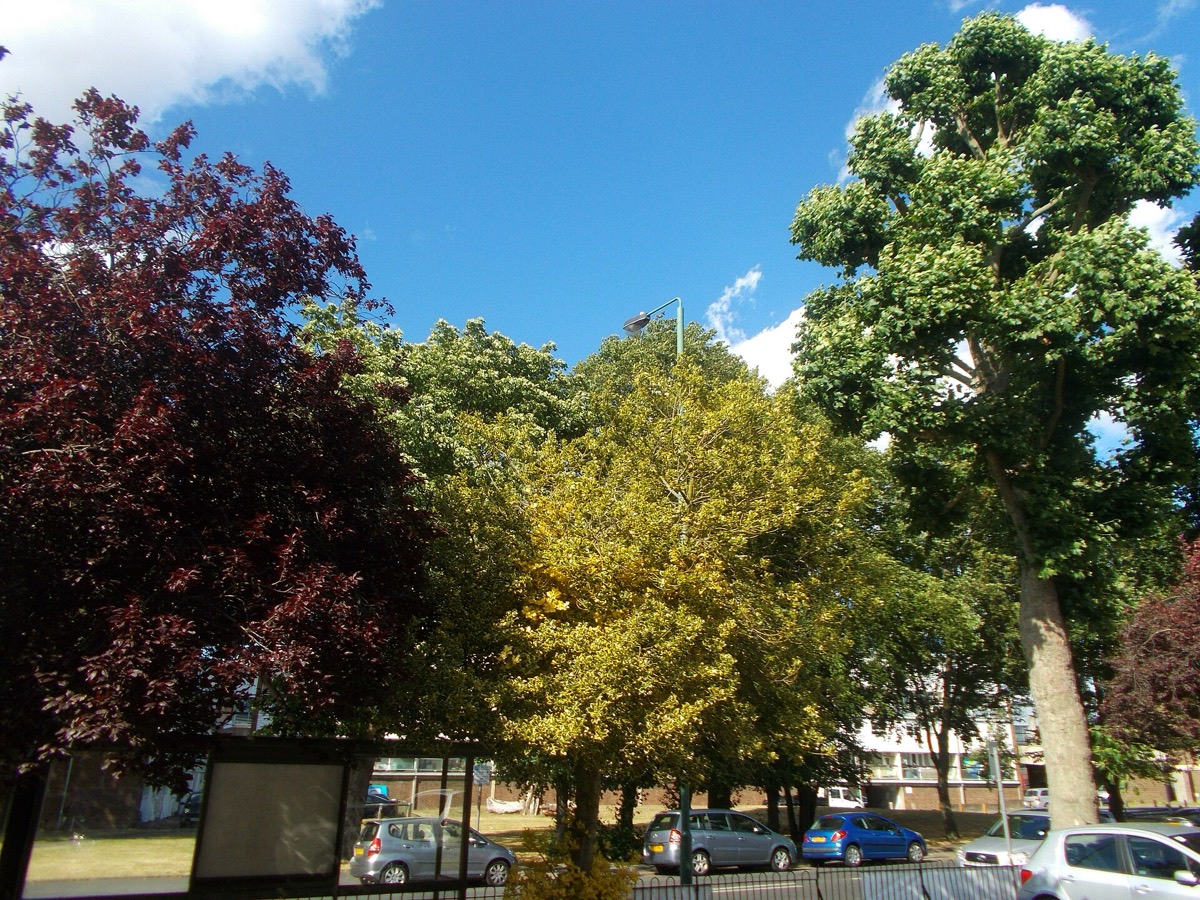
Two numbers about the same city trees sound like they are arguing. One says the trees cancel close to half of the urban heat effect. The other says they pull the thermometer down by a fraction of a degree. Both are correct, so how do they fit together?
The two numbers stop fighting once you see that each one answers a different question. The is the warmth a city generates simply by being built, and a model estimated how much of it would form with no canopy at all. Against that, the existing removes 41 to 49 percent. The other figure is real air temperature, weighted by where people actually live, and in summer it averages about 0.15 degrees Celsius.
The claim that trees cancel nearly half the heat in a city is true against one specific comparison. Take the extra heat a treeless city would have gained, and set it beside the same city with the canopy it has. It does not say that half the heat of the city has been cut away.
The study built that estimate for 8,919 urban areas. On the model, existing tree cover holds back 41 to 49 percent of the urban heat island that would otherwise form. That is a share of a potential increase, not a share of the thermometer reading.
Converted into degrees, and so that places where people live count for more, the average summer cooling comes to about 0.15 degrees Celsius, with wide variation between places. The benefit is also not shared evenly: suburban districts and wealthier countries get more of it today.
Trees remain a serious tool, and on this model the canopy that exists, or a plausible expansion of it, offsets only a small part of the warming forecast for these cities. Read against the right , that is an argument for planting where the shade is missing, in dense and poorer neighborhoods, rather than for counting trees citywide and calling the problem handled.
wat. City trees cancel close to half the heat a city would otherwise gain, and still move the summer thermometer by about 0.15 degrees.
wat wat
A large percentage of a small baseline does not promise a cool street. Where the trees stand, and who lives under them, decide what the number is worth.
How do we know?
Researchers estimated tree cover and air temperature across 8,919 urban areas and compared what stands today against a computed scenario with no canopy at all.
What is still unknown
This is a global model rather than a measurement of each street. The average hides wide variation between cities, and the cooling offsets only a small part of the warming that is forecast.
Learn something?
Where to next
 How much does one tree over a sidewalk change a summer afternoon?cities
 Where has almost all the trapped heat actually gone?heat
 Does the Amazon still absorb more carbon than it releases?climate