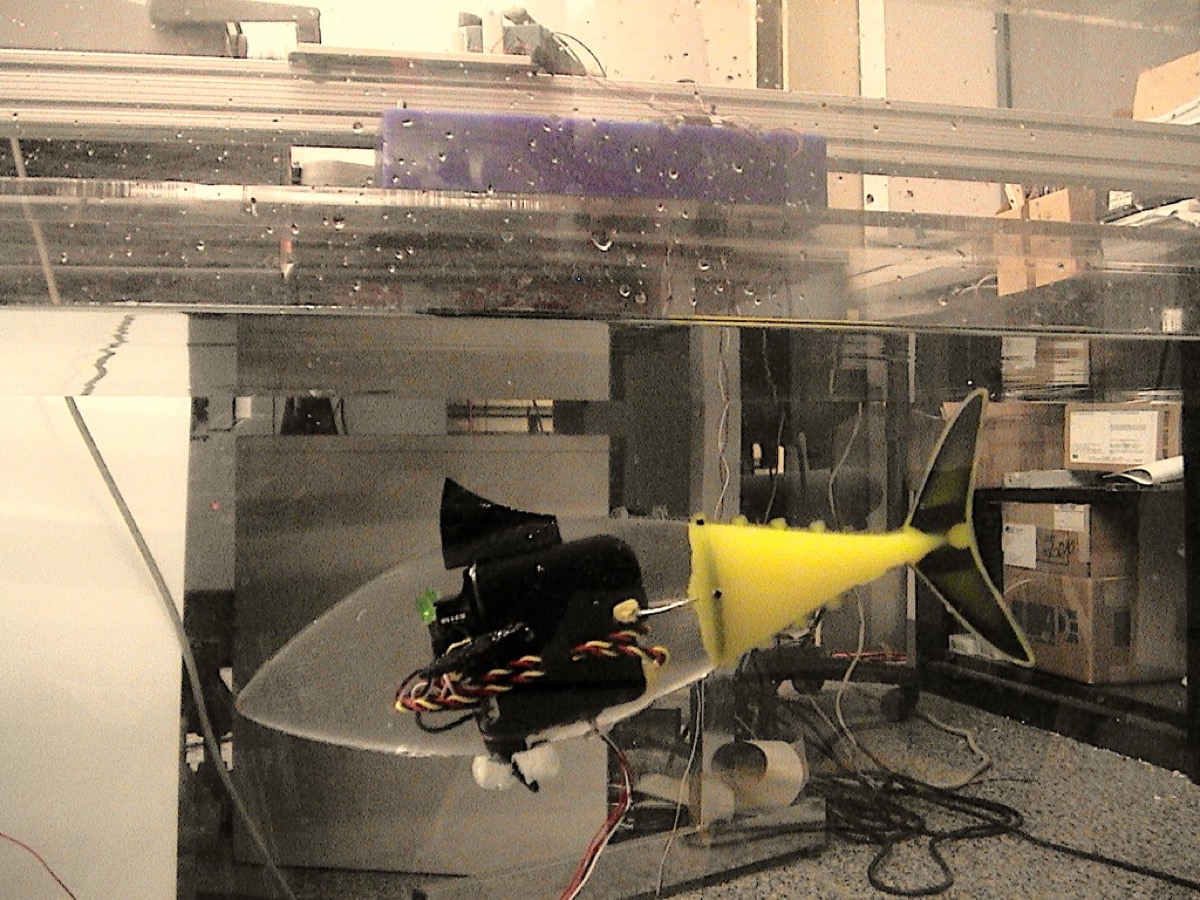
A propeller is the obvious way to move something through water, and no fish uses one. An eel swims by sending a wave down its body, which needs a body that bends continuously rather than joints that hinge. So the robot has to be soft, and softness is hard to control.
With segments and a rhythm generator. The robot is built from multiple soft , each able to bend both ways through two embedded symmetrical , and propulsion appears once the right control rules are applied to their . The controller is based on a .
The robot combines the adaptability of soft material with the flexibility of an eel-shaped body. Both halves of that are needed: a rigid eel would not swim like an eel, and a soft body with no structure would not swim at all.
It consists of multiple soft actuation segments, each capable of bidirectional bending through two embedded symmetrical fluidic chambers. Propulsion is produced when proper control rules are applied to the bending angles of those segments.
The paper walks through robot design, prototype fabrication and system integration step by step, which is the part that makes such work reproducible rather than impressive.
For control, a motion controller based on a central pattern generator was designed using identified parameters, and substantial experiments were implemented to evaluate it. One prototype in a tank is where this stands.
wat. Soft segments bending in sequence move the robot, and a pattern generator supplies the sequence.
wat wat
Soft swimmers can work where a propeller cannot, and the control problem is the thing standing between the material and the machine.
How do we know?
Chen and colleagues describe the design, prototype fabrication and system integration step by step, identify the parameters for the controller, and run substantial experiments to evaluate the result.
What is still unknown
This is one prototype evaluated in the laboratory, and a fluidic soft robot carries its pressure supply as a constraint.
Learn something?
Where to next
 Why do ducklings swim in a tight line behind their mother?swimming
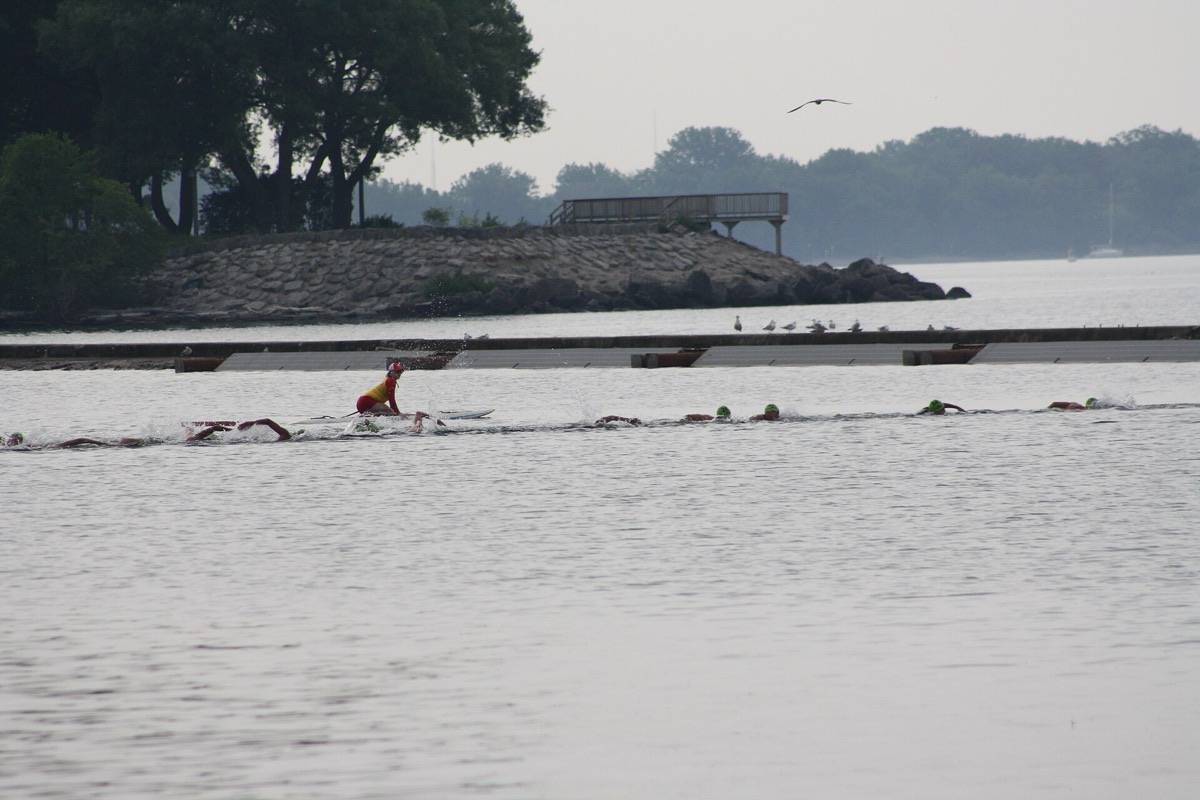 Why does a swimmer work less behind another swimmer?swimming
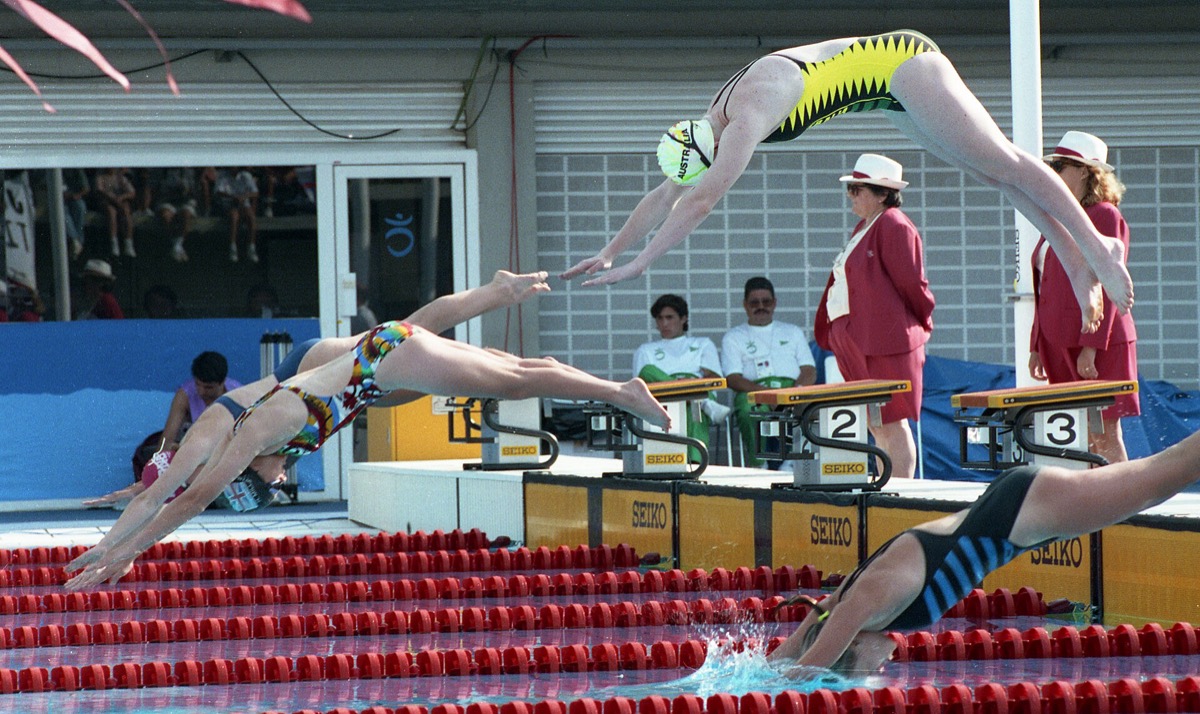 What exactly was swimming’s governing body trying to ban?swimming