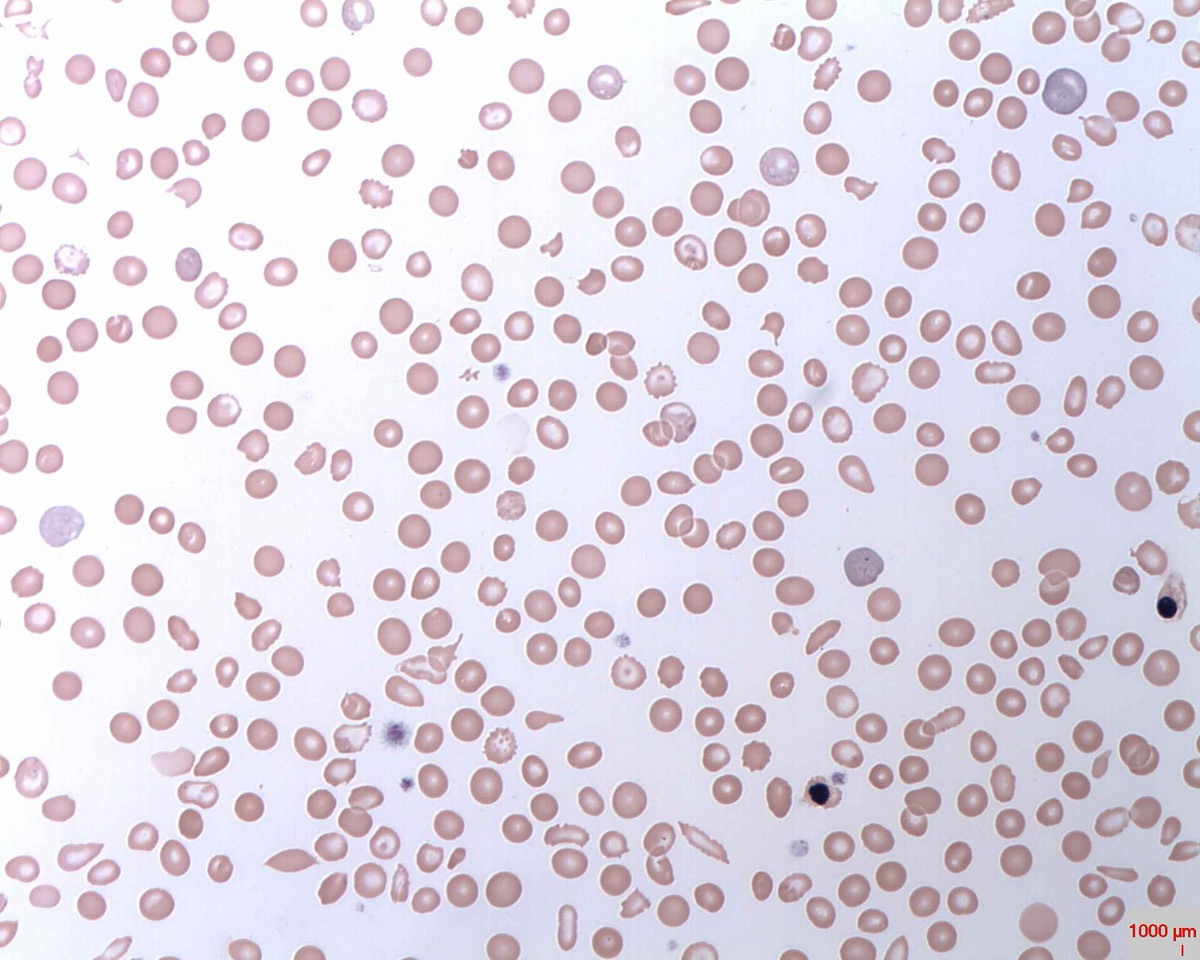
Sickle hemoglobin is damaging in a double dose, and more than fifty years ago researchers noticed its prevalence rises in the most malarious parts of the world, sub-Saharan Africa above all. Carrying one copy protects against severe disease and death from falciparum malaria. What stayed unclear was whether it also keeps the parasite out in the first place.
It slows infection down rather than blocking it. Following children in Mali over two years, the authors found that those with took far longer to turn smear-positive, a median of two hundred and seventy-four days against one hundred and eight. They also cleared parasites faster when infected, and took twice as long to be reinfected after clearing.
Malaria remains a public health problem of overwhelming importance, with hundreds of millions of cases and one to two million deaths each year at the time of writing. Children under five and women in a first pregnancy are at particular risk. Transmission, incidence, deaths and complications all run higher in sub-Saharan Africa than anywhere else.
The genetic observation is older than the explanation. Beginning more than fifty years before this paper, Beet, Allison and others noted that hemoglobin S is more prevalent in highly malarious areas, especially in sub-Saharan Africa. Reports since then established that the heterozygote protects against severe disease and death from falciparum malaria.
What remained open was asymptomatic infection, which is to say whether the trait affects carrying the parasite at all. The authors identified one hundred and seventy-one persistently children and four hundred and fifty asymptomatic persistently smear-positive children in Bancoumana, Mali. Recruitment ran from June nineteen ninety-six to June nineteen ninety-eight, and both groups were followed for two years.
Three timings came out in the same direction. Among the persistently negative children, median time to turn positive was two hundred and seventy-four days with sickle trait against one hundred and eight without. Median time to reinfection after was three hundred and sixty-five days against one hundred and eighty-four. And among the persistently positive children, median time to clear spontaneously was one hundred and ninety days with the trait against three hundred and sixty-five without. All of it showed up in the cohort analysis and none of it in a look at the same data.
wat. One copy of the sickle gene does not keep malaria out. It buys months, and in a child’s first years that is the whole difference.
wat wat
The protection shows up only in the cohort analysis. Looking at the same data cross-sectionally, a snapshot rather than a follow-up, the effect disappears.
How do we know?
A cohort study in Bancoumana, Mali, from June nineteen ninety-six to June nineteen ninety-eight, following one hundred and seventy-one persistently smear-negative children and four hundred and fifty asymptomatic smear-positive children for two years.
What is still unknown
One village, under its own natural transmission conditions, with infection judged by blood smear. The design shows timing differences rather than the mechanism behind them.
Learn something?
Where to next
 Where did the Tibetan adaptation to thin air come from?genetics
 Why does a cat walk past a bowl of sugar?genetics
 What is the appendix actually for?evolution