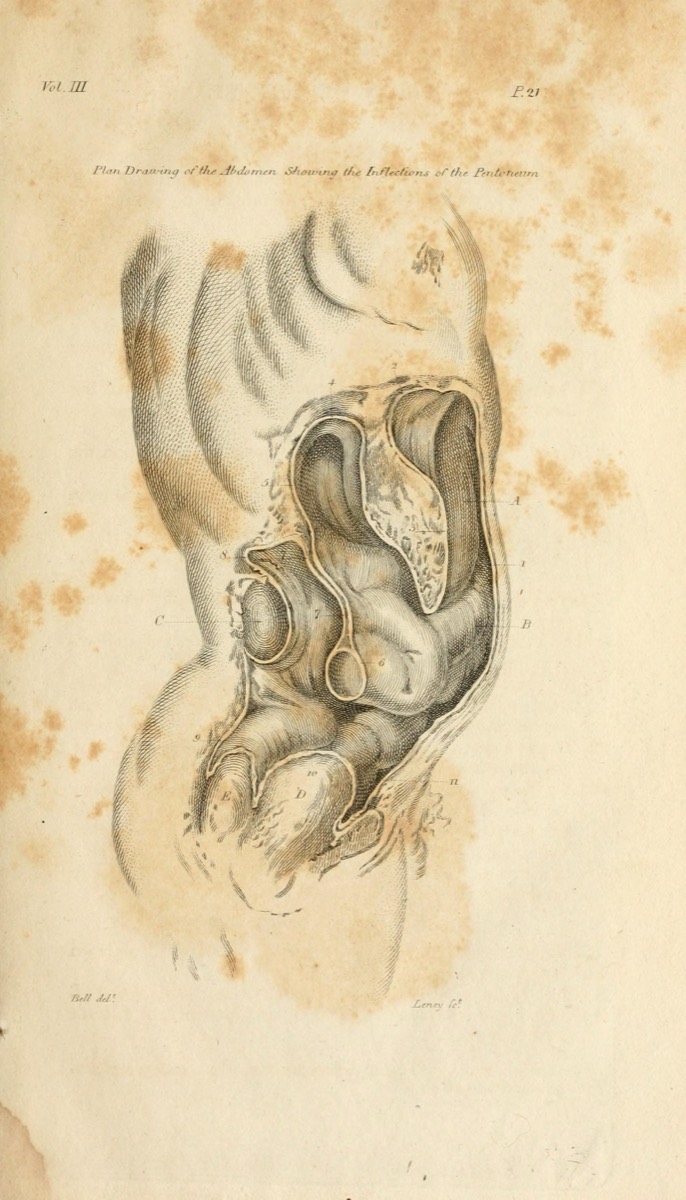
was presented for years as the textbook case of a , one that lost its job. Except that it is unusually rich in , which does not suit an organ with nothing to do. So what is it doing?
Holding a backup. Researchers at Duke proposed in 2007 that its isolated position and narrow opening make it a refuge. When the gut empties completely during acute diarrhoeal illness, a of useful bacteria living in the appendix survives, and once the episode passes they come out and repopulate the gut. The unusually high concentration of immune tissue there supports an active part in defense rather than passive storage.
The appendix served for years as the first example anyone reaches for of a useless organ, so it is worth starting with that reasoning. The argument was that it is small, that you can live without it, and that in our herbivorous relatives it is large and used for digestion. From which it was concluded to be a shrinking remnant.
The alternative proposal looks at the structure rather than the size. The appendix is a narrow dead end, outside the main stream of gut contents, with a layer of bacteria pressed against its wall. Which is to say a place where a population can hold on instead of being flushed.
Its relevance shows up in an extreme event. In acute diarrhoeal illness the gut empties almost completely, which is the body’s way of clearing a pathogen. Whatever lives in that narrow branch is not washed out, and when the episode passes it comes out and repopulates the gut. A backup, in other words.
Two pieces of evidence support this beyond the reasoning: the unusually high concentration of immune tissue in the appendix, and the fact that it appeared and was retained independently in many groups of mammals. The caveat is practical: the role matters mainly where exposure to gut disease is heavy, and in modern medicine people without one do fine. If the hypothesis holds, the interesting implication is about microbiome recovery after prolonged antibiotics.
wat. When the gut empties completely, the bacteria that survived in the appendix come out and repopulate it.
wat wat
If the appendix really does repopulate the gut, removing it may have long-term consequences for how the microbiome recovers, after prolonged antibiotic treatment for instance.
How do we know?
The hypothesis rests on comparative anatomy across species, on the structure of the immune tissue in the appendix, and on clinical observations of people with and without one.
What is still unknown
The role matters mainly in settings with heavy exposure to gut disease. In modern medicine people without an appendix do perfectly well, so the relative benefit is disputed.
Learn something?
Where to next
 How do bacteria in a mouse’s gut change the way it behaves?microbiomeWhat happens to a mouse raised with no gut bacteria at all?microbiome
 How many bacteria are there really in your body per human cell?microbiome