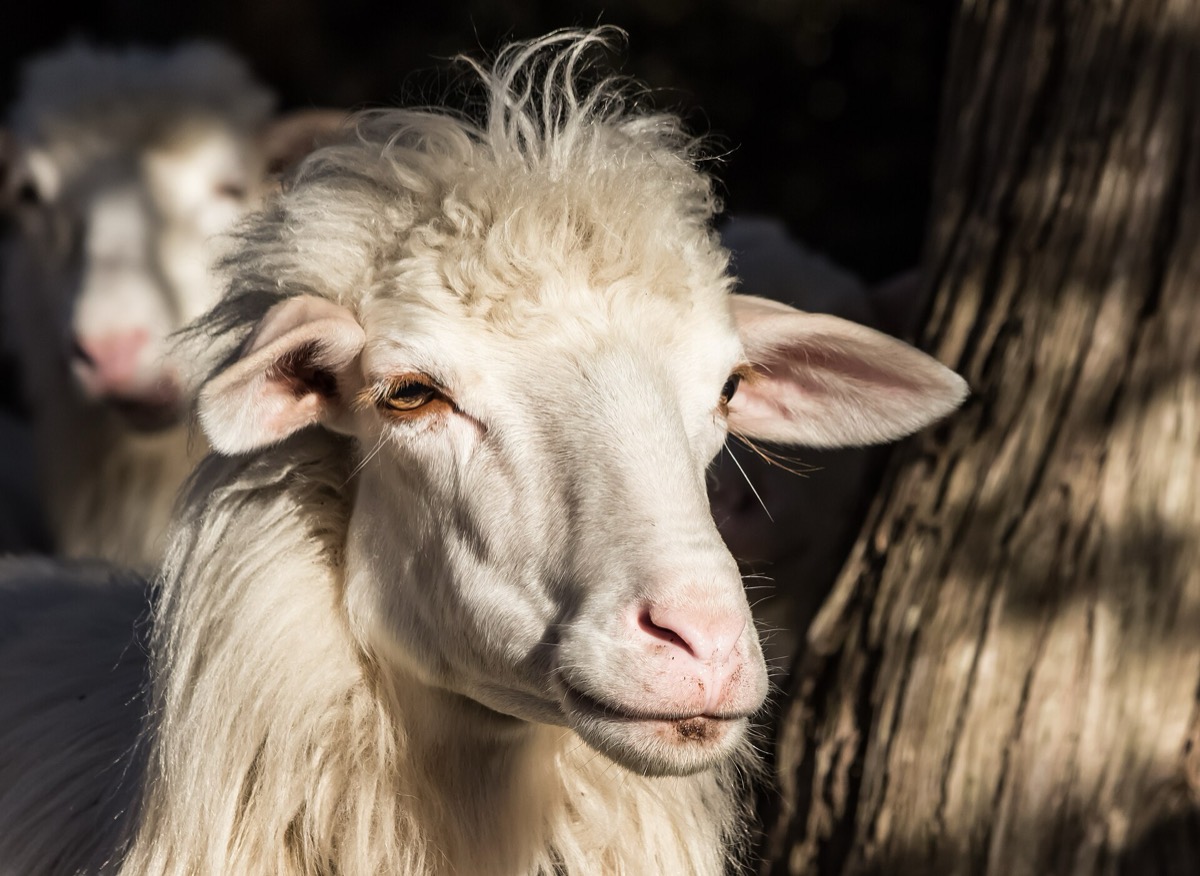
Sheep recognize other sheep and recognize the people who handle them, which could be done on smell, gait or voice. Whether they process a face as a whole was unknown. So eight sheep were trained to pick out four celebrity portraits on computer screens, and then given the harder version: the same four faces photographed from a different angle. Does the recognition survive the tilt?
It survives, and it costs the sheep roughly what it costs us. After training, the sheep chose the learned faces over unfamiliar ones well , and they still recognized all four celebrities in . Accuracy fell from about 79 percent to about 67 percent, a drop of similar size to the one humans show on the same task. The sheep also identified their own handler in about 72 percent of trials, with no pretraining.
Recognizing faces is one of the social skills people are best at, and humans manage it even for faces learned only from repeated photographs. Sheep are social too, and they already recognize other sheep and familiar handlers. What nobody knew was whether they do it by or by some cruder route.
Eight sheep were trained to recognize the faces of four celebrities from photographic portraits on computer screens. After training they chose the faces over unfamiliar ones significantly above chance, which establishes that photographs alone, with no smell and no voice, were enough.
Then came the condition that mattered. The same four celebrity faces were presented in different perspectives, and the sheep still recognized them from tilted images. Performance dropped, from about 79 percent to about 67 percent, and the size of that drop is similar to what humans show on the same task, which is the comparison the authors lean on.
Finally the sheep were shown photographs of a very familiar handler, with no pretraining at all, and identified the handler in about 72 percent of trials. Taken together the authors put sheep face recognition alongside that of humans and non-human primates. Hold the scale in view. Eight animals, four faces, and a long training regime on screens, which shows the capacity without saying how a sheep uses it in a field.
wat. Tilt a famous face and a sheep still knows it, losing about the same twelve points of accuracy that a person loses.
wat wat
Recognizing a face from a new angle had been shown only in humans. Finding it in a production animal, at a similar cost in accuracy, puts sheep face processing alongside that of humans and other primates.
How do we know?
Knolle, Goncalves and Morton trained eight sheep to choose four celebrity portraits on screens, then tested the same faces in tilted perspective, and finally tested photographs of a very familiar handler.
What is still unknown
Eight sheep, four faces, and months of training on screens. A trained discrimination at this scale establishes the capacity and tells you nothing about how sheep use it in a field.
Learn something?
Where to next
 How does a crow that has never been caught learn which face to avoid?faces
 Does a crow read a face the way we do?faces
 How does one word in a question plant a memory of something that never happened?memory