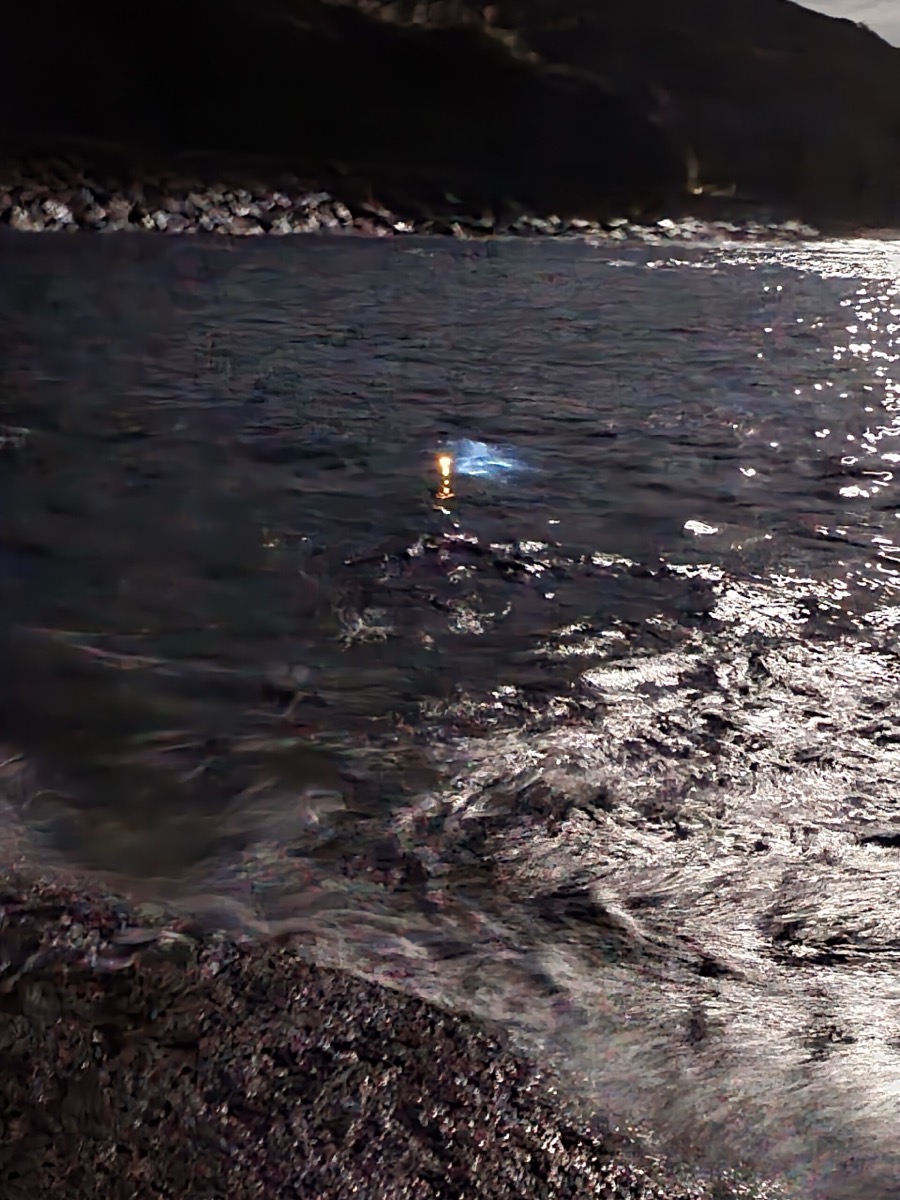
In the open water of the deep sea, a recent count put more than three quarters of individual macro-planktonic organisms in the category able to emit light. On the bottom, the censuses have been few and based on small numbers of observations, so the figure there has been anybody’s guess. Martini and colleagues went through twenty-five years of dives off central California. What does the seafloor come out at?
Far less than the water above it. Between thirty and forty-one percent of the individual benthic organisms observed were categorized as capable of emitting light, against more than three quarters in the water column. The dataset runs from nineteen ninety-one to two thousand sixteen, from the surface down to nearly four thousand meters, with over one hundred and fifty thousand observations. The difference tracks the difference between the two habitats.
Bioluminescence is a prominent functional trait used for visual communication, and in the open ocean it is close to standard equipment. A recent quantification found more than seventy-five percent of individual macro-planktonic organisms categorized as able to emit light.
The seafloor is a different habitat and had a much thinner record. Only a few censuses of had been attempted, each based on a limited number of observations, which left the comparison between bottom and water column resting on very little.
Martini and colleagues built a dataset from remotely operated vehicle dives conducted between nineteen ninety-one and two thousand sixteen. It spans the surface down to nearly four thousand meters in the greater Monterey Bay area, including Davidson Seamount, Guide Seamount and Sur Ridge. It holds over three hundred and sixty thousand and over one hundred and fifty thousand epibenthic observations. Because filming light in place is still a technical challenge, taxa were categorized from the literature rather than seen glowing.
Between thirty and forty-one percent of the individual benthic organisms observed came out as capable of emitting light, a strong difference from the pelagic figure. The authors attribute the variability to the major differences between the two habitats, which is the plainest reading: in open water light is worth having, and on the bottom, less often.
wat. Three quarters of the open water can light up. On the bottom it is closer to a third.
wat wat
Light is a communication channel, and how many organisms can use it sets how much of the deep sea runs on signals at all. The seafloor turns out to be a quieter place than the water column.
How do we know?
Martini and colleagues categorized taxa from remotely operated vehicle dives in the greater Monterey Bay area between nineteen ninety-one and two thousand sixteen, using published knowledge to assign bioluminescence status.
What is still unknown
Bioluminescence status was assigned from the literature by taxon rather than observed directly, because filming light in place remains a technical problem. One region, however thoroughly surveyed, is one region.
Learn something?
Where to next
 What is a glowing mushroom glowing for?bioluminescence
 Does a filter-feeding shark eat while crossing an ocean?deep sea
 What exactly does a wave do to make the sea glow?bioluminescence