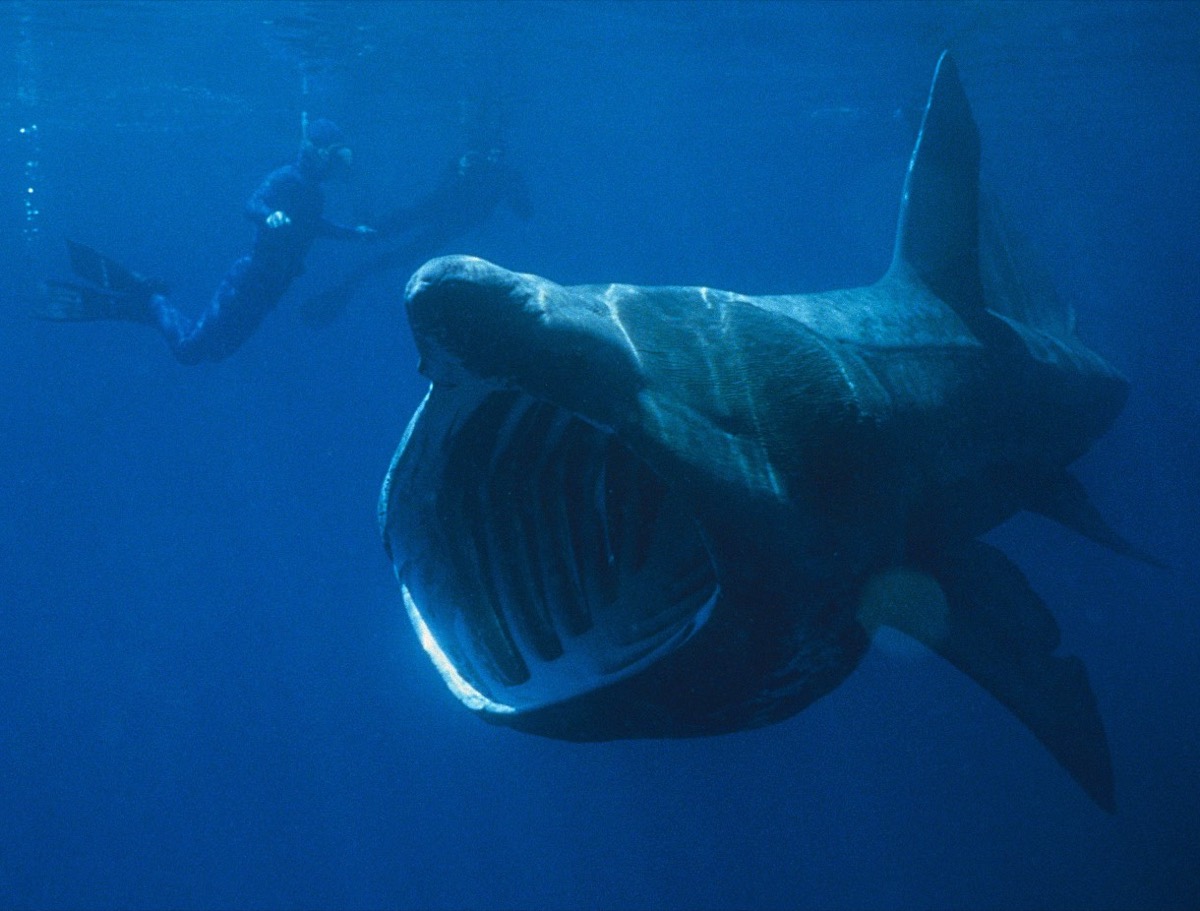
Basking sharks spend the summer filtering plankton off the shelf of the northeastern United States and Canada, then vanish south to the Caribbean for winter. For other highly migratory sharks the assumption is fasting: swim on stored energy and feed at the destination. Elcock and colleagues put satellite archival tags on basking sharks and recorded what depths they held through the crossing. Are they eating on the way?
They look like they are feeding the whole way. Offshore, the tagged sharks ran a strong that overlapped the primary and secondary , and the pattern was widespread across the Sargasso Sea where most of them overwintered. It continued into the Caribbean and through trans-equatorial movements. That argues for foraging across the migration rather than living off reserves.
Basking sharks are large filter feeders, familiar in temperate shelf waters with their mouths open at the surface. In the Northwest Atlantic they leave the summer grounds off the northeastern United States and Canada and travel to tropical water in the Caribbean and off South America for the winter.
What the journey is for has stayed unclear. For other highly migratory sharks the working assumption has been that a long crossing runs on stored energy, with feeding concentrated at either end. Nothing much was known about what a basking shark does in the middle.
Elcock and colleagues tagged sharks with tags and read off daily summaries of time-at-depth and time-at-temperature. Two behaviors emerged: shallow occupancy on or near the shelf, and movement through the once offshore.
Offshore, the vertical pattern was a strong diel vertical migration overlapping the primary and secondary deep scattering layers, most clearly in the southern Sargasso Sea. The behavior was widespread across the Sargasso, where most tagged animals overwintered, and carried on into the Caribbean and across the equator. The authors read that as foraging throughout the migration, and suggest the sharks regularly target the deeper, often non-migratory prey layer below the primary one.
wat. Up at night, down by day, in time with a layer of prey, all the way from Canada to the equator.
wat wat
It makes a vast migration into a long feeding trip, and it adds a very large consumer to the list of animals depending on the deep pelagic food web.
How do we know?
Elcock and colleagues deployed pop-up satellite archival transmitting tags on basking sharks and analyzed daily summaries of time-at-depth and time-at-temperature through the overwintering migration.
What is still unknown
Depth records are a proxy for eating, not a record of it. Overlapping a prey layer is strong circumstantial evidence, and nobody saw a shark feed or sampled its stomach.
Learn something?
Where to next
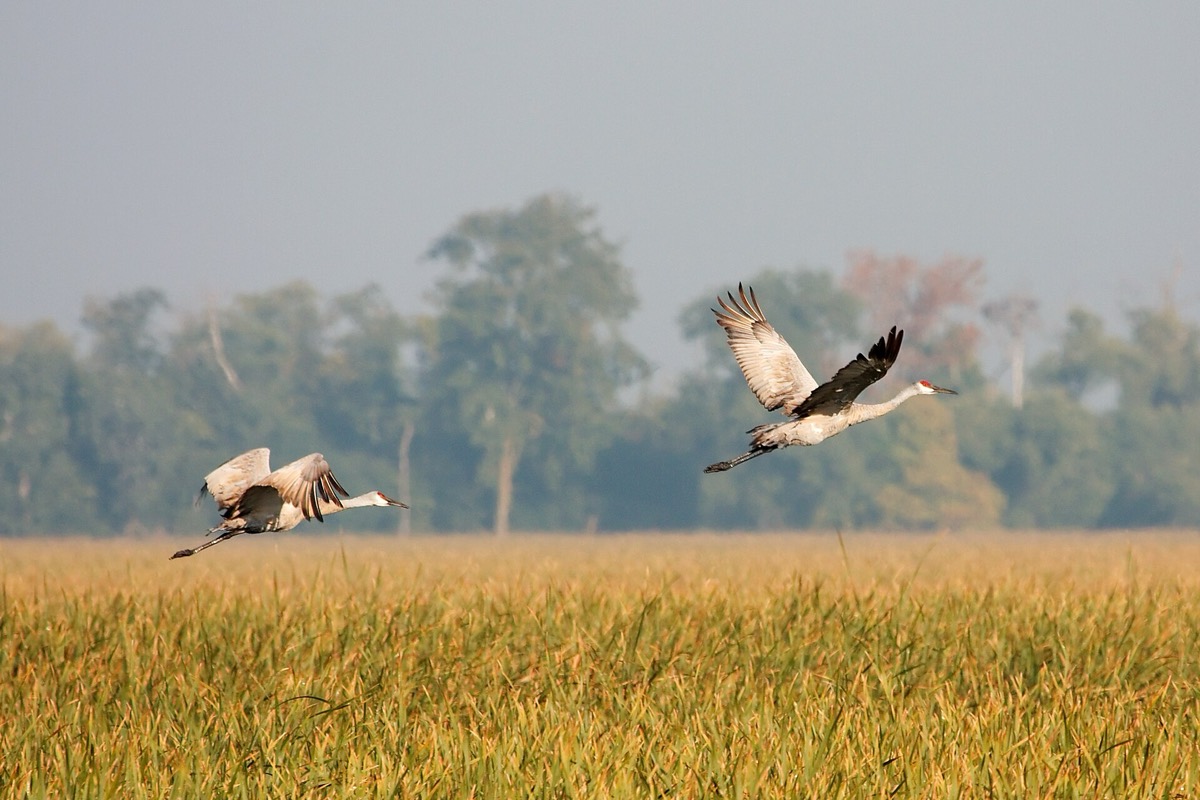 Do migrating birds actually see the magnetic field?migration
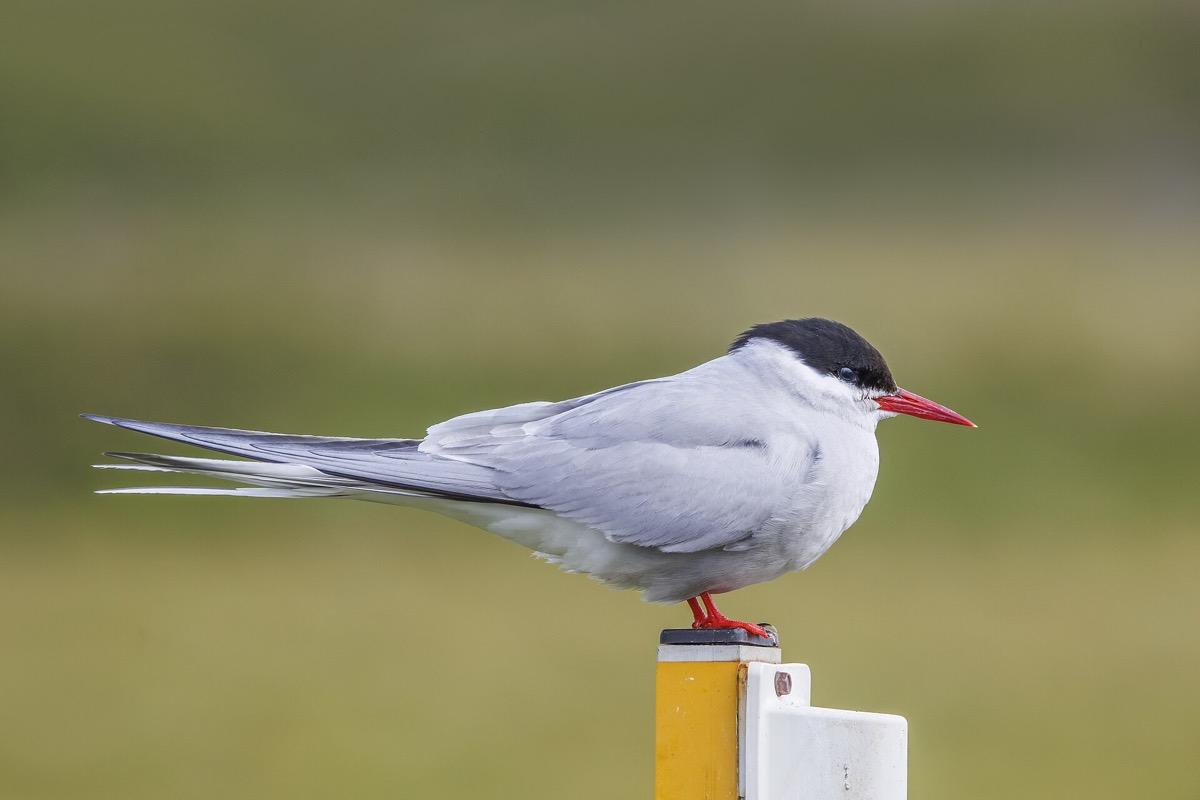 Which bird travels between both poles every single year?migration
 Can a shark give birth without ever meeting a male?sharks