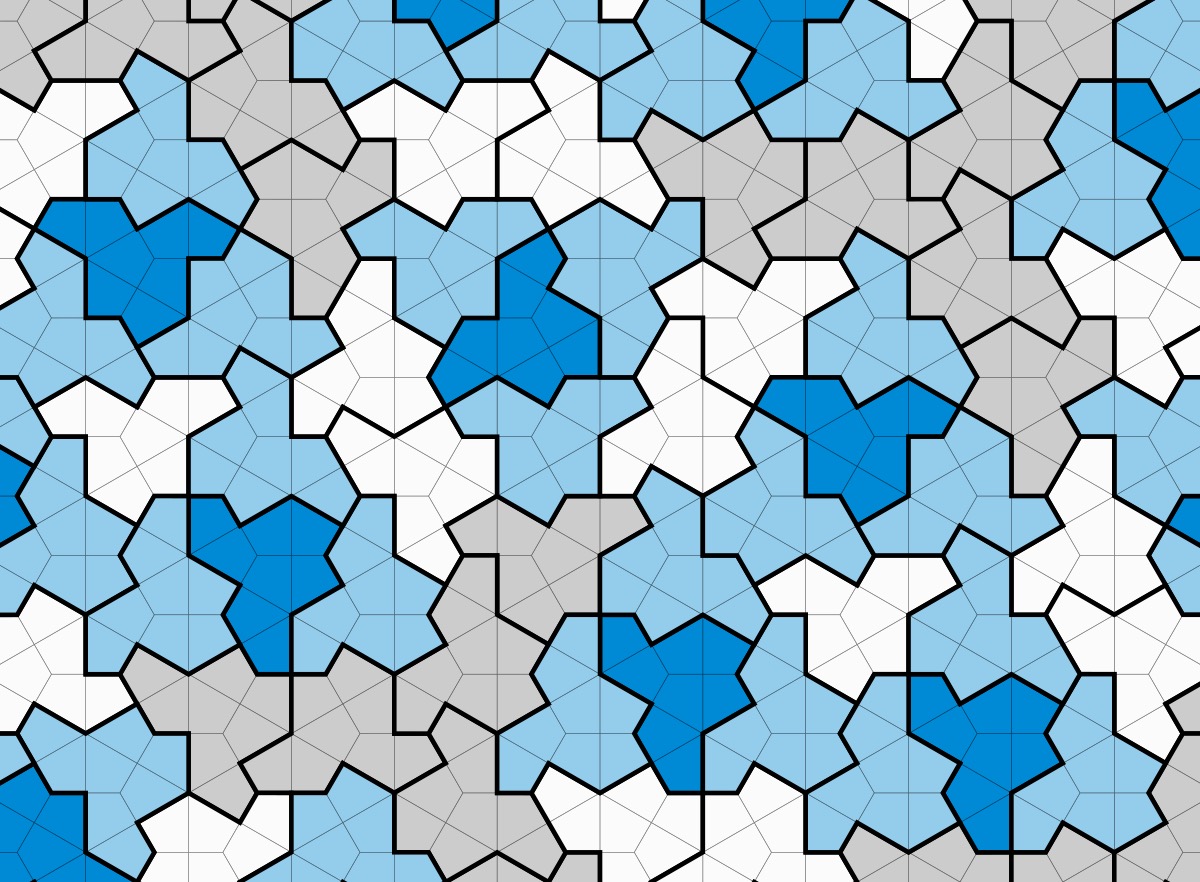
A shape that tiles the plane usually tiles it periodically, with a pattern you could slide onto itself. Mathematicians asked for decades whether a single shape could cover the plane while admitting no periodic tiling at all. The problem had a nickname, the einstein, and no answer.
It can, and there are infinitely many of them. The 2023 paper exhibits a continuum of combinatorially equivalent aperiodic polygons, with one representative, polykite, doing the work in the proof. The hat forms clusters called with substitution rules, and because those tile the plane, so does the hat.
A longstanding open problem asked for an , known as an einstein: a shape that admits tilings of the plane but never a periodic one. Sets of two or more such shapes were known. One was the question.
The answer, for topological disk tiles, is a continuum of combinatorially equivalent aperiodic polygons rather than a single lucky shape. Out of that family the paper takes a representative, the hat polykite, and works with it.
The first step is showing the hat can tile at all. It forms clusters called metatiles, for which substitution rules can be defined, and because the metatiles admit tilings of the plane, so does the hat.
The second step is showing it never repeats. The authors prove that generic members of the continuum are aperiodic through a new kind of geometric incommensurability argument. Separately, a combinatorial and computer-assisted proof shows the hat must form , and therefore aperiodic, tilings.
wat. The hat tiles the plane forever and never once periodically.
wat wat
A longstanding open problem closed by one shape anybody can cut out of paper, which is rare for a result of this kind.
How do we know?
Smith, Myers, Kaplan and Goodman-Strauss proved that generic members of their continuum are aperiodic through a new kind of geometric incommensurability argument, and gave a separate computer-assisted combinatorial proof that the hat must tile hierarchically.
What is still unknown
The aperiodicity proof covers generic members of the family, and the proof for the hat itself is computer-assisted.
Learn something?
Where to next
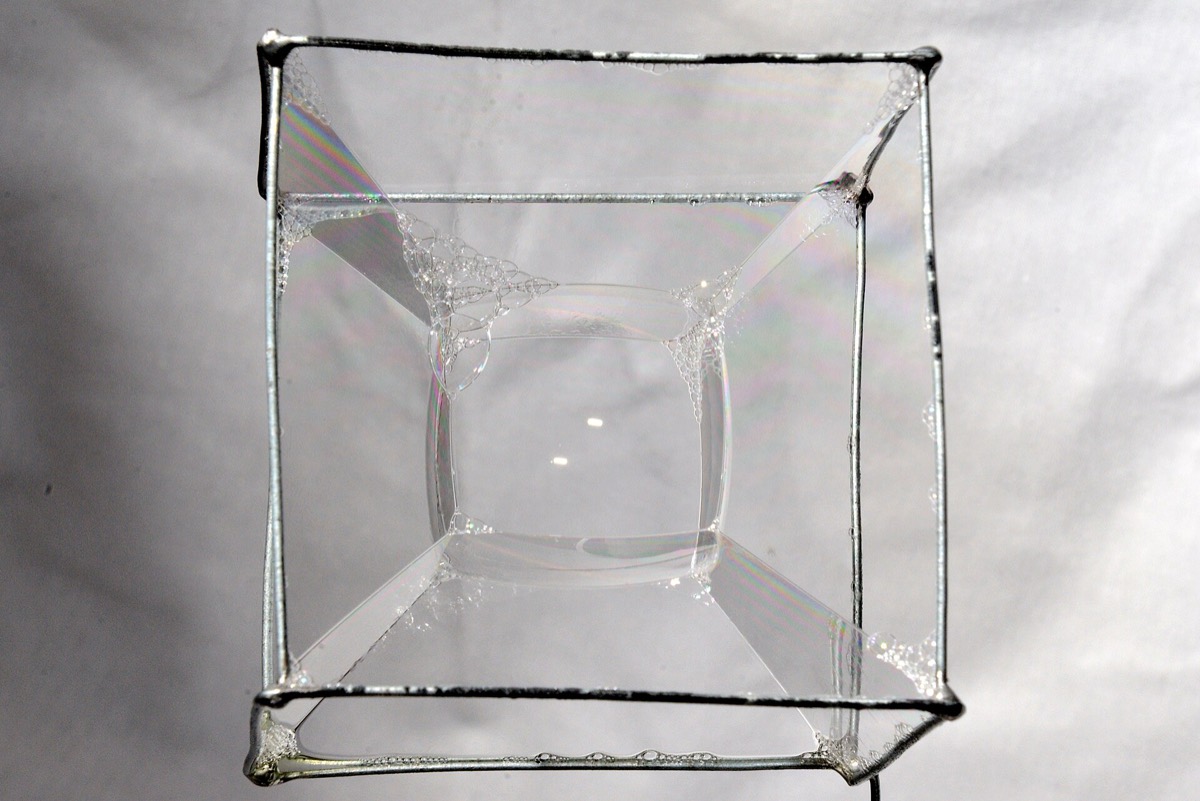 How does a thin film solve a geometry problem without calculating?geometry
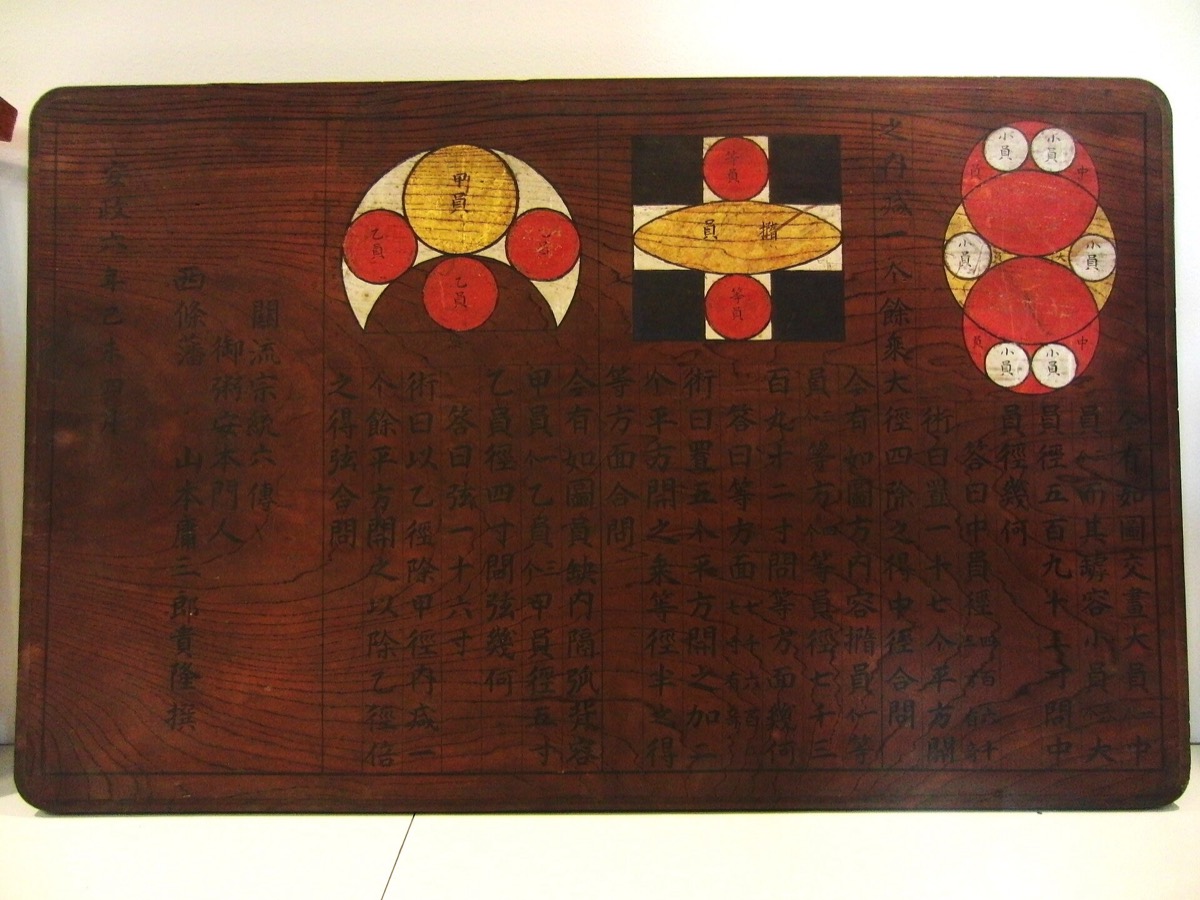 Why were geometry problems hung in temples in Japan?geometry
 Why do mathematicians warn each other off one problem?open problems