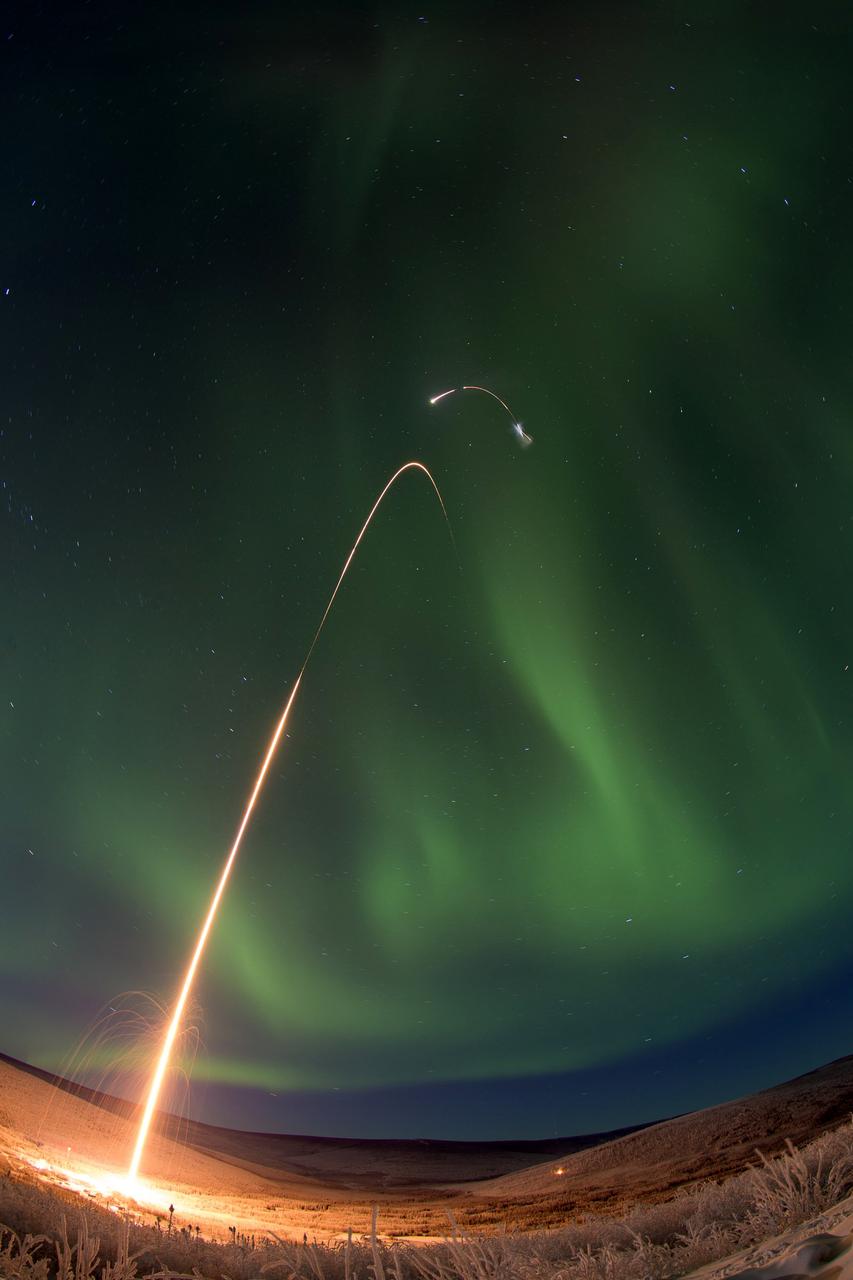
An aurora happens between about eighty and a few hundred kilometers up, which is too high for balloons and too low for satellites to linger. Ground instruments see it from below, radar probes it at a distance, and neither gets inside the plasma. The answer is to fire a rocket through one, and to make it come apart on the way.
With a rocket that scatters instrumented units through the plasma. The SPIDER sounding rocket launched into a westward moving auroral surge in February twenty sixteen, deploying ten , each unfolding spherical electric field and on wire booms. Together they gave in situ multi-point recordings of the electric field, the electron density and temperature, and the plasma potential.
The campaign name states the method. SPIDER stands for small payloads for investigation of disturbances in electrojet by rockets. It launched on the second of February twenty sixteen, at nine minutes past nine in the evening Universal Time, into a westward moving auroral surge, and deployed ten free falling units inside it.
Each unit was its own small observatory. Spherical electric field probes and Langmuir probes unfolded on wire booms, giving in situ multi-point recordings of the electric field and of the plasma properties. A single payload on a single trajectory cannot provide that.
Getting numbers out of the probes was the hard part. The analytical retrieval of electron density, electron temperature and plasma potential from the Langmuir probe measurements was non-trivial because of effects, and required an empirical assumption about the sheath thickness. The authors confirmed that assumption by simulating the plasma environment around a unit with the Spacecraft Plasma Interaction Software. Their retrieved density and temperature also agreed with simultaneous incoherent scatter radar measurements from the facility.
With the calibration settled, the flight data could be read. The units caught hints of drift-wave instabilities, and a Hall current introduced by increased electron precipitation inside a region of enhanced density. That is the kind of result the geometry buys: a current and an instability identified in a particular patch of aurora, while the patch was happening.
wat. One rocket into the aurora, ten instrumented pieces let go inside it, all reporting at once.
wat wat
Multiple points at once is the gain. A single probe cannot tell a structure that varies in space from one that varies in time, and an aurora does both.
How do we know?
A Journal of Geophysical Research Space Physics paper by Giono and colleagues, reporting the retrieval of plasma parameters from the Langmuir probes on the ten units and the cross-checks that validate it.
What is still unknown
Reading the plasma parameters off the probes was not straightforward, because of sheath effects around each unit, and it required an empirical assumption about the sheath thickness.
Learn something?
Where to next
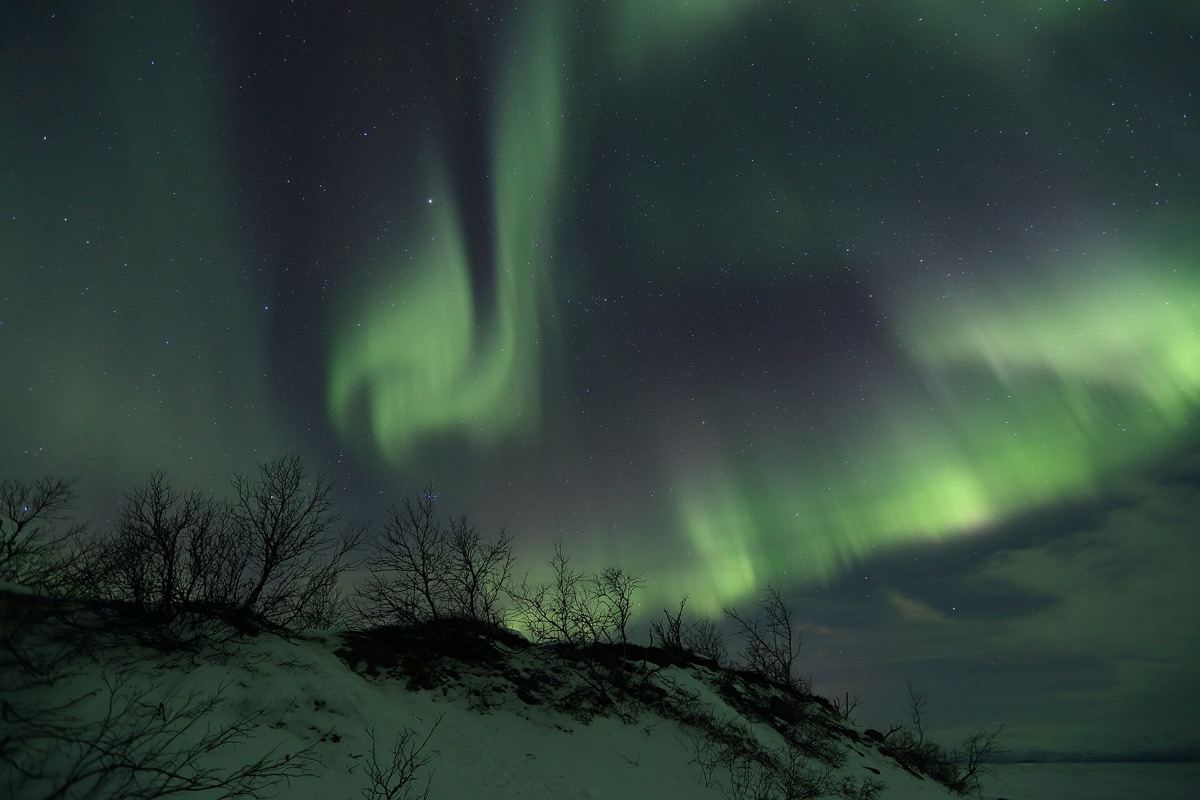 What is actually glowing when you see the northern lights?aurora
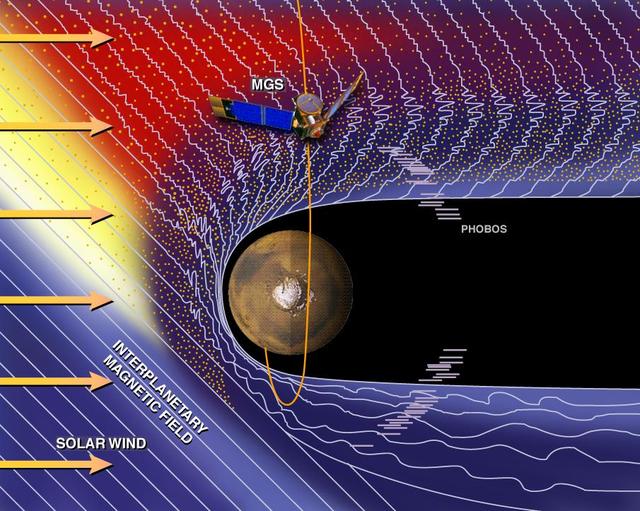 What is blowing past the Earth at four hundred kilometers a second?plasma
 What did the Sun do to the only electrical network of eighteen fifty-nine?aurora