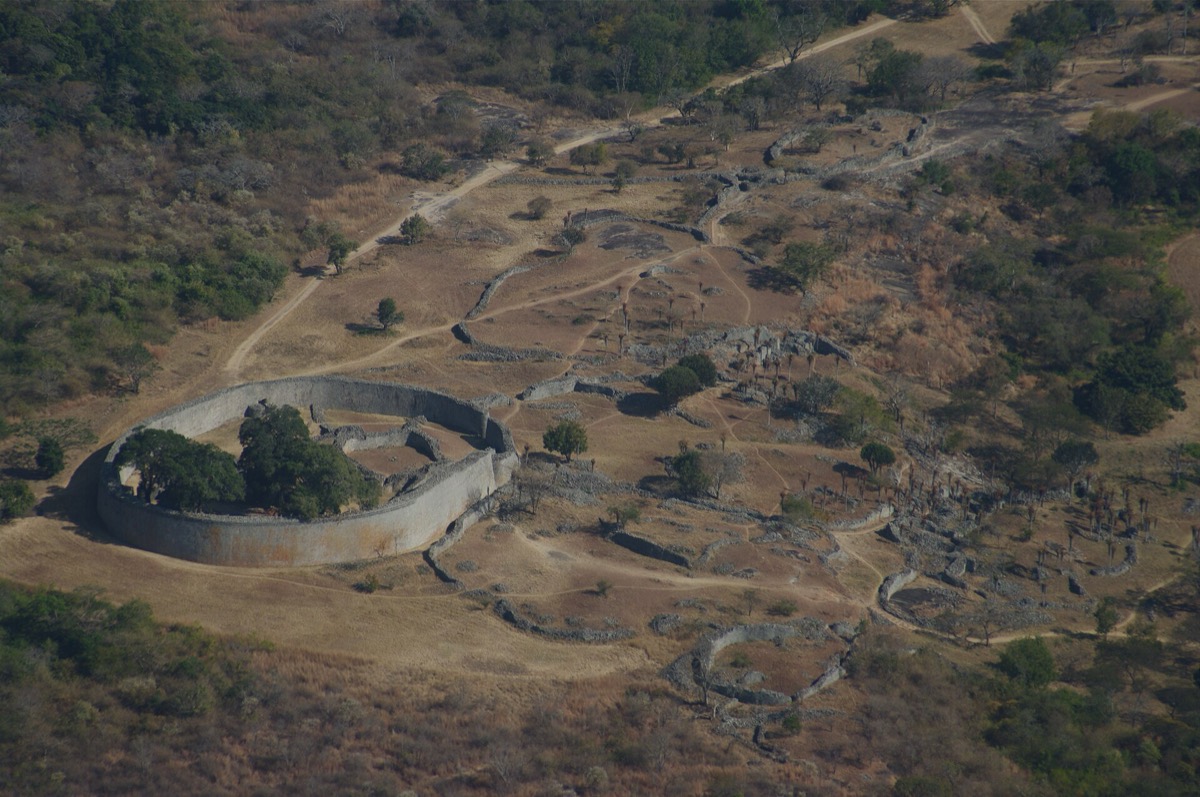
Great Zimbabwe was built entirely in , block on block with no mortar at all, and its central wall is the largest ancient structure on the continent south of the Sahara. Generations of archaeologists studied the walls, and less the more everyday question: where did thousands of people drink in an arid region? Then round depressions in the ground around the city were examined. What were they?
A landscape-scale water system. The depressions, known as , served to harvest and store water, apparently from the beginning of the settlement in the middle of the second millennium CE. They are not a local detail but part of a system on the scale of a whole landscape. Artificial reservoirs, wells and springs were chosen and managed by the flow of water in the and by the groundwater. The water served drinking, farming and ritual.
To appreciate the problem you have to know the climate. The region receives rain in one short season, and the rest is dry. A city holding thousands of residents and herds cannot rely on a stream, so the question is not how to bring water but how to hold it from season to season. Any solution has to be storage rather than conveyance.
What the work did was look at the soil instead of the stone. Soil sections show which layers accumulated in a depression and in what order, a precise topographic model shows where water flows after rain, and supplies what neither records. Laying those two layers on each other shows the depressions are not scattered at random but sit in the places water reaches anyway.
The dhaka connects the two. The same clay soil dug out for building and plaster is also soil that does not pass water easily, so a pit dug in it tends to hold. The digging may have been for the material, with the water use discovered afterwards; and once discovered, digging may have continued for the water too. The work does not decide, and says so explicitly.
The overall picture is a system rather than an installation. Pits store runoff, artificial reservoirs hold a larger quantity, wells reach groundwater and springs supply a steady flow. Each works under different conditions, and together they cover a whole year and unusual seasons. That is exactly the difference between a solution and an infrastructure.
And finally, the historical context of the question. For decades European writers tried to attribute the site to Phoenicians, to Arabs or to any foreign agent, because they were unwilling to accept that a local society built it. Documenting a water system that exploits a whole landscape adds a layer to that file which is hard to argue with: the people who lived there understood the ground they lived on.
wat. At Great Zimbabwe water was stored in dhaka pits that were part of a system spread across a whole landscape, rather than one local fix.
wat wat
For decades colonial writers claimed the site was built by foreigners, because they would not credit a local society with planning on that scale. A water system exploiting a whole topography is exactly that kind of planning. There is also a practical side: the same region faces water shortage today, and the old solutions are being examined again.
How do we know?
A combination of soil sections in the field, a high-resolution topographic model showing where the water flows, historical sources, and the socio-ecological memory of the communities living in the area. Published in the journal Anthropocene in 2022.
What is still unknown
The work itself stresses that precise dating is missing: when exactly the pits were dug and in which period they operated is unknown. Some may have been dug first to extract building material and only later used for water. Without dates it is hard to know whether the system was planned in advance or grew gradually.
Learn something?
Where to next
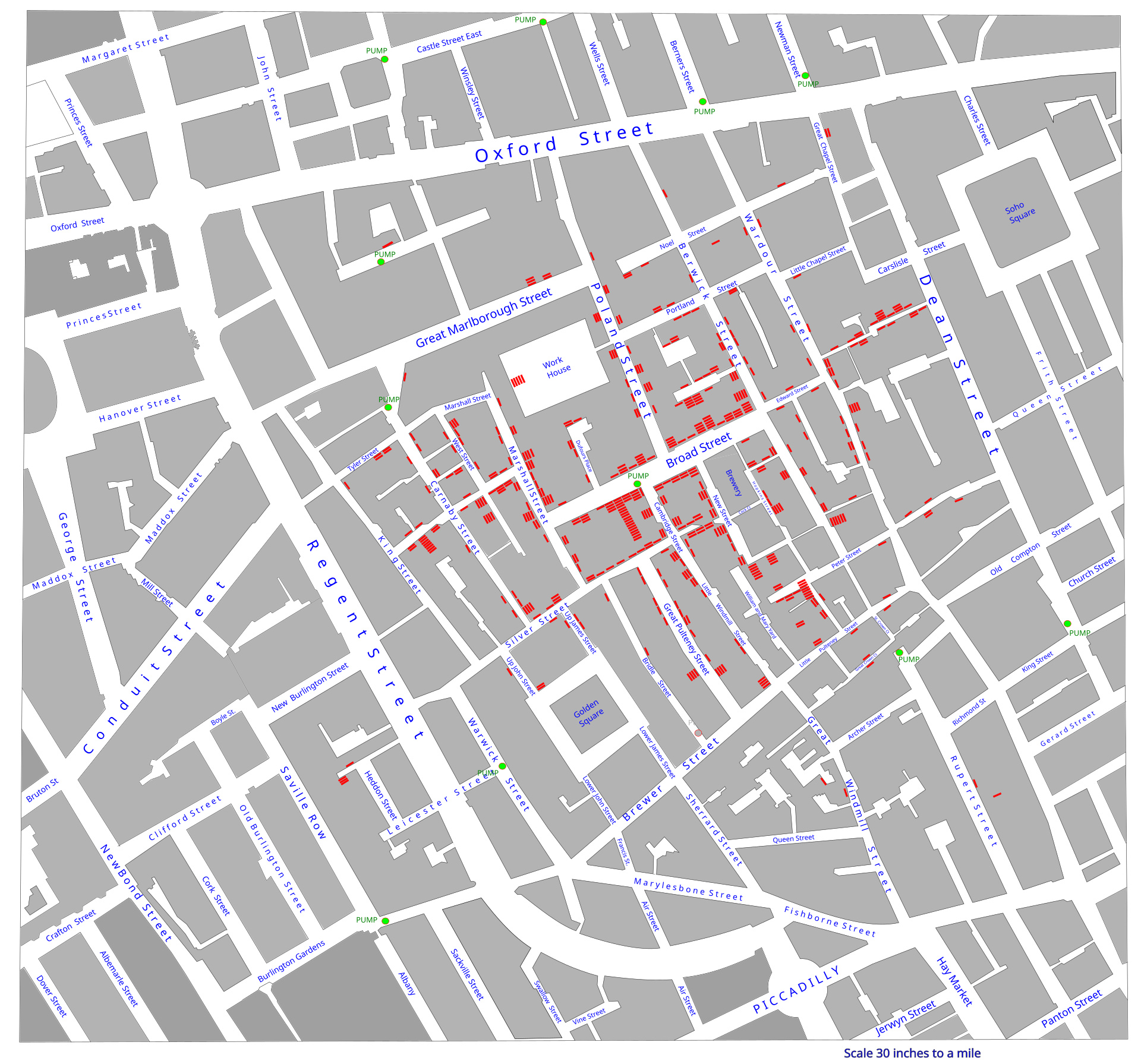 How do you prove what is causing an epidemic before anybody can see a germ?water
 What sets the limit on how tall a tree can get?water
 Why does a drop of water flee a very hot pan in particular?water