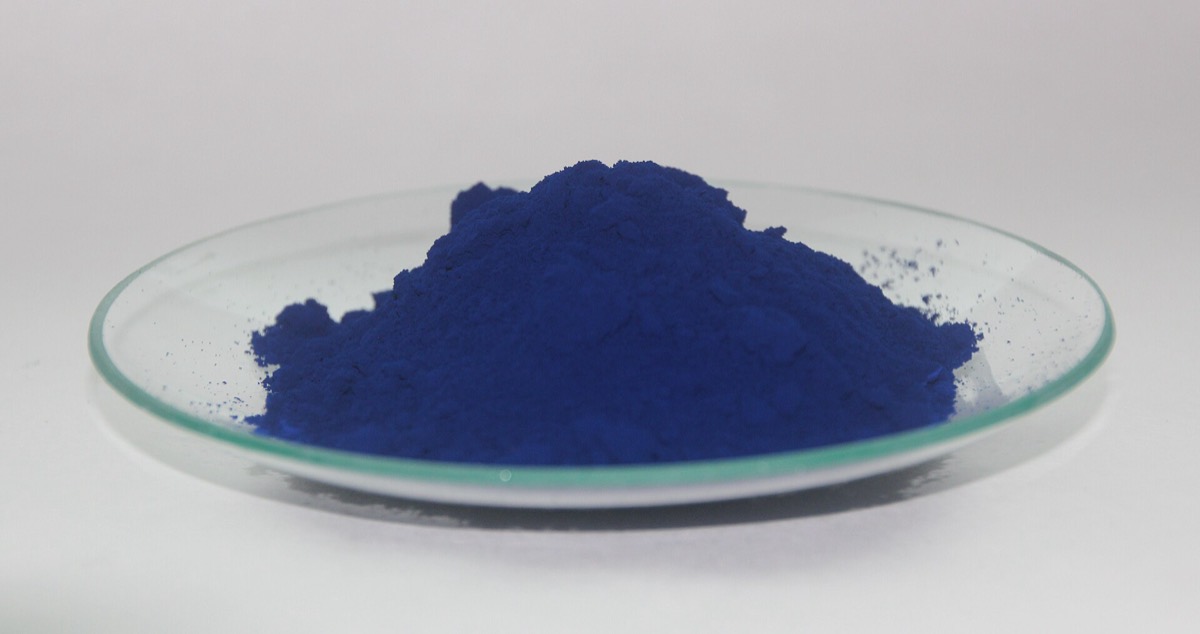
Before , a deep and durable blue was hard and expensive to obtain, so it was saved for important details alone. Then a new pigment appeared in Berlin, out of a reaction between . What did that change?
Less, and more slowly, than the legend says. Its crystal structure traps iron in , and electrons moving between them absorb light so the eye sees an intense blue. The pigment arose in Berlin early in the eighteenth century, and a study following it through Paris shows the route to the palette ran through chemists, manufacturers and color merchants before any studio.
Before the eighteenth century a deep and durable blue was hard and expensive to obtain, so it was used sparingly and for important details alone.
In Berlin a new pigment came out of a reaction between iron salts and ferrocyanide compounds, raw materials that were available and cheap and that depended on no distant mine or trade route.
Its color arises by an unusual mechanism. The crystal structure traps iron in two oxidation states, and electrons moving between them absorb light in a particular range, so what reaches the eye is an intense blue. That is also the source of its stability.
The familiar story is that the new pigment transformed the palette at once. A study following its route through Paris describes a longer chain: laboratory, factory, color shop and studio. The tale of the discovery as also rests on later testimony, and the details of the original experiment are not entirely certain.
wat. Prussian blue turned deep blue from a rare and costly material into a synthetic pigment that could be made in quantity.
wat wat
A new laboratory material changed not only chemistry but which colors artists and customers could afford.
How do we know?
Historical research combined recipes, letters and commercial accounts with chemical tests of the pigment in works from the period.
What is still unknown
The story of the discovery as one famous accident rests on later testimony; the details of the original experiment are not entirely certain.
Learn something?
Where to next
 Why is a ship that survived three hundred years in water falling apart on land?chemistry
 How long did the first photograph take to expose?chemistry
 Why can a plant starve in an atmosphere that is mostly nitrogen?chemistry