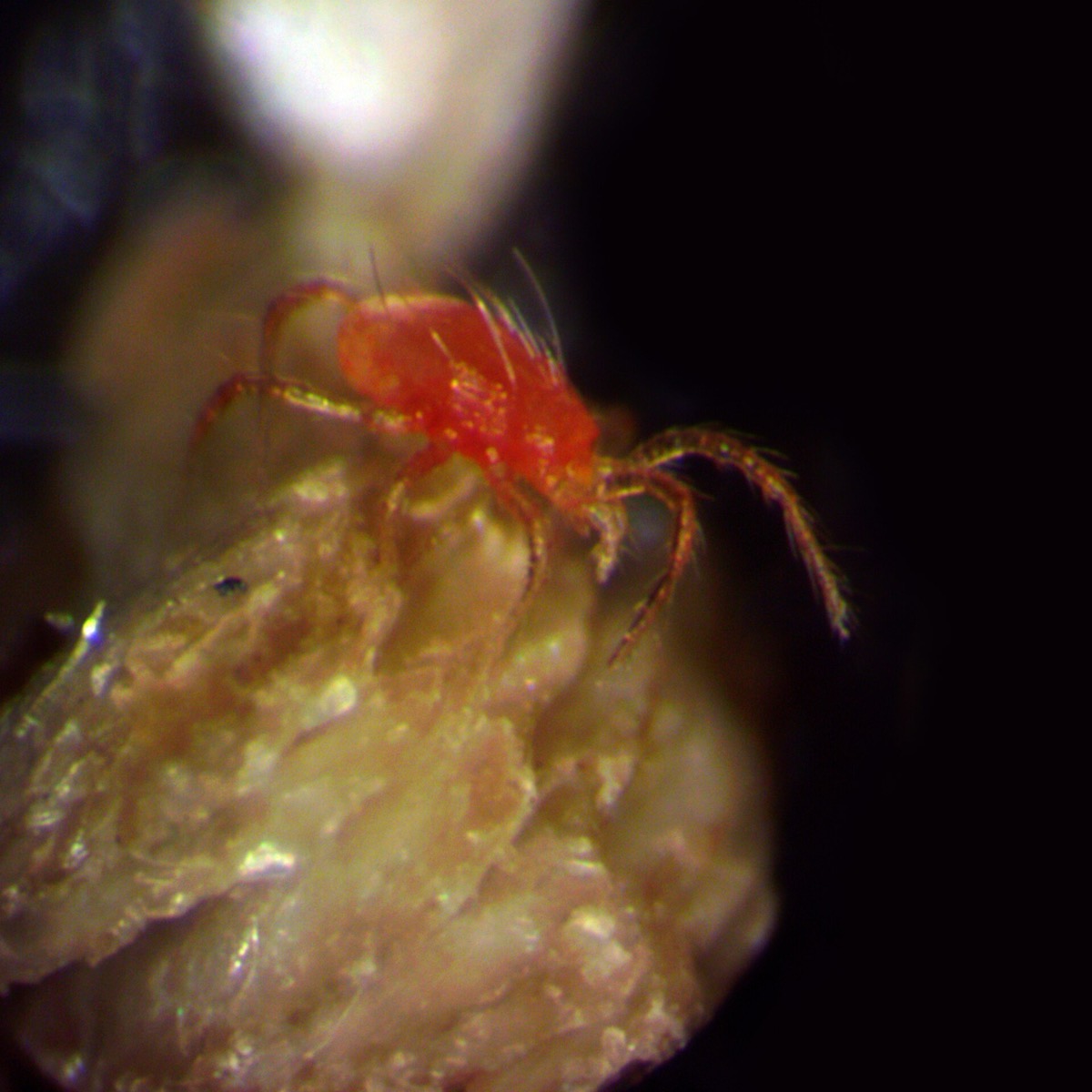
A plant that recruits a predator to eat its pests is a familiar arrangement. Steering that predator to the right organ at the right time is a harder trick. On wild potato, predatory mites gather at the flowers of undamaged plants and move down fast once herbivorous mites start on the leaves. Munawar and colleagues went after the signal behind that move with inhibitors and gene silencing. What calls them down?
Organ-specific scent, switched by two hormones. Flowers and herbivory-damaged leaves emit different , and that difference drives the predators’ up-down movement between them. Experiments with applied compounds, biosynthetic inhibitors and showed and jasmonic acid signalling controls both the emissions and the movement. The predators shift from eating pollen to eating herbivores as they travel.
Plants that recruit predators to deal with their herbivores are a well-described mutualism. How a plant fine-tunes the arrangement, rather than simply issuing a general alarm, is much less clear.
On wild potato the pattern is specific. Predatory mites, Neoseiulus californicus, are recruited to the flowers of undamaged plants, and move rapidly downward once herbivorous mites damage the leaves. That up-down movement coincides with a change of diet, from on flower pollen to carnivory on the herbivores below.
Munawar and colleagues traced it to organ-specific emissions of volatile organic compounds, different from a flower than from a leaf under attack. Experiments with exogenous applications, biosynthetic inhibitors and transient RNAi showed that salicylic acid and jasmonic acid signalling in the two organs controls both the shift in emissions and the movement of the predators.
The plant is therefore running an alternating conversation between its own parts, using scent as the channel and two hormones as the switch. The same arrangement turned up in a cultivated potato variety, which is what gives it agronomic interest: a crop whose flowers hold a reserve of natural enemies ready to be called down.
wat. The flower holds the guards on retainer, and a chewed leaf changes its scent to call them down.
wat wat
The same alternation appeared in a cultivated potato variety, which raises the practical possibility of using flowers as a standing reservoir of natural enemies against crop pests.
How do we know?
Munawar and colleagues tracked predatory mite movement on wild potato, measured volatile emissions from flowers and damaged leaves, and used exogenous applications, biosynthetic inhibitors and transient RNAi to test the hormone pathways.
What is still unknown
Controlled work on one plant-predator-herbivore triangle. Showing the pathway mediates the movement does not establish how much pest control it would deliver in a field.
Learn something?
Where to next
 Where exactly does an ant lose its footing on a pitcher plant?plants
 Can an ape treat its own injury with a plant?plants
 Does a plant under stress make any sound you could pick up?plants