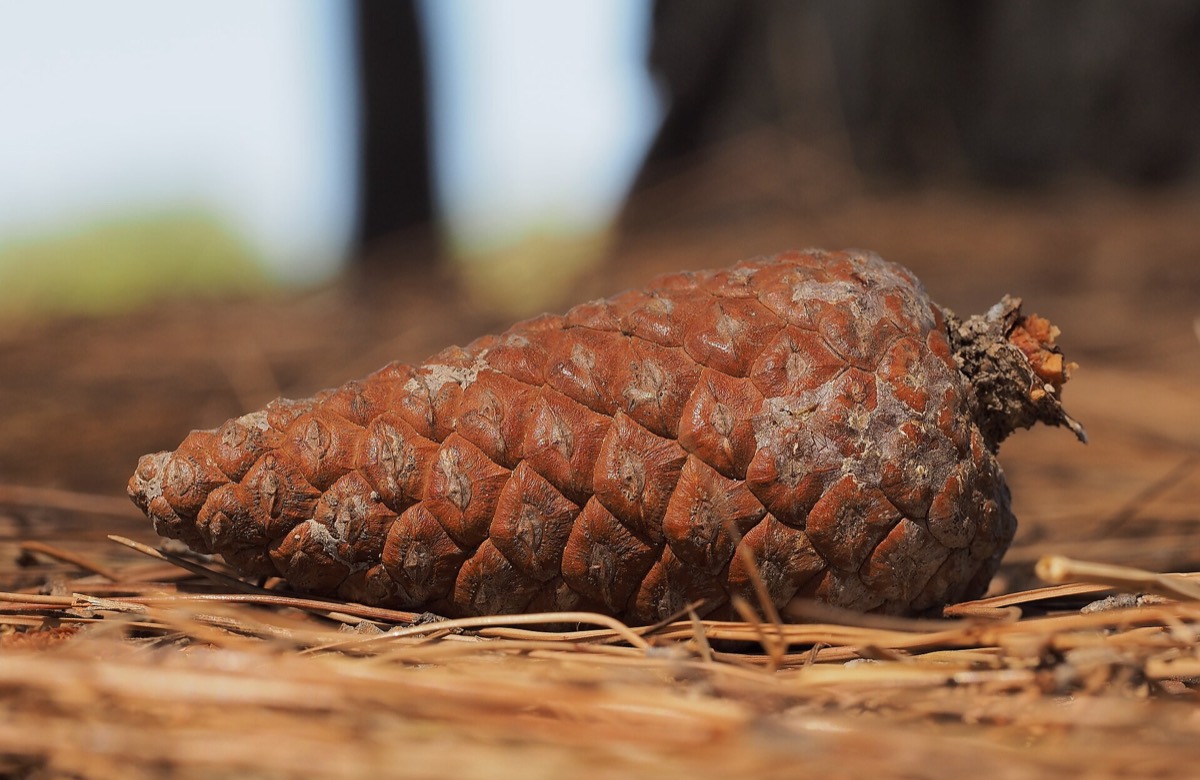
A pine cone spreads its scales in dry air and draws them back in damp, and it keeps doing so long after the tree dropped it, with nothing alive left inside. Each scale is built as a , one tissue that swells and one that resists. Eger and colleagues measured the water uptake and the stiffness of every layer and scanned scales wet and dry. How does swelling become bending?
Through a mismatch in how much each layer drinks. The lower tissue takes up water and swells; the fiber layer above it takes up less and holds its length. Bonded together, unequal swelling has nowhere to go except into curvature, so the scale bends. Scans of wet and dry scales, strain mapping and finite element models all converge on that account, and they put a number on the force a scale delivers.
A pine cone on a shelf still works. Leave it in a dry room and the scales spread; put it somewhere humid and they draw back in. Nothing in it is alive, so the movement comes out of the material rather than out of any cell doing work.
The behavior is , driven by water taken up and given off again. Earlier work had already proposed the mechanism in outline: a bilayer, with a swellable sclereid layer underneath and a less swellable fiber layer on top. What was missing was how a change in the air turns into a scale moving through an angle.
Eger and colleagues went component by component. They measured wetting, water uptake and stiffness for each tissue, and compared wet and dry scales under micro-computed tomography. Then they mapped displacement and strain in three dimensions, tested the force a scale can push with, and ran finite element simulations against the lot.
The picture that comes out is a glued pair of layers with mismatched appetites for water. One swells, the other does not, and a bonded mismatch resolves itself as a bend. The authors offer the result as a template for devices, meaning structures built to actuate on humidity alone, with no motor, no battery and no wire.
wat. Two glued layers that drink unequally can only answer by curling, which is how a dead cone goes on opening and shutting for years.
wat wat
A structure that moves on humidity alone needs no power source at all, which is why engineers keep coming back to the pine cone when they want an actuator with no wire attached.
How do we know?
Eger and colleagues measured water uptake and mechanical properties for each tissue in a cone scale, imaged wet and dry scales with micro-computed tomography, and checked the whole picture against finite element models.
What is still unknown
One species of cone, and a model built to match it, so how far the design carries over into a synthetic material is a question for the engineering rather than the biology.
Learn something?
Where to next
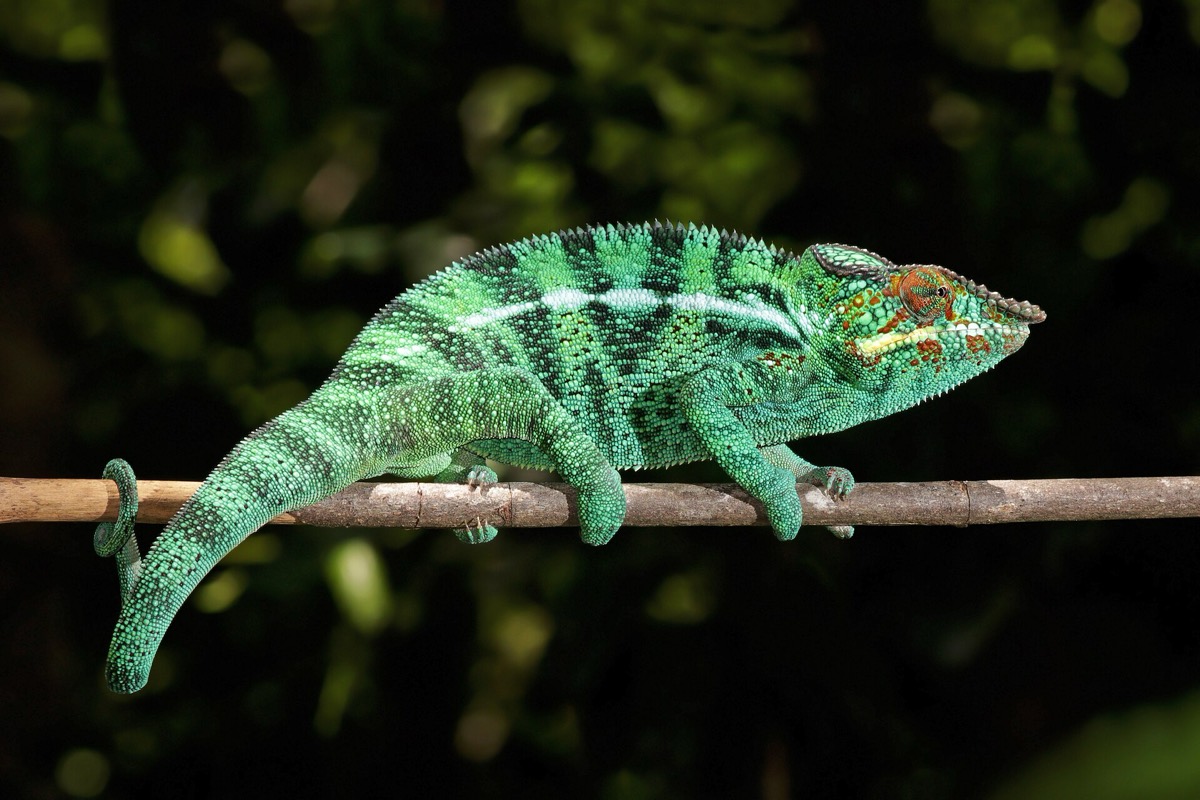 How does a chameleon change color without making any new pigment?materials
 Could a building panel tell you it is damp?materials
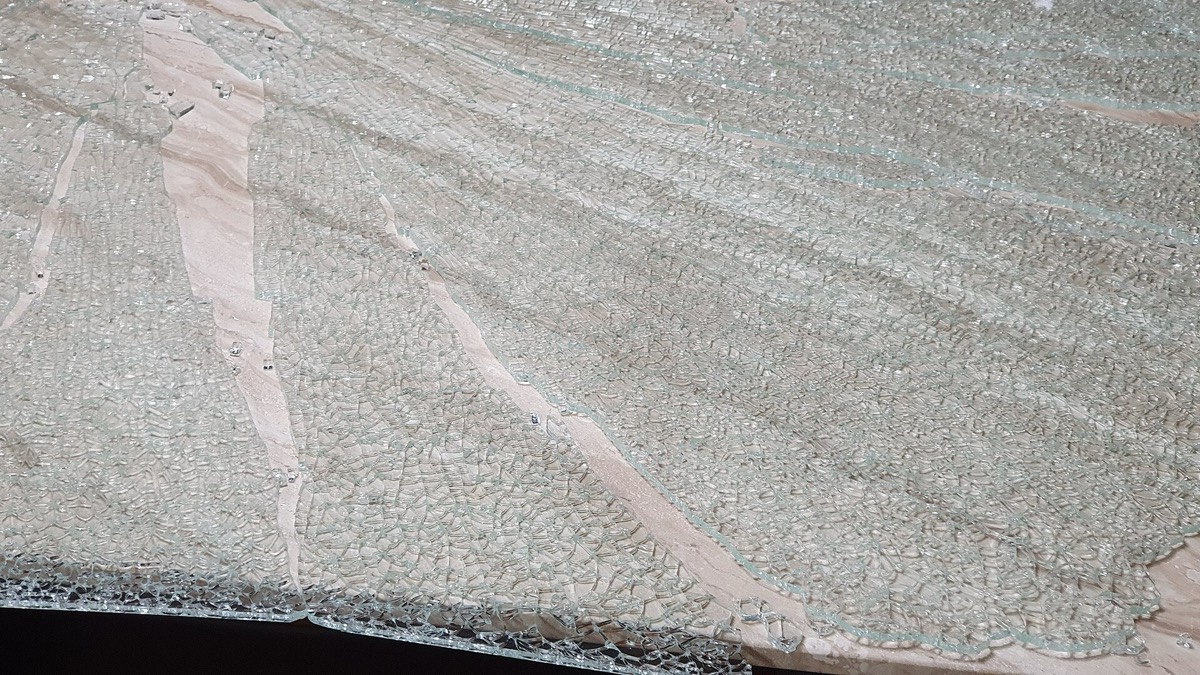 Why does a toughened window crumble into thousands of small pieces instead of long blades?materials