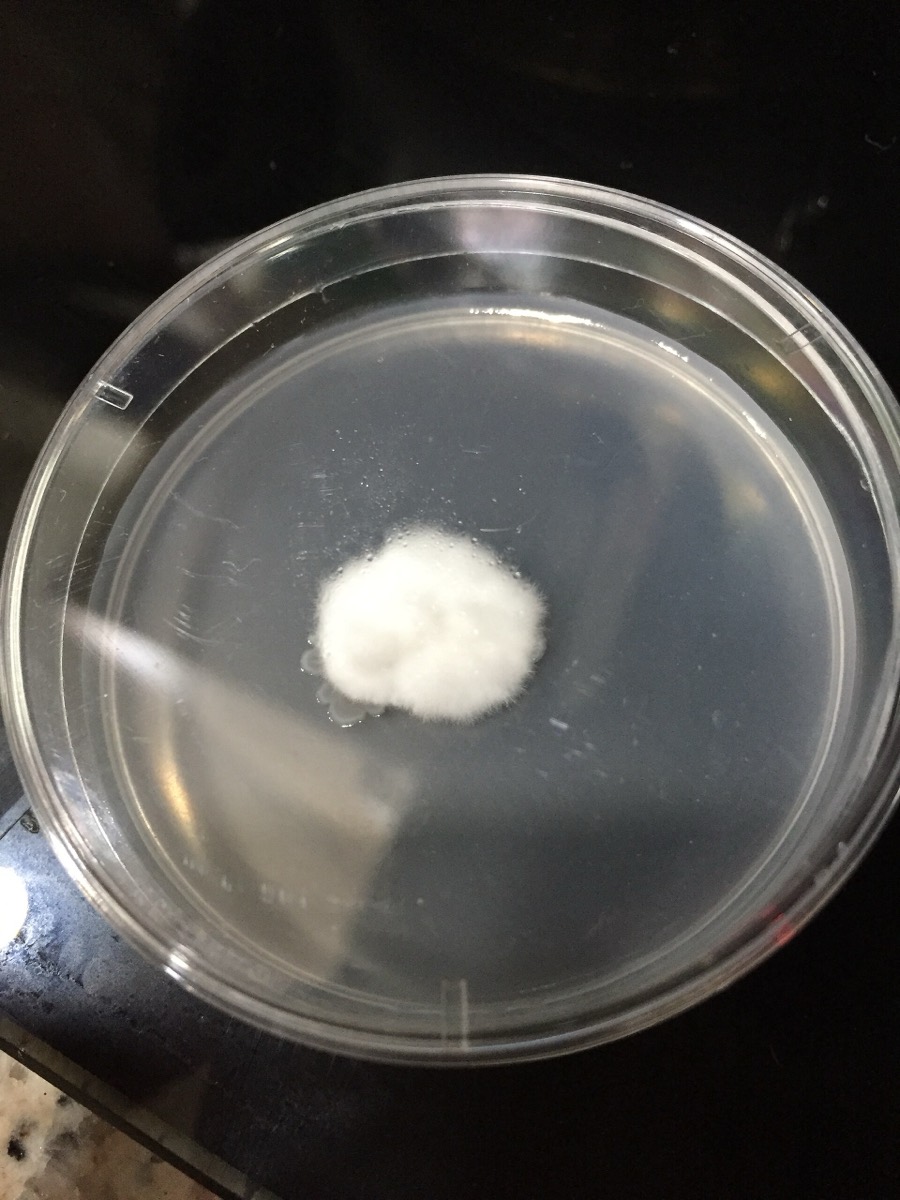
are being proposed as replacements for conventional materials, in acoustic and thermal panels and in packaging, and the usual plan is to kill the fungus once the block has grown. Leaving it alive would make the panel something else: a material that reacts. Phillips and colleagues kept the mycelium living and recorded its electrical activity while the changed. Does the material report anything?
It spikes, in two separate moisture bands. Trains of start spontaneously in fresh composites between about ninety-five and sixty-five percent moisture content, and again between about fifteen and five percent once partially dried. Water droplets placed on the surface of a fresh composite induced spikes too. Encasing the surfaces partially or completely with an impermeable layer increased the electrical activity rather than quieting it.
Mycelium-bound composites are offered as alternatives to conventional materials, for thermal and acoustic building panels and for product packaging. The usual route treats the fungus as a manufacturing step: it grows the block, then it is killed, and what remains is an inert material.
Keeping it alive changes the proposition. If the reactions of live mycelium to its surroundings are taken into account, the same block could work as an active building component or a sensory wearable. The sensing would be built into the substance rather than attached to it.
Phillips and colleagues measured the electrical sensitivity of the fungus to changing moisture content. Trains of electrical spikes initiate spontaneously in fresh composites between roughly ninety-five and sixty-five percent moisture, and again between roughly fifteen and five percent once partially dried. Those are two distinct regimes rather than one smooth response.
Several other handles turned up. Water droplets on the surface of a fresh composite induced spikes directly. Encasing the surfaces partially or totally with an impermeable layer increased the electrical activity. The relationship between activity and was also explored, which matters for anybody deciding where to place a contact. The authors frame the lot as groundwork for fungal sensors and unconventional computing rather than as a finished device.
wat. Leave the fungus alive inside the panel and the panel starts producing electrical spikes when it gets wet.
wat wat
A panel that already senses its own dampness, with no circuitry added, is the difference between a material and a component, which is the point of keeping the fungus alive.
How do we know?
Phillips, Gandia and Adamatzky recorded electrical activity from live mycelium-bound composites across a range of moisture contents, with droplets applied to the surface, with impermeable encasing, and at different electrode depths.
What is still unknown
Laboratory composites with electrodes inserted, not panels in a wall. Spiking that correlates with moisture is a signal, and turning it into a usable reading is engineering nobody has done yet.
Learn something?
Where to next
 Do trees really help each other underground?fungi
 How does a chameleon change color without making any new pigment?materials
 What opens the scales of a pine cone that has been dead for years?materials