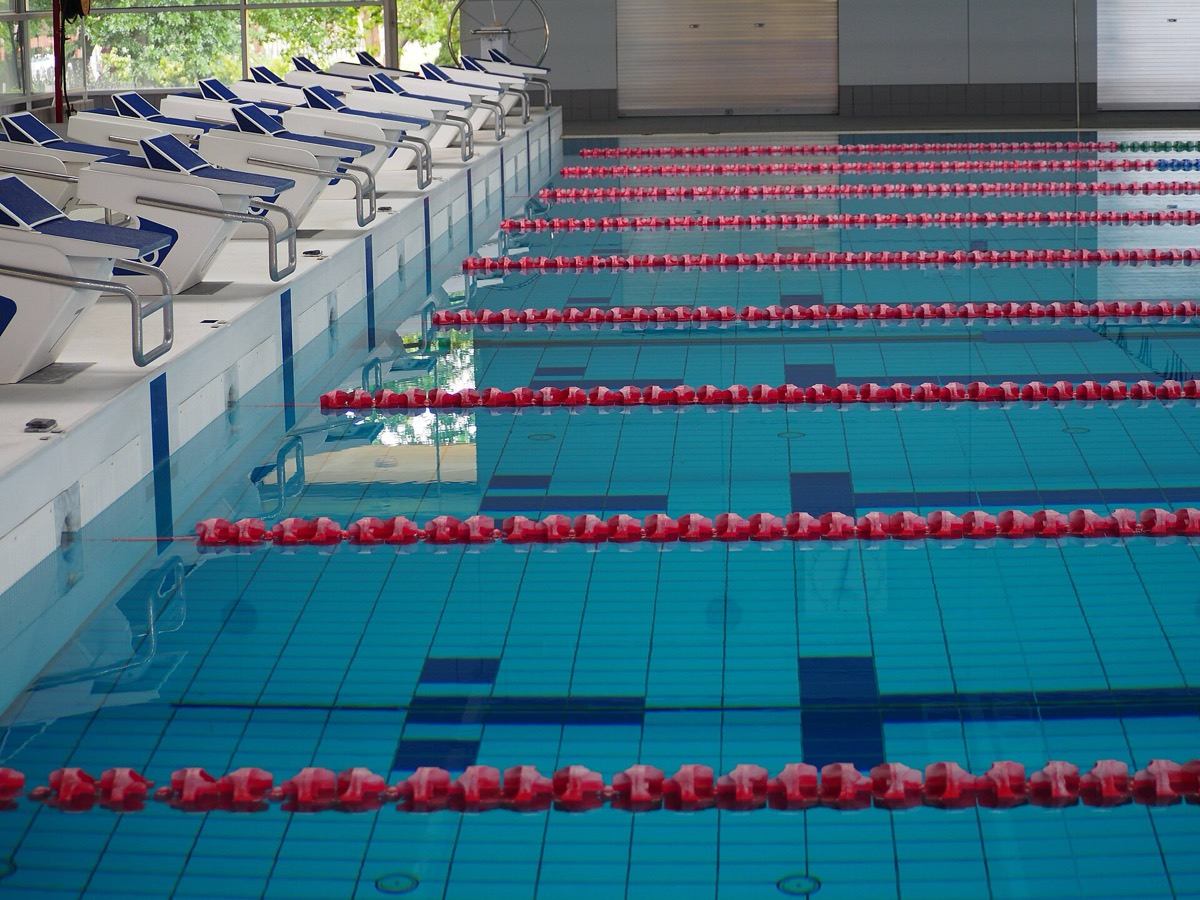
Because a hundredth is the smallest margin the sport will separate. In Beijing in 2008 the electronic timing system determined, and confirmed, that Michael Phelps out-touched Milorad Cavic by exactly that. Below it, swimming declines to choose: at the 2022 World Championships two relay teams touched together and both were given the world record.
The touchpad exists because of an older dispute. At the Rome Olympics in 1960 two swimmers recorded the same time on an aggregate of three judges’ . The gold went to Australia’s John Devitt and the world record to the American Lance Larson. Swimming’s governing body then asked for a technology that removed human uncertainty.
were born out of necessity, after a controversy at the Rome Olympic Games in 1960. Two athletes recorded exactly the same time, measured by aggregating three judges’ hand stopwatches. The Australian John Devitt was awarded the gold medal and the American Lance Larson received the world record, which satisfied nobody. World Aquatics then approached its timekeeping partner for a technology that eliminated the human uncertainties.
The answer arrived in 1967 and has been used at every World Aquatics Championships, and at the Olympic Games since Mexico City in 1968. A touchpad lets each swimmer stop their own clock, which removes the judge from the decision entirely. Since being introduced, they have been the most precise way to measure time in swimming.
Beijing in 2008 is the famous test of that precision. The electronic timing system determined, and the high-speed cameras confirmed, that Michael Phelps out-touched Milorad Cavic by : the smallest possible margin of winning in swimming. Both halves of that sentence matter, because the camera is there for exactly the cases the pad alone would leave arguable.
What happens below the threshold is just as telling. At the World Championships in Melbourne, the men’s medley relay came down to a finish nobody could see. When the Australian and American anchors each punched the pad, high-speed video at a hundred images per second showed them stopping the clock in unison. Both teams were awarded the world record of 3:18.98 and shared the top step of the podium. One caution: this is a governing body feature about its timekeeping partnership, so it praises the technology and reports no error figures.
wat. Phelps won by the smallest margin swimming is willing to recognize.
wat wat
The precision of a sport is a decision, not a fact. Swimming could resolve finer margins and has chosen not to, which is why ties still happen and still stand.
How do we know?
A World Aquatics feature on its timekeeping partnership sets out the Rome controversy and the introduction of touchpads in 1967. It also covers their use at every championship since 1968, and the Beijing finish.
What is still unknown
A governing body feature celebrating a commercial timekeeping partnership, so it presents the technology in a favorable light and gives no measurement error figures for the touchpads themselves.
Learn something?
Where to next
 Why does a swimmer work less behind another swimmer?swimming
 What exactly was swimming’s governing body trying to ban?swimming
 Why do ducklings swim in a tight line behind their mother?swimming