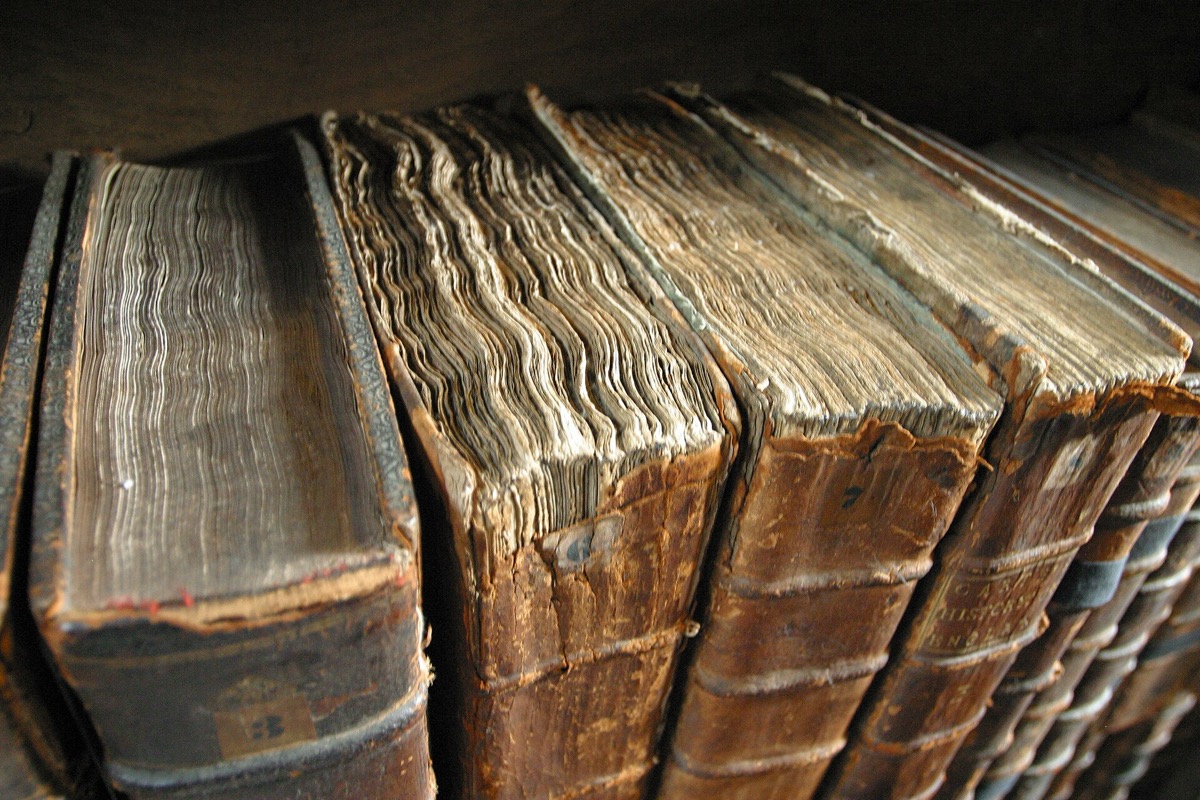
Everybody recognizes the smell of an old book, and nothing in conservation practice preserves it. Paper, glue, ink and board release a shifting mixture of volatile molecules as they age, so the smell is information that leaves the building. Researchers sampled the air itself, in a historic book and a historic library. What can you do with that?
Turn it into a record with two halves. Chemical sampling captured the coming off the book and the library, while visitors and a sensory panel described what they smelled. Combining the two produced the Historic Book , which links the chemistry to the words people actually reach for, and is a first step toward documenting and archiving a smell.
We know very little about the smells of the past, and smells do a great deal of work in the present, affecting people emotionally and physically and shaping how they engage with history. That raises an awkward question for conservation: can a smell be heritage?
The authors approach it in three ways. They examine the role of olfaction in heritage guidelines, look at evidence for smells already being used to communicate with audiences, and evaluate the techniques for analyzing and archiving a smell experimentally.
The case study is the smell of historic paper, chosen because its cultural significance is well recognized. Volatile compounds were sampled from both a historic book and a historic library, while visitors described an extract of the book in a survey and a panel carried out a on site.
Combining the two sides produced the Historic Book Odour Wheel, a documentation tool linking the measured chemistry to the vocabulary people use. The authors present it as a first step toward archiving historic smells, within a framework that runs from through chemical and sensory analysis to archiving.
wat. The smell of an old book is a mixture of molecules from its paper and binding, and it can be documented alongside its color and shape.
wat wat
Smell is part of what a historic place is, and it is the part that disappears without anybody deciding to let it go.
How do we know?
Bembibre and Strlic collected visitor descriptions of an extract of a historic book through a survey, and ran a sensory evaluation at a historic library. Both were combined with chemical sampling of the volatiles from the book and the library.
What is still unknown
Composition varies with paper, adhesives, storage and the person smelling. The wheel documents one case study rather than giving a formula that fits every old book.
Learn something?
Where to next
 Why is a ship that survived three hundred years in water falling apart on land?conservation
 What exactly did Gutenberg invent, if printing already existed?books
 How do you read a sealed letter without opening it?conservation