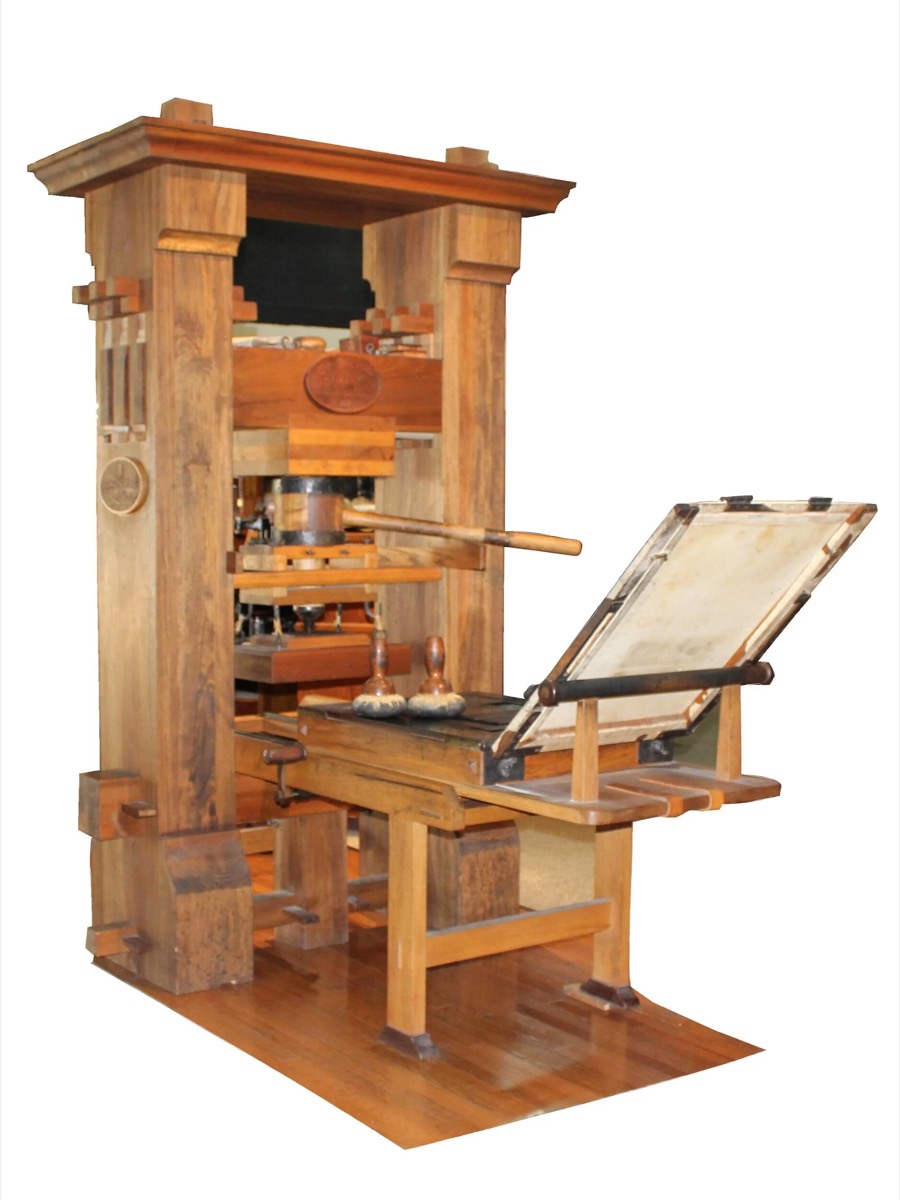
Europe could already stamp letters onto surfaces and print whole pages from carved woodblocks. What it could not do was produce books in quantity. A craftsman in Mainz changed that in the middle of the fifteenth century, and the invention was not a single device but a set of things that had to work together. What were they?
A method of printing from , which took three inventions at once. A metal alloy that melted readily and cooled quickly into durable reusable type. An thick enough to cling to metal and still transfer to vellum or paper. And a press, likely adapted from those used for wine, oil or paper, that applied firm even pressure. None of that existed in Europe before.
Gutenberg is usually described as the inventor of printing, which undersells what the problem actually was. Europe already stamped letters onto various surfaces and already printed from woodblocks. The missing piece was a way to compose a page from reusable parts, print it with firm even pressure, and do it again.
His invention is thought to have combined three things. A metal alloy that could melt readily and cool quickly to form durable reusable type. An oil-based ink that could be made thick enough to adhere well to metal type and still transfer well to vellum or paper. And a new press, likely adapted from the presses used in producing wine, oil or paper, to apply firm even pressure to printing surfaces. None of those features existed in the European techniques used until then.
One long-standing part of the story has since been corrected. Gutenberg was also credited with the of casting type. A character engraved on the end of a hard metal rod is struck into a softer metal plate, and molten metal poured into the resulting matrix yields any number of near-identical pieces. In the early two thousands a computer-aided analysis of his printed work showed too much variation among characters of the same sort, the letter i for instance. His type cannot have been cast that way, and some scholars now place the system several years after his death.
The assessment of what it all meant is unambiguous. His printing press was considered a history-changing invention, making books widely accessible and ushering in an . The man himself is thinly documented: born in Mainz in the fourteenth century, with no firm year, and dead there probably on the third of February fourteen sixty-eight.
wat. Not one machine. An alloy, an ink and a press, and the books that followed from all three.
wat wat
Britannica calls it a history-changing invention that made books widely accessible and ushered in an information revolution, which is a large claim resting on an alloy, an ink and a screw press.
How do we know?
Britannica’s biography of Johannes Gutenberg, which sets out the elements his invention is thought to have included and what later analysis of his printed work revealed about how his type was made.
What is still unknown
The attribution is partly inference. The elements are what his invention is thought to have included, and his birth year is unknown, with the entry giving only the fourteenth century.
Learn something?
Where to next
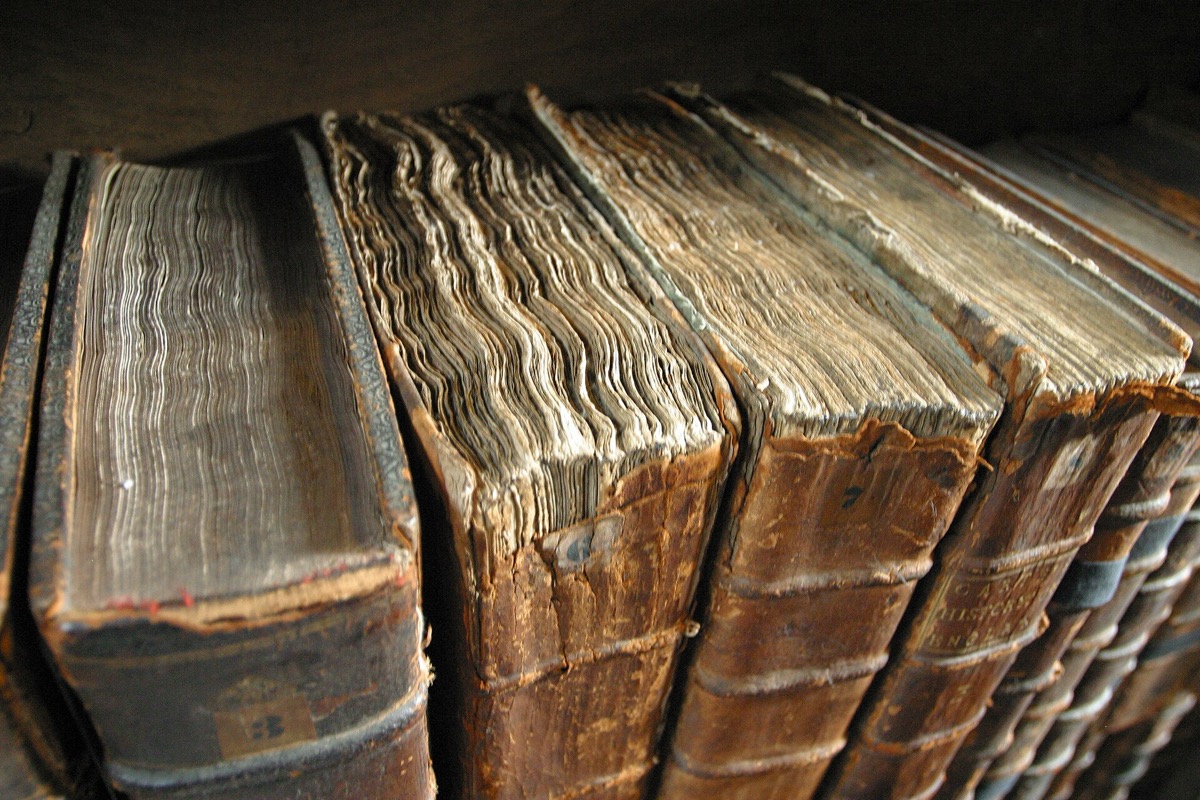 Why does an old book have a smell you can actually archive?books