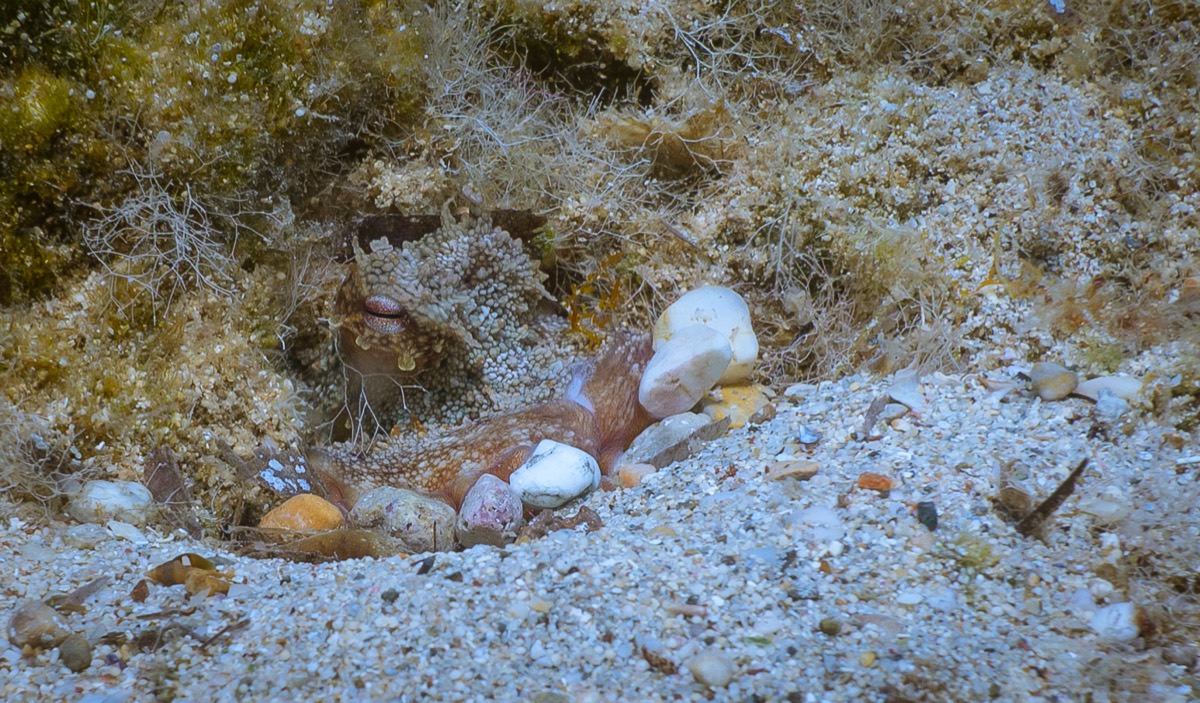
A resting octopus sometimes runs waves of color and texture across its skin while the arms stay still, and that could be anything from digestion to a twitching nerve. A lab filmed four Octopus insularis around the clock, scored skin, eyes and mantle automatically, and tested how hard each animal was to rouse. Is the flickering part of sleep?
Two sleep states, alternating. held the animal uniformly pale with closed pupils, in episodes of about seven minutes on the median. Then came : dynamic skin patterns, rapid eye movements, bursts lasting well under a minute. Neither state answered stimulation, so the stayed high through both. Active sleep recurred every half hour or so, and almost always followed quiet sleep.
An octopus at rest in its den goes pale and still. Every so often the skin breaks into moving patterns, the eyes flick, the mantle shifts, and then it settles again. The easy reading is noise: a nervous system idling, with nothing organized behind it.
Medeiros and colleagues video-recorded four adult Octopus insularis and let software score the skin color, the texture, and the movements of eyes and mantle, instead of relying on somebody watching. Alongside that they tested the arousal threshold with sensory stimulation, since a resting animal only earns the word asleep once it stops responding.
Both states passed that test. Quiet sleep ran pale and smooth with the pupils shut, for episodes around seven minutes on the median. Active sleep was its opposite and far shorter, well under a minute, the skin running patterns while the eyes moved quickly underneath.
What makes it a cycle is the timing. Active sleep returned at fairly regular intervals of roughly half an hour, and it nearly always arrived on the heels of quiet sleep. That is the shape of an , in an animal whose brain is built on a wholly different plan from ours.
wat. The color show is not leftover noise but a second sleep state, cycling in and out the way our own deep and dreaming phases do.
wat wat
Cephalopod and vertebrate brains are built on entirely different plans, so a shared two-state cycle suggests the structure of sleep solves something basic rather than something mammalian.
How do we know?
Medeiros and colleagues video-recorded four Octopus insularis continuously, scored skin, eye and mantle changes with automated image processing, and measured how much stimulation it took to rouse them.
What is still unknown
Four animals of one species, scored from video in a tank. Behavior is not brain activity, and nothing here shows what the animal is doing internally during the active phase.
Learn something?
Where to next
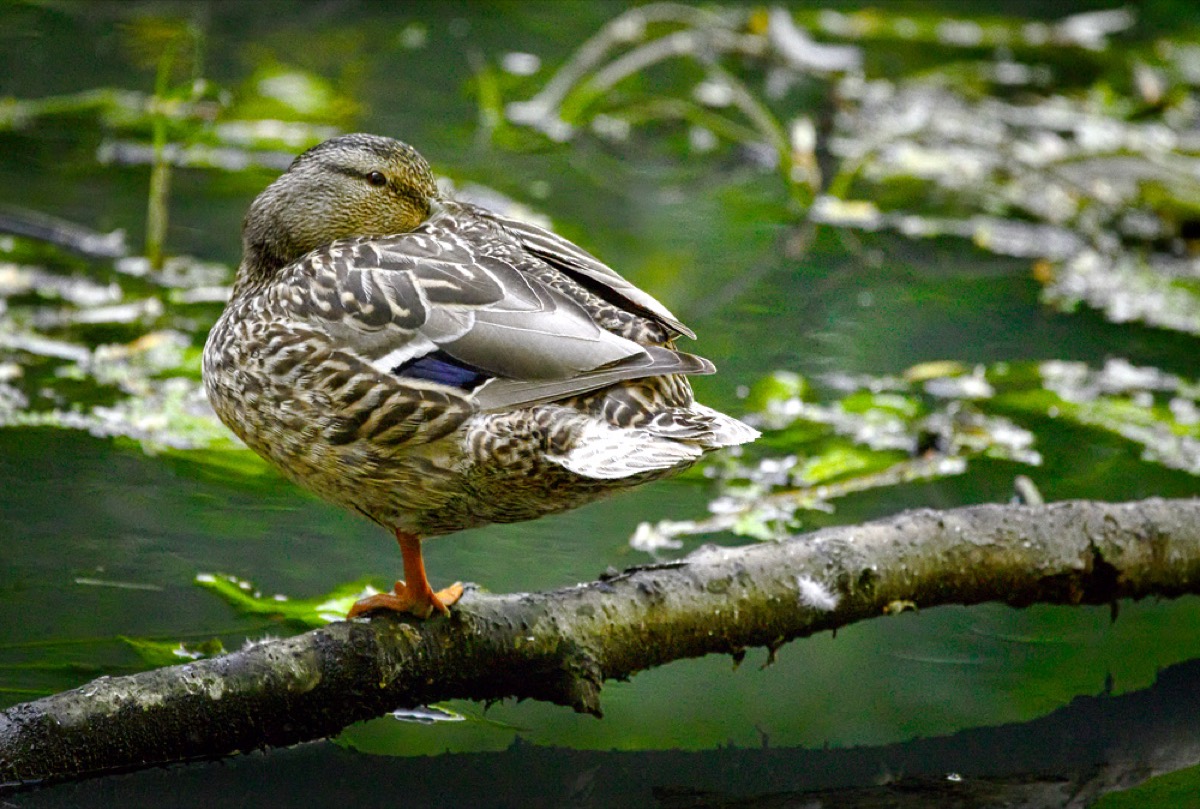 Which way does a sleeping duck point its open eye?sleep
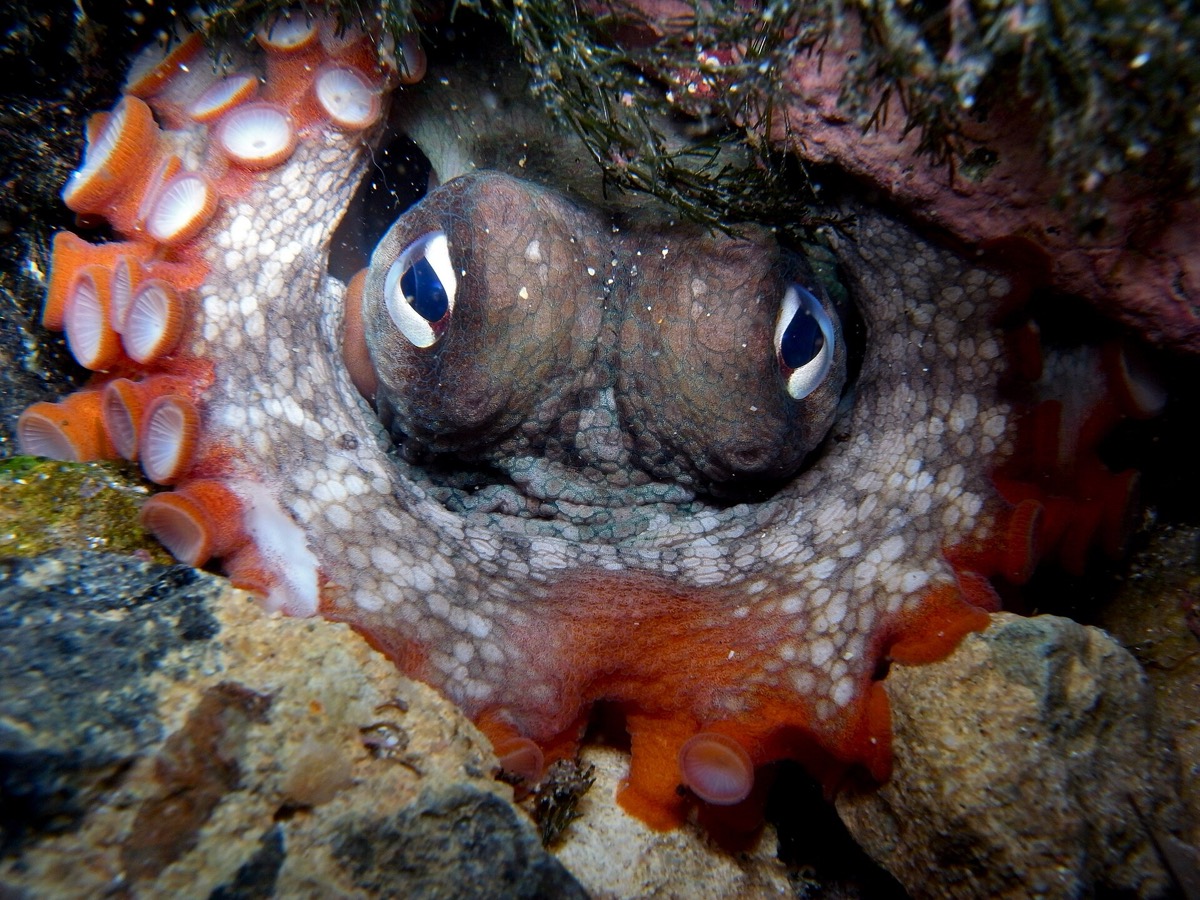 Is an octopus throwing silt at a neighbor, or just tidying up?octopuses
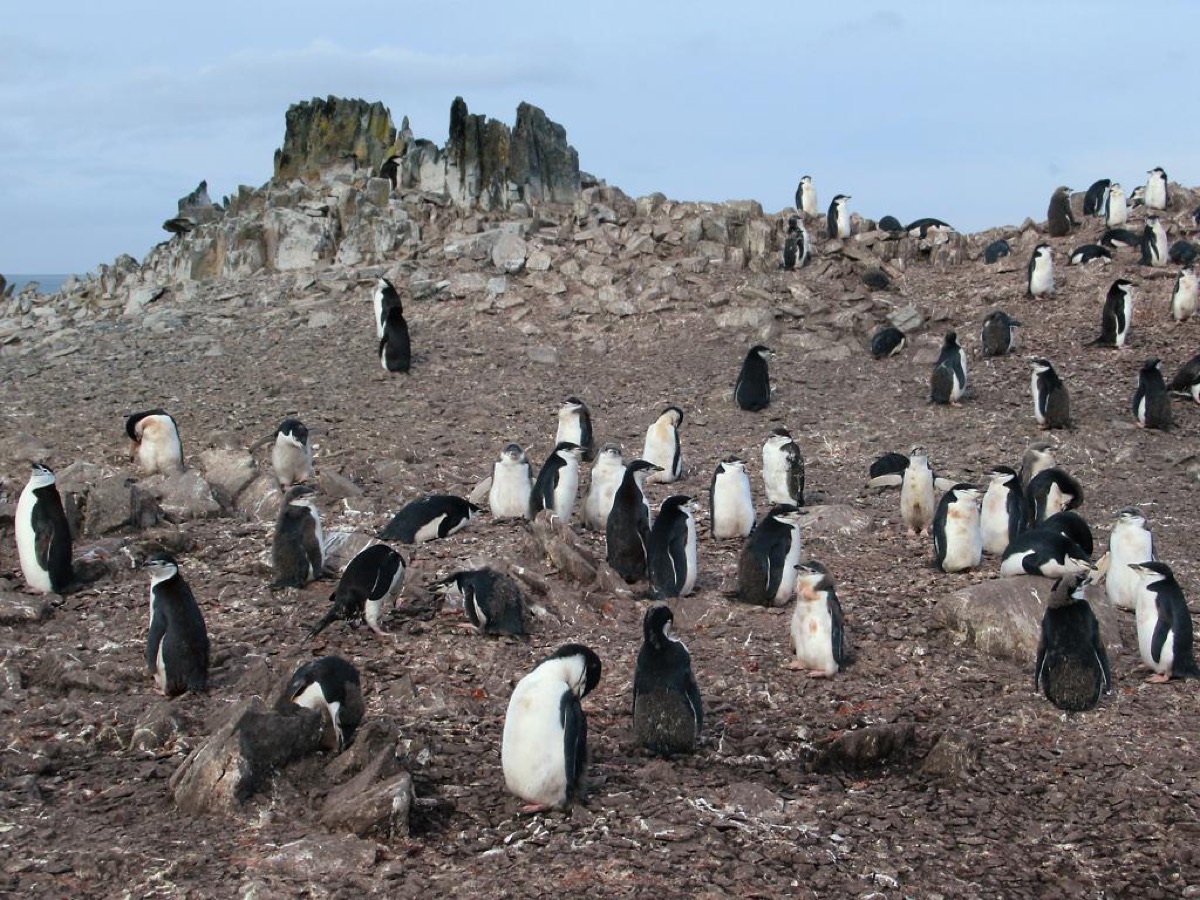 Can sleep be useful if it only lasts four seconds at a time?sleep