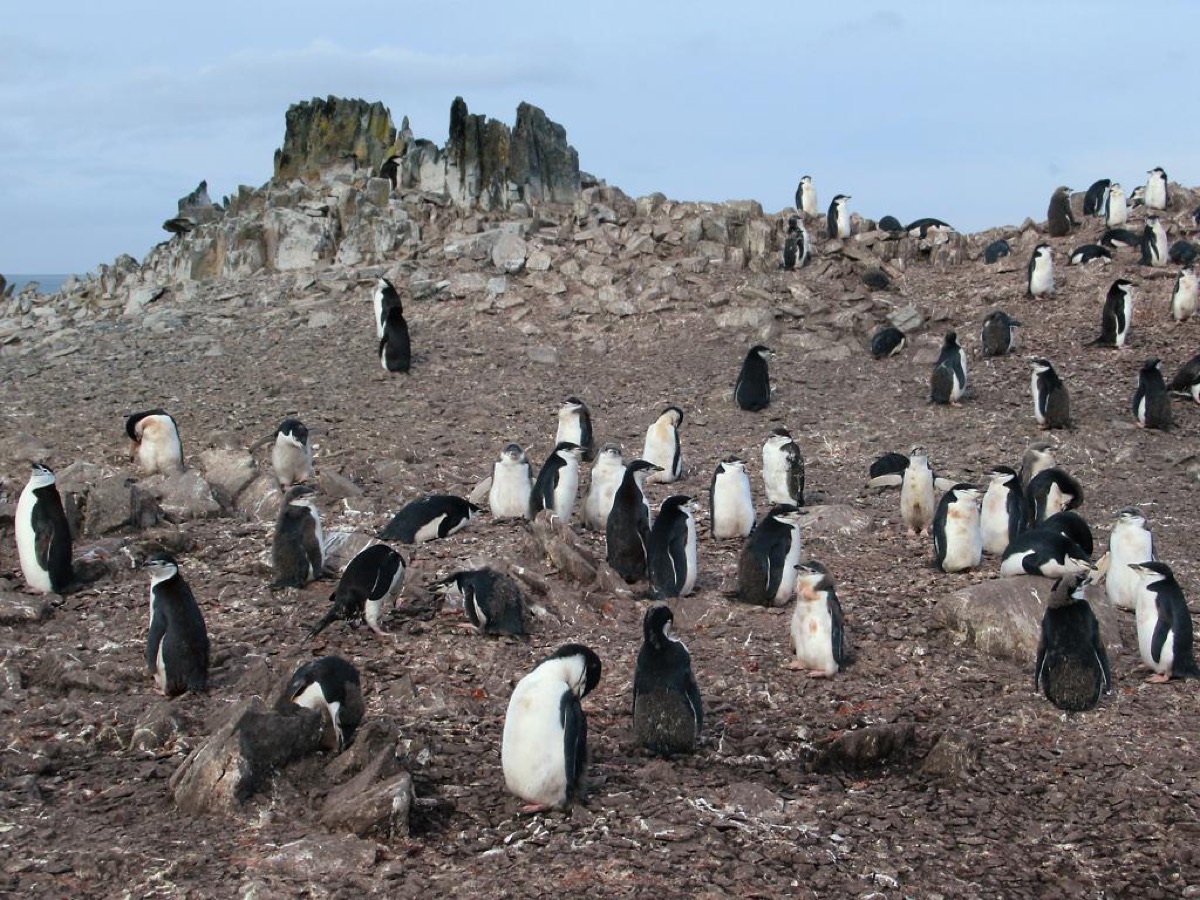
A microsleep is the seconds-long lapse that makes a tired driver dangerous, and it is usually treated as a failure of wakefulness rather than as rest. A nesting chinstrap penguin cannot afford a proper sleep, with an egg predator about and neighbors attacking constantly. Libourel and colleagues put brain recorders on wild penguins in Antarctica. How much sleep can seconds at a time add up to?
More than eleven hours a day, in four-second pieces. The penguins nodded off over ten thousand times daily, in bouts of averaging about four seconds, sometimes with both hemispheres and sometimes with one. Summed across a day, each hemisphere accumulated more than eleven hours. The birds doing this were breeding successfully, which argues the fragments are doing the work of sleep.
A microsleep is what happens to a driver who has been awake too long: a few seconds of eye closure with sleep-like brain activity, then back. It is studied as a danger, and the working assumption has been that something that brief cannot deliver the restorative functions of sleep.
That assumption is hard to test on people, because nobody is forced to live on . A nesting chinstrap penguin is. The colony sits under constant threat from an egg predator and from the aggression of other penguins, so leaving the nest unwatched for any length of time is not an option.
Libourel and colleagues recorded sleep in wild chinstrap penguins in Antarctica, at sea and on the nest. The birds nodded off more than ten thousand times a day, in bouts of slow-wave sleep that averaged only about four seconds, some bihemispheric and some .
Added up, those fragments came to more than eleven hours of sleep for each hemisphere. The penguins doing it were breeding successfully, which is the detail that carries the argument: if the strategy worked badly, it should show in the outcome that matters most to the bird. The benefits of sleep, on this evidence, can accrue incrementally.
wat. Four seconds at a time, ten thousand times a day, and it adds up to a full night for each half of the brain.
wat wat
If the benefits of sleep can accrue a few seconds at a time, then sleep is less a block of time an animal has to find and more a quantity it has to reach.
How do we know?
Libourel and colleagues recorded electroencephalograms from wild chinstrap penguins in Antarctica, both at sea and while nesting, and counted and timed every sleep bout.
What is still unknown
One species under unusually extreme pressure to stay alert. Showing that successful breeders sleep this way is not the same as showing the fragments restore as much as consolidated sleep would.
Learn something?
Where to next
 How hard does a penguin have to push to keep its nest clean?penguins
 How do penguins decide who has to stand on the cold outside?penguins
 What is an octopus doing when its skin flickers in its sleep?sleep